
10 / 18
Case file
Digital Conferencing & Voting Systems.
Sittings, voting, interpretation — one system, every seat.
Parliamentary-grade digital conferencing for legislative chambers, council halls and corporate boardrooms — mic management, electronic voting, 8-channel interpretation, camera control and chamber recording, integrated through Bosch DCN, Dicentis and Integrus.
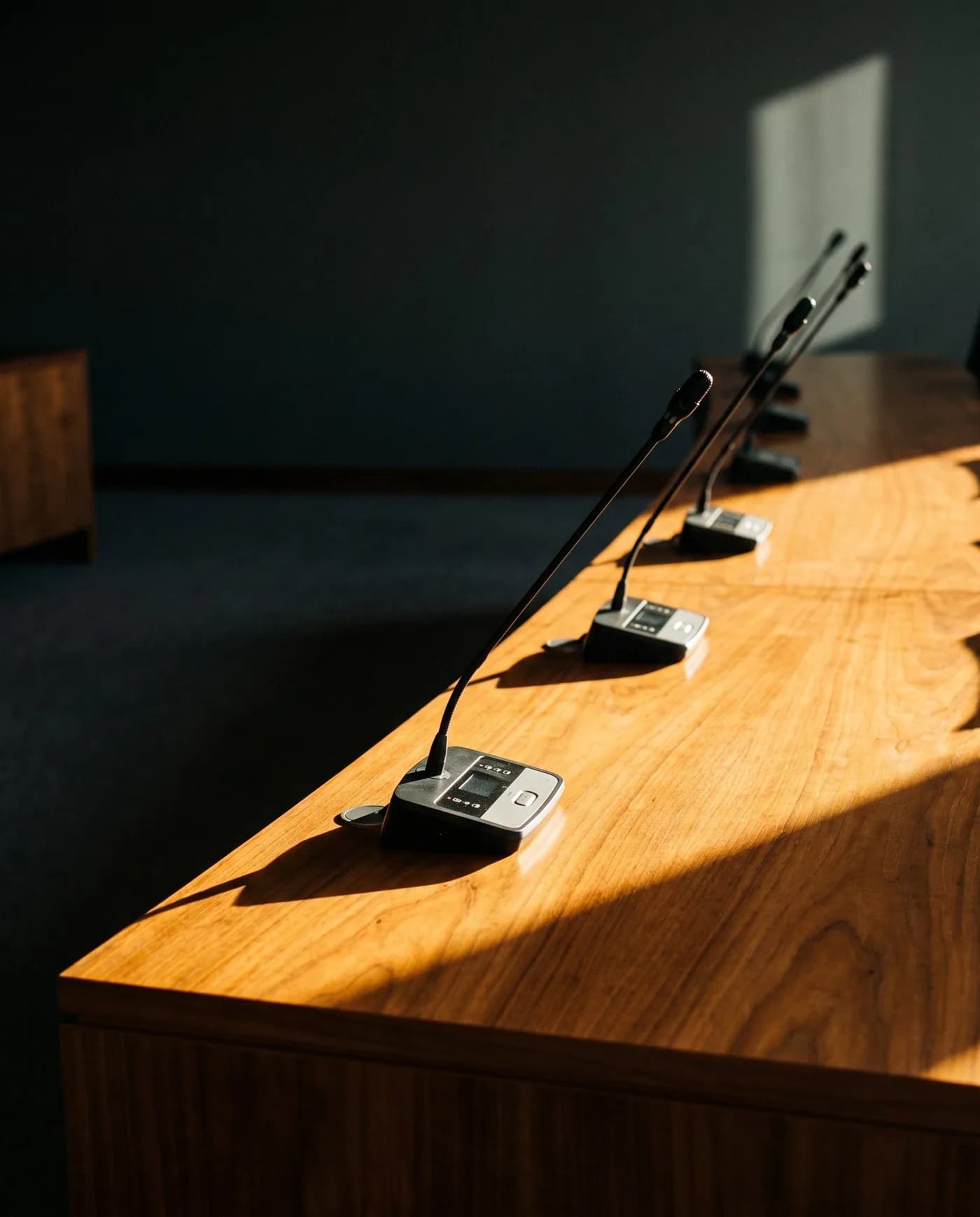
| Capability | Regular boardroom mic setup | Digital conferencing platform |
|---|---|---|
| Architecture | Independent mics and an amplifier | Microphone management, voting and interpretation on one network |
| Voting | Not available | Electronic voting with division-display routing |
| Operation | Manual control per device | Single operator console with recess and shutdown presets |
Educational comparison of system types — not a statement about any specific installer.
— Digital Conferencing · Session
Sittings, voting, interpretation — one system.
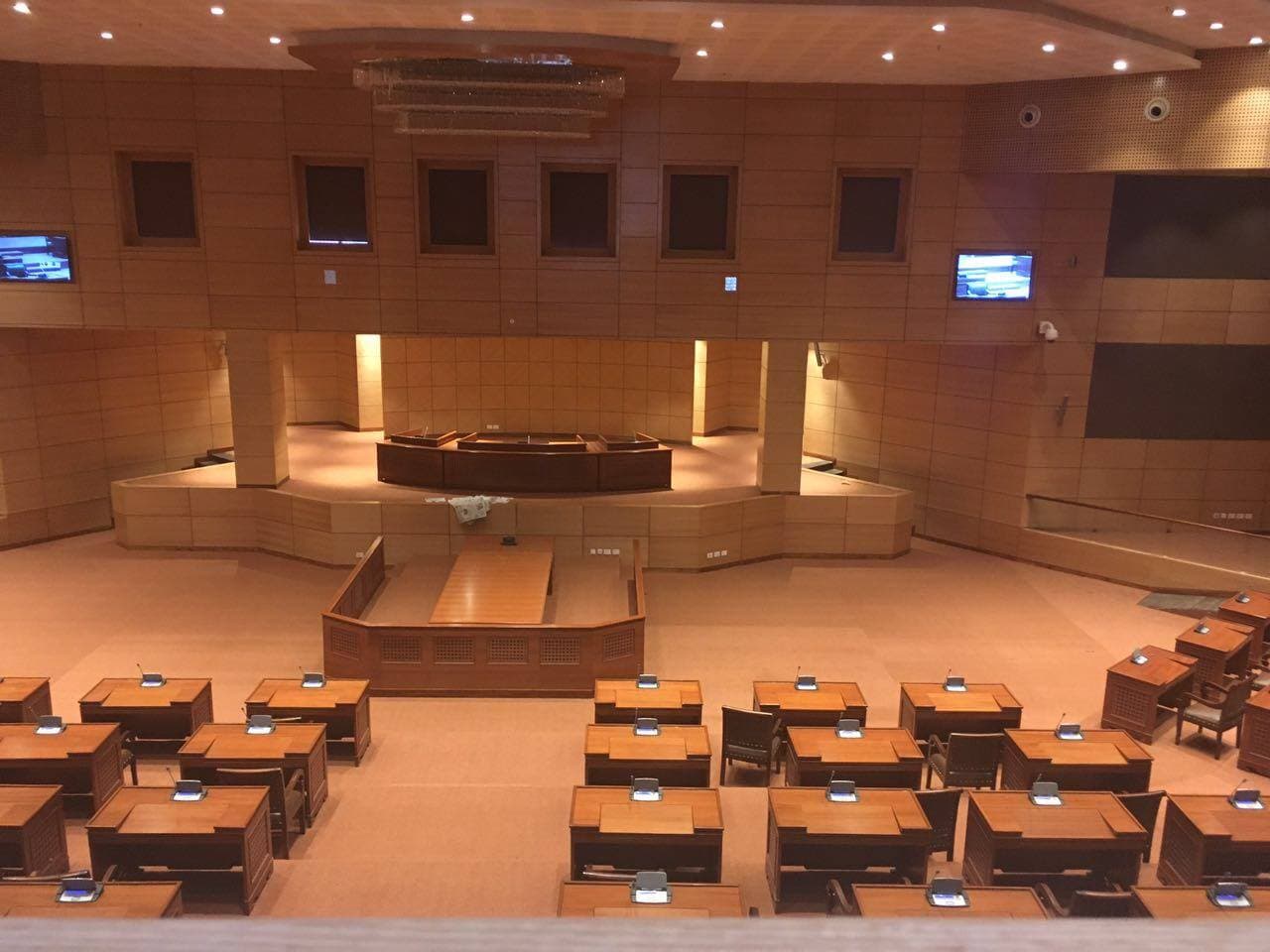
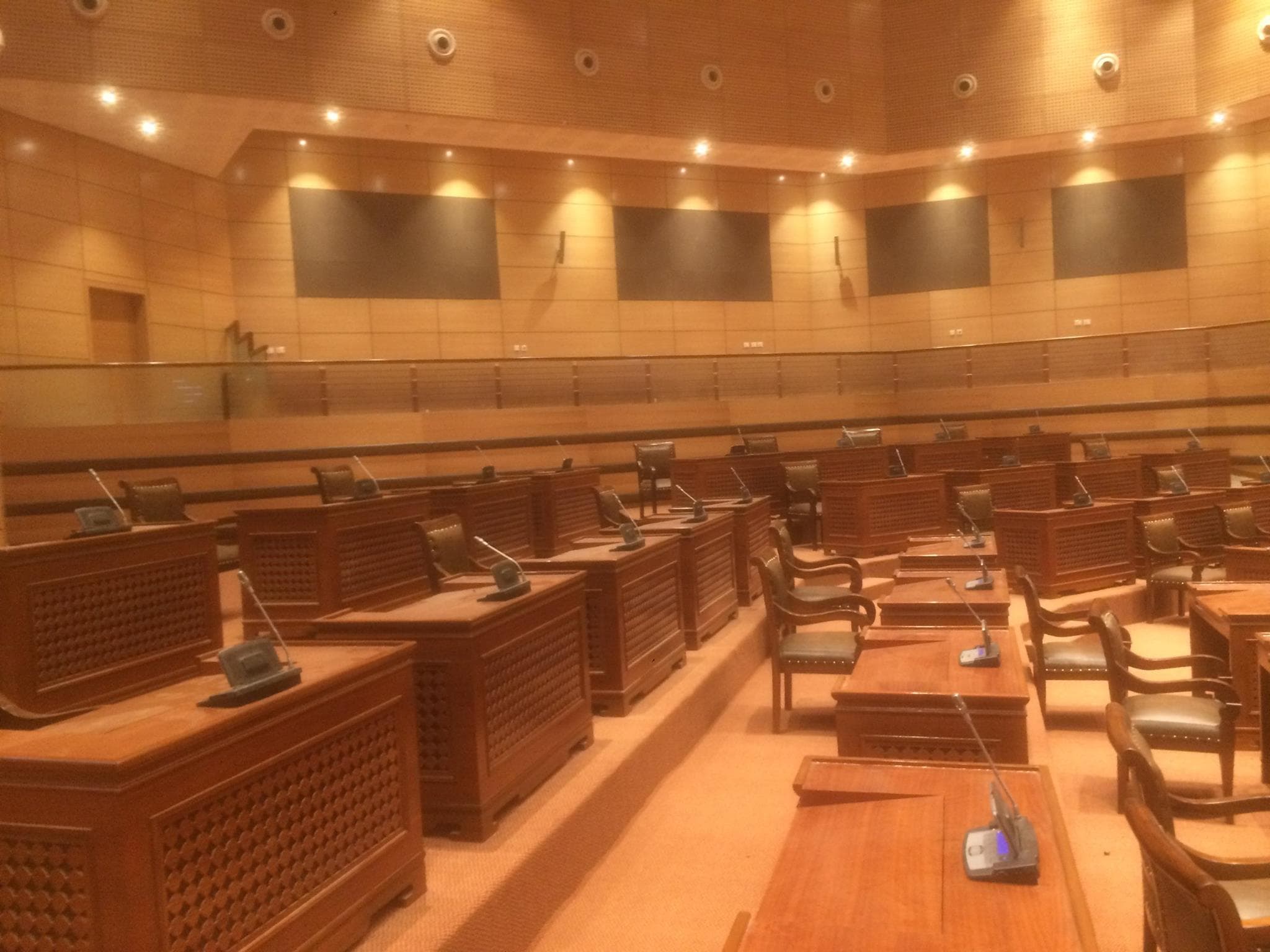
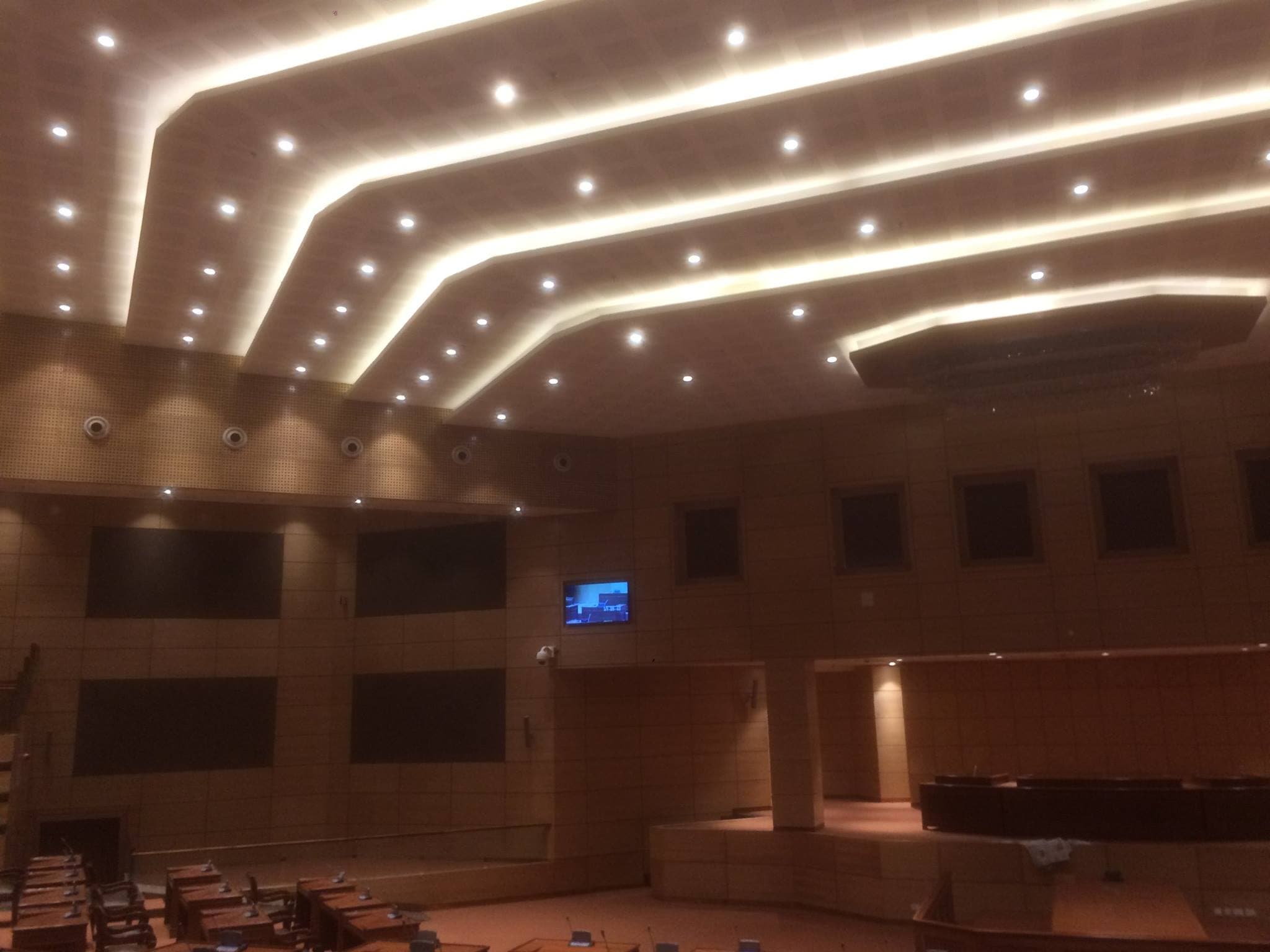
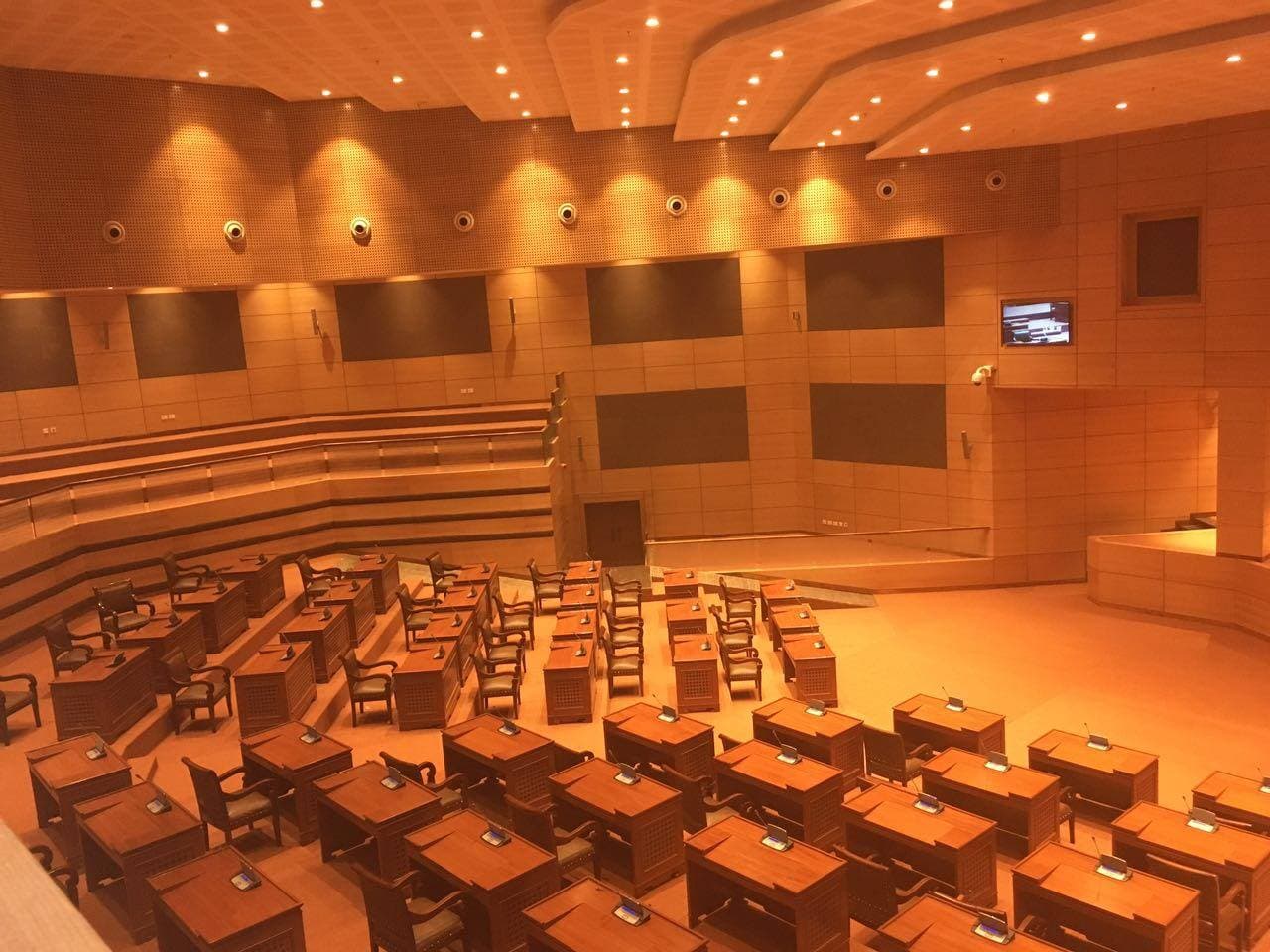
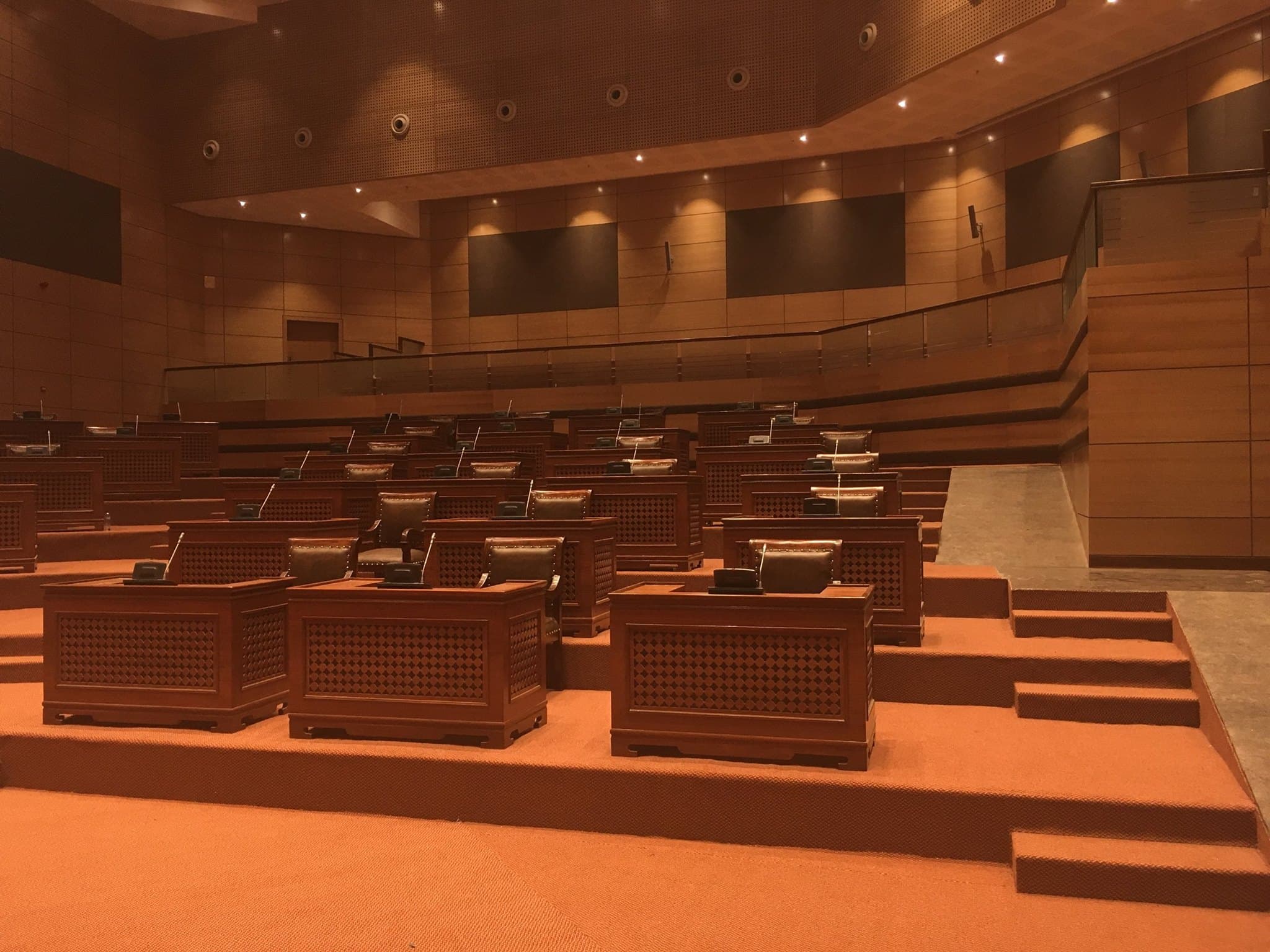
Bosch DCN delegate units on every desk. Live mic management, parliamentary voting and 8-channel interpretation through one operator console.
Switch modes · watch the chamber adapt
Mics Open
04 / 121
Vote Panel
● Armed
Interpretation
CH 01–08
Arunachal Pradesh Legislative Assembly — Itanagar · Demonstration
Specify the chamber you are designing for.
Parliamentary assembly to twelve-seat boardroom — same architecture, scaled to the room.
Bosch DCN · Integrus · Dicentis — vendor-flex
/ Operating Mode
Pre-rendered preview.
Not a live console.
Digital Conferencing — Operating Modes
Five operating modes drive the conferencing system: Session, Voting, Interpretation, Recess and Recording Off. Each mode coordinates microphone management, voting state, interpretation routing, chamber lighting and the recording chain as a single operator preset.
- Session: Mics + voting + interpretation
- Voting: Live tally on the repeater screens
- Interpretation: Eight languages, every seat
- Recess: Mics muted, system holding
- After Hours: System idle, recording stopped
/ The discipline, in detail
How we approach digital conferencing & voting systems.
A legislative chamber needs clear speech, orderly microphone management, visible voting results and accessible interpretation channels. We coordinate the audio, video, voting and translation requirements against the room layout and the operator workflow before selecting the system.
TechnoGuru delivered audio, video, electronic voting and simultaneous interpretation for 120 delegate positions in the Arunachal Pradesh Legislative Assembly Hall at Itanagar, under sub-contract in an Arunachal Pradesh PWD project. This legislative chamber is distinct from the Multi-Purpose Hall in the same Assembly Complex, where the delivered scope was audio, video, stage lighting and stage furnishing.
The same architecture scales to corporate boardrooms, council halls and conference rooms — the operator console pattern, voting logic and interpretation routing port across vendor stacks (Bosch DCN, Bosch Dicentis, Televic Confidea) without re-engineering the chamber.
On record
Every digital conferencing & voting systems engagement is documented end-to-end — design, programming, commissioning, calibration — and handed over with the files our successors would need if we were never to return.
/ Signal architecture
Chamber signal discipline
Delegate microphones, chairman priority and voting results ride the same engineered signal path as the chamber's PA and record feeds.
Diagram · described
Civic auditorium signal architecture
A civic / cultural auditorium AV signal architecture. Inputs (gooseneck and lavalier microphones, line-in sources, HDMI presentation, livestream feed) route through a digital mixer to a DSP with feedback suppression, EQ and named-preset library (Civic, Cultural, Ceremonial). DSP feeds line-array audio output, stage monitors, LED-cluster video wall, DMX stage lighting and a recording / livestream encoder. Auditorium-staff console recalls a preset and orchestrates all five output classes from a single gesture.
Diagrammatic view — a system planning illustration for design discussion, not a project drawing or live interface.
/ Where we deploy this
Active across 2 sectors.
Digital Conferencing & Voting Systems is rarely a standalone brief — it sits inside a wider sector practice with its own codes, expectations and operating rhythm.
/ Sister services
The rest of av.
A serious brief usually crosses two or three of these. Read across the discipline — we deliver them as one contract.
- 01
Home Theatre
Reference cinema, in your living room.
Custom-engineered private cinemas — projector, processor, screen, seating and acoustics designed to a single sweet-spot, following THX and Dolby Atmos reference layouts.0 - 02
Multi-Room Audio
One song. Every room. Or six different ones.
Whole-home audio on Yamaha, Sonance and BluOS — invisible in-ceiling speakers, hidden subs, room-corrected and zone-routed.1 - 03
Acoustic Solutions
Rooms that sound the way they look.
Acoustic design and treatment for cinemas, auditoriums, recording studios, places of worship and conference halls — engineered absorbers, diffusers, bass traps and ceiling clouds.2 - 04
Video Walls
Pixels at the scale of architecture.
Direct-view LED, fine-pitch LCD and rear-projection video walls for command centres, lobbies, broadcast studios, control rooms and event venues.3 - 05
Control Rooms & Command Centres
The room is the instrument.
Operator environments for security, utilities, transport and industrial monitoring — where the display wall, the operator position and the infrastructure behind them are engineered as one system that runs continuously.4 - 06
Smart Classrooms
Every student. Every word. Every time.
Interactive flat-panels, lecture-capture, voice-lift and learning-management integrations — engineered to NCERT, NEP-2020 and university lab specifications.5 - 07
LED Panels & Projectors
The right pixels for the room.
Direct-view LED, OLED, microLED and laser projection — selected to the room's lux, throw, sightline and content.6 - 08
Professional Audio & PA Systems
Intelligible, every seat in the house.
Public address, voice-evacuation and concert-grade audio for auditoriums, places of worship, stadia, transit hubs and event venues.7 - 09
Auditoriums & Boardrooms
Rooms that begin on time.
Turnkey auditorium, boardroom, training-room and conference-room AV — display, audio, control, video-conferencing and lighting integrated to a single touch.8 - 11
Recording Studios & Nightlife
Rooms tuned to the recording.
Recording studio design, post-production suites, broadcast booths and nightlife audio — acoustic isolation, monitoring, console integration and DJ infrastructure.9 - 12
Stage Lighting
Light that performs.
Theatre, concert, event, nightclub and place-of-worship stage lighting — moving heads, washes, profiles, pixel-mapped LED, effect lighting and MADRIX or ProtoPixel show control on DMX / Art-Net / sACN.10 - 13
Conference Room AV
Single-touch join. Every meeting.
Microsoft Teams Rooms, Zoom Rooms and Cisco Webex meeting rooms on platform-certified hardware, with auto-tracking cameras, ceiling-array microphones and one-touch room controllers.11 - 14
Hospitality Venue AV
From the banquet stage to the last bar stool.
Hospitality venue AV — banquet hall, ballroom and conference AV, restaurant and bar zone audio, and club-grade nightlife systems with JBL Professional, K-array and Kgear, engineered for hotels, resorts and standalone venues.12 - 15
Digital Signage & Wayfinding
The right message, in the right place, on schedule.
Commercial indoor and outdoor display panels, signage video walls, menu boards, wayfinding and queue or information screens — driven by content-management software with scheduling and remote management for retail, hospitality, corporate, transport and institutional spaces.13 - 16
IPTV & Hospitality TV
Live channels, your channel, on every screen in the building.
Head-end reception and IP distribution of live television, in-house channels and content to commercial-grade and hotel TVs — with interactive welcome screens, an electronic programme guide, casting and integration into the property's network and guest-room systems.14 - 17
Queue Management System
Take a token, watch the counter, walk up.
Token and queue management — ticket dispensers, counter and main calling displays, audio call-forward, multi-counter routing and wait-time analytics — for healthcare, banks, government and retail counters.15 - 18
IP Paging & Announcement
Page the right zone, over the network.
IP network paging and announcement — zoned paging over the data network, SIP/telephone and desktop paging, scheduled bells and announcements — integrated with the PA and telephony systems for offices, campuses, industrial and transit sites.16
/ Where this system has been deployed
Digital Conferencing & Voting Systems on the ground.
The reference projects below carry a digital conferencing & voting systems layer engineered as part of an integrated stack. Each case study walks through the engineering challenges that were solved, the standards the work was held to, and the operational outcome on the day-two team.
Public project summaries describe systems and outcomes only — BOQ values, quantities, device counts and security layouts are kept off public surfaces.
Request a feasibility review/ Integration with
How digital conferencing & voting systems talks to the rest.
A serious deployment of this system rarely operates in isolation. The disciplines below most commonly share its cabling pathways, its controller logic, and its cause-and-effect matrix.
Auditoriums & Boardrooms
Rooms that begin on time.
Turnkey auditorium, boardroom, training-room and conference-room AV — display, audio, control, video-conferencing and lighting integrated to a single touch.Professional Audio & PA Systems
Intelligible, every seat in the house.
Public address, voice-evacuation and concert-grade audio for auditoriums, places of worship, stadia, transit hubs and event venues.Video Conferencing Infrastructure
Reliability beats features.
Cloud, on-prem and hybrid VC — Microsoft Teams, Zoom, Google Meet, Cisco Webex — with bridges, gateways, recording and transcription infrastructure.
/ Read deeper
The engineering, in long form.
Each article below goes deeper than this service page can — a full walk-through of the engineering decisions, written by the team that delivers this work.
Engineering toolkit
Tools to scope this work
Calculators and reference checkers we use ourselves to sense-check the engineering before any drawings change hands.
- AV · Selector
Boardroom Solution Selector
Pick the room, how it is used and the platforms in play, and see a broad meeting-room direction with what to share. A planning aid — not a final design, model list, quantity or budget.
Advisory · directionOpen - Auditorium AV · Readiness
Auditorium AV Scope & Readiness Planner
A scope-level self-check for an auditorium, convention or multipurpose hall — the AV signal chain (sources, mixing & DSP, amplification & loudspeaker zones, projection, stage-lighting, assistive listening, recording, control), plus acoustics, infrastructure and operations — with the gap list and who owes what. Statuses and bands only; no seat counts, SPL targets or model choices.
Advisory · readinessOpen - AV · LED
LED Wall Size Calculator
Direct-view LED wall sizing across a source-cited model catalogue including Samsung, LG MAGNIT, Sony, Philips, Leyard, Absen, Unilumin, ROE Visual, AOTO, INFiLED, Daktronics, Planar, Nanolumens and more. Cabinet count, native resolution, brightness adequacy, power and weight — with pitch-vs-distance honesty and camera-refresh flags. Sources cited per model.
50 brands · pitch-awareOpen
/ Used alongside
Commonly deployed alongside
Project
Arunachal Pradesh Legislative Assembly
Arunachal Pradesh Legislative Assembly — TechnoGuru delivered audio, video, voting and translation systems serving 120 delegate positions under sub-contract in an Arunachal Pradesh Public Works Department project, integrating Bosch, Bosch Plena and Finolex.
Service
Auditoriums & Boardrooms
Rooms that begin on time.
Sector
Education & Institutions
Schools, colleges and universities.
Service
Professional Audio & PA Systems
Intelligible, every seat in the house.
Sector
Hospitality
Guest experience, engineered.
Service
Conference Room AV
Single-touch join. Every meeting.
/ Plan it right
Digital Conferencing & Voting Systems — getting the brief right.
Common mistakes to avoid
- Buying delegate units before designing the operator's grammar — recess, division, interpretation switching — the console workflow is the system.
- Cabling the chamber point-to-point when the platform needs a structured digital backbone to every seat.
- Leaving interpretation and recording as later additions when their channel capacity must be designed into the backbone now.
- No rehearsal and operator-training plan before the first live sitting — a chamber cannot fail in session.
- Treating camera-tracking as an accessory instead of coordinating it with microphone activation and chamber sightlines from the start.
What to share before a quotation
- The chamber or boardroom layout with seat count and the presiding positions.
- The procedural requirements — voting types, attendance logging, interpretation languages.
- Recording, broadcast or webcast obligations for the sittings.
- The existing cabling and AV infrastructure, if the chamber is a retrofit.
- Who operates the system — a dedicated operator or secretariat staff — and their training needs.
/ Frequently asked
Digital Conferencing & Voting Systems — what buyers ask first.
What is a Bosch DCN system and how is it different from a regular boardroom mic setup?
Bosch DCN (Digital Congress Network) is a digital conferencing platform that integrates microphone management, electronic voting, multi-channel interpretation, delegate database and recording on one wired network — not a collection of independent products. A regular boardroom setup gives you mics and an amplifier. A DCN deployment gives you the operator console, voting tally with division display, interpretation routing across 8+ channels, automatic camera-tracking driven by mic activation, attendance logging and a hard-disk session recorder, all addressable from a single operator workstation. We have delivered this at parliamentary scale (120-delegate legislative chambers) and boardroom scale (12-seat conference rooms) on the same architecture.
Can we add electronic voting to an existing boardroom or do we need to start from scratch?
If the existing room is wired DCN-ready (CAT6 trunk to each seat) the voting layer can be added by replacing the delegate units and the central control unit — typically a 4–6 week deployment. If it is a generic boardroom (point-to-point analogue mic cabling), the entire wired backbone is replaced. We audit the existing low-voltage layer at brief stage and tell you which path applies before the BOQ is issued.
Can a chamber be upgraded while the House is in session periods?
Yes — retrofit work is sequenced around the sitting calendar. The cabling backbone and back-of-house work run during recess windows, seat-by-seat unit installation is staged so the chamber remains presentable, and the switchover to the new system happens against a rehearsal plan, never on the morning of a sitting. The sitting calendar is one of the first inputs we ask for.
What happens if a delegate unit fails during a sitting?
Wired conference units are individually addressed, so a failed unit is swapped and re-assigned to that seat without disturbing the rest of the chamber. This is why we specify a spares pool alongside chamber deployments and structure the maintenance programme around the sitting calendar — the system is serviced between sessions, not during them.
Does electronic voting produce a record the secretariat can rely on?
Yes — each division is logged against the delegate database with per-seat results and attendance, displayed to the chamber on the result screens and exportable for the record of proceedings. The session recorder captures the audio alongside, so the tally and the debate share one timeline. How that record is stored and who may access it is agreed with the secretariat at design stage.
· Begin
Begin a
digital conferencing & voting systems
brief.
Tell us about the building, the timeline, and what success looks like a year after handover. We will reply within two working days with a written response, not a sales pitch.