
Industrial & Warehousing.
Operations that don't take a day off.
Factories, logistics hubs, warehouses, refineries and processing plants — perimeter security, fire detection and suppression, BMS, UPS and industrial networking engineered for continuous operation.
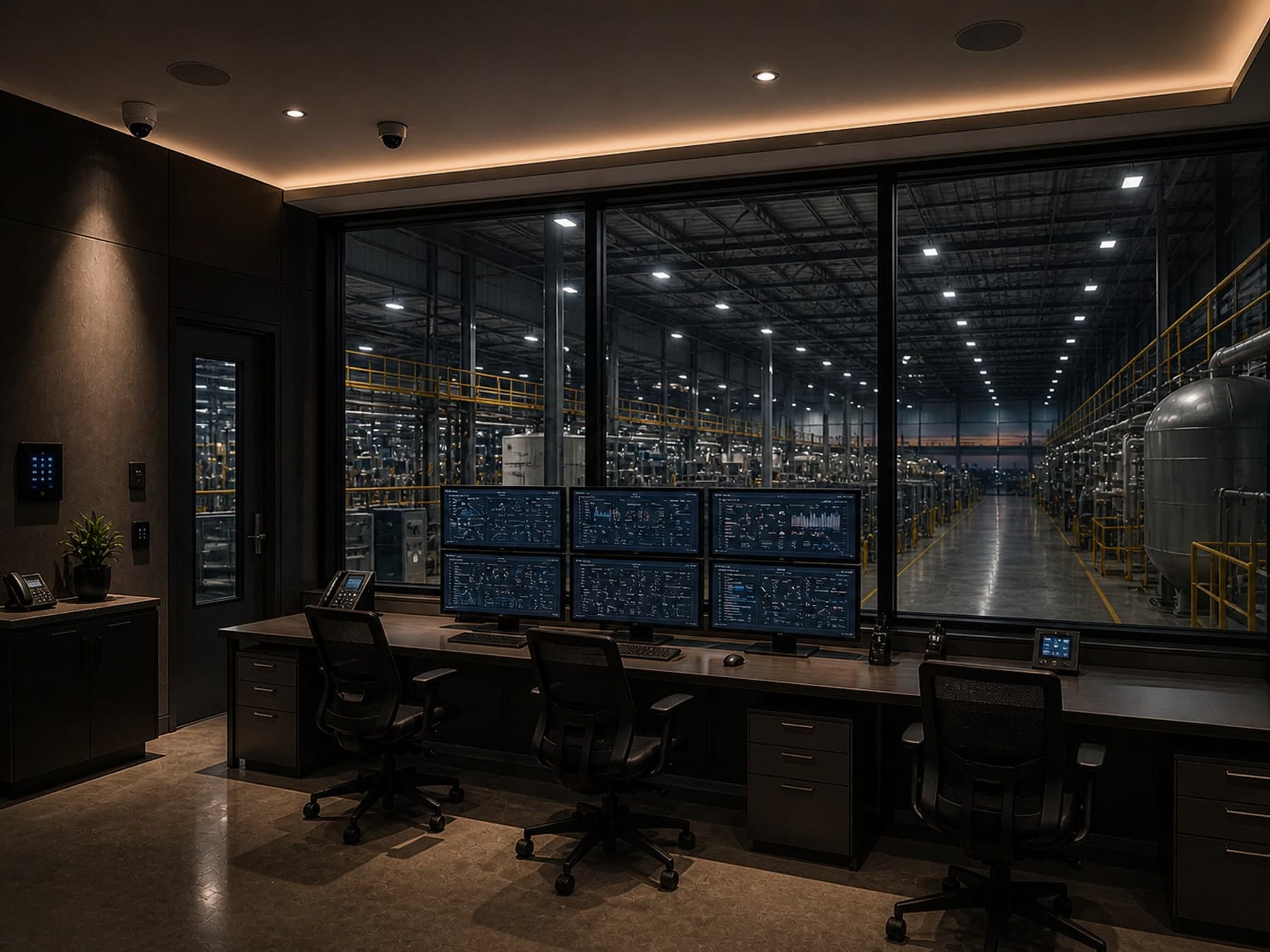
| Aspect | Fragmented delivery | TechnoGuru — coordinated |
|---|---|---|
| Surveillance | Standard cameras on a harsh site | Hardened cameras and perimeter analytics sized to the environment |
| Networks | One flat network for office and plant | OT and IT segmented to the discipline modern compliance requires |
| Continuity | Retrofit forces a shutdown | Migration sequenced around the plant's shutdown calendar |
Educational comparison of delivery models — not a statement about any specific installer.
Industrial deployments are decided by uptime and survivability. We design surveillance and access control around shift patterns and contractor flow, fire systems around hazardous-area classification and suppression strategy, and networks around the OT-vs-IT segmentation that modern compliance frameworks require. UPS-and-BESS specifications follow from the actual ride-through requirement, not from catalogue defaults; cabling is rated for the chemical, thermal and mechanical reality of the plant.
We coordinate with EPC contractors and the plant's own electrical and instrumentation team so the systems we deliver fit into the broader DCS, SCADA and emergency-shutdown framework rather than competing with it.
· What we coordinate in industrial sites
From the perimeter fence to the control room — built for the industrial floor.
Factories, godowns, warehouses, tea estates, logistics hubs and production units. These are the systems TechnoGuru can plan, integrate and support — from perimeter surveillance to the control room — sized to the site and maintained under preventive AMC.
Surveillance and perimeter
Eyes on the fence line and the floor.
- CCTV and perimeter surveillance
- Long-range camera systems
- Warehouse monitoring systems
- Security sensors and intrusion alerts
Industrial communication
Heard across the shed and the yard.
- PA and announcement systems
- Control-room display systems
- Digital and safety signage
Fire and safety
Protection sized to the premises.
- Fire alarm system
- Fire hydrant and safety systems
- Electronic rodent-control systems
Access and gates
Who and what comes through the gate.
- Access control
- Attendance and biometric systems
- Boom barriers and gate automation
- Bollards where required
Network, power and maintenance
Connectivity and power that stay up, maintained.
- Industrial Wi-Fi and networking
- Fibre and structured cabling
- Network- and server-rack planning
- Online-UPS systems, with BESS-based backup where required
- IT infrastructure for office and warehouse
- AMC and preventive maintenance
Hazardous-area and OT/IT specifics are coordinated with the plant's own electrical, instrumentation and EPC teams. We agree the detail privately against the drawings — no device counts, quantities or layouts are published here.
Planning resilient infrastructure
What keeps an operation running
Industrial sites judge technology on whether it keeps working. These are the foundations we plan so operations do not take a day off.
- Network backbone and rugged coverage
- A robust backbone and coverage planned for large, demanding spaces keep the floor connected where ordinary office wireless would not reach.
- Power backup and continuity
- Backup power is sized to what genuinely has to ride through an interruption, so the critical systems stay up.
- Fire and ELV readiness
- Fire and ELV provisions are planned for readiness against code and the consultant's drawings — fire hydrant, fire alarm and fire extinguisher works where applicable to project scope, subject to AHJ / consultant review.
- Cabling and pathways
- Structured cabling and containment are routed for a working industrial environment and for maintainable expansion later.
· Core services
11 services
delivered to this sector.
Grouped by the engineering layer each system belongs to — the way the scope is actually coordinated on site.
- CCTV & SurveillanceCoverage. Storage. Evidence.
- Access ControlRight person. Right door. Right time.
- Boom Barriers & Motorised GatesControlled flow, every gate.
- Under Vehicle Surveillance (UVSS)Full-chassis scan, the moment a vehicle arrives.
- Fire Alarm SystemDetection that pinpoints. Response that is coordinated.
- Fire Hydrant SystemHigh-volume water, precisely where it's needed.
Indicative coordination scope. Not every project engages every layer; the working scope is agreed against the drawings before anything is specified.
· Delivered and maintained
Delivered turnkey, then supported across its life
Equipment categories
See the equipment behind the solution.
Explore equipment we supply and the services around it. The final specification follows your space, operating needs and agreed scope.
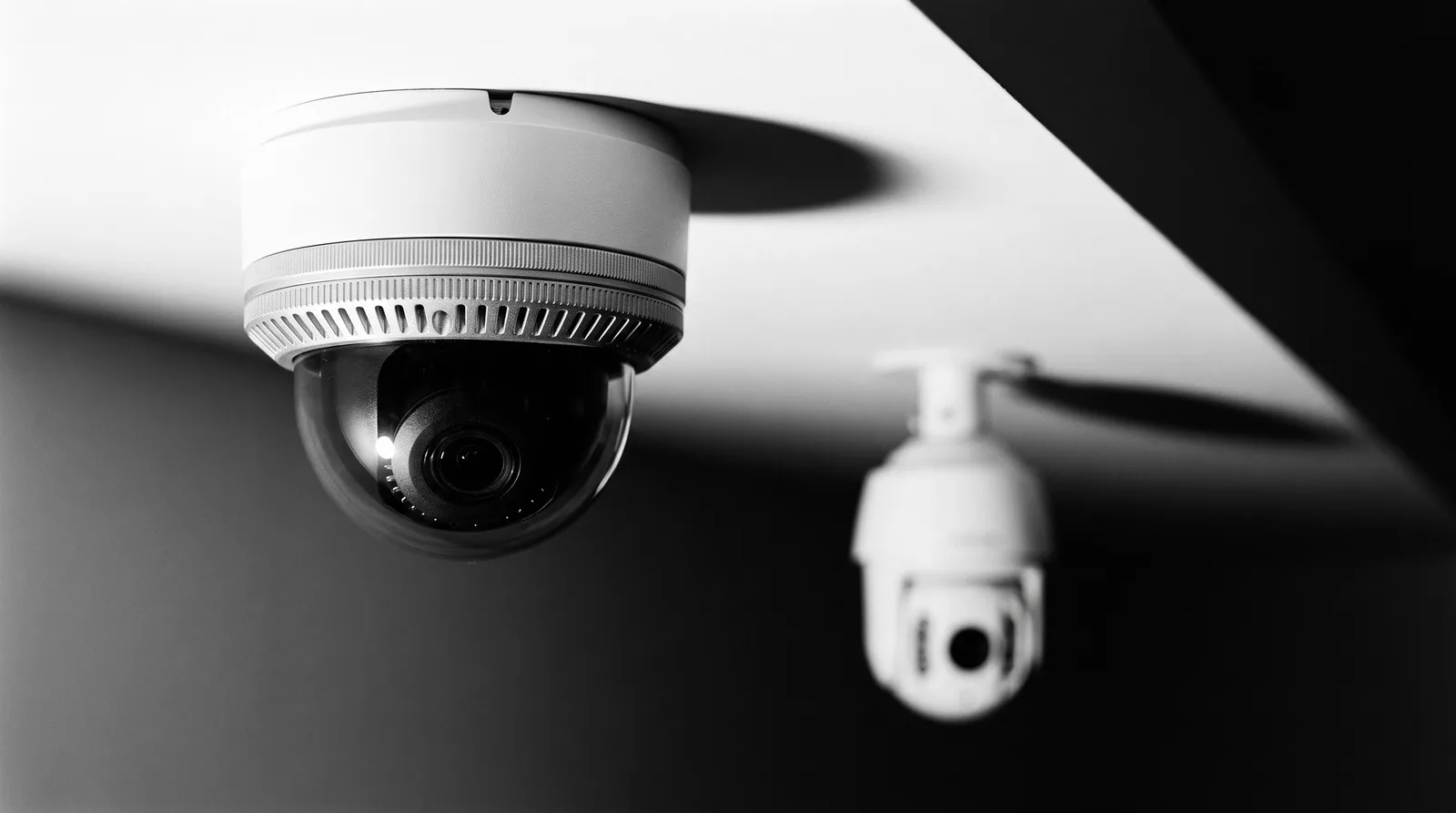
Illustrative — generated visual, not a real project photograph. Illustrative category scene
CCTV cameras
Surveillance cameras and recording equipment selected around the documented coverage and retention brief.
Explore related service
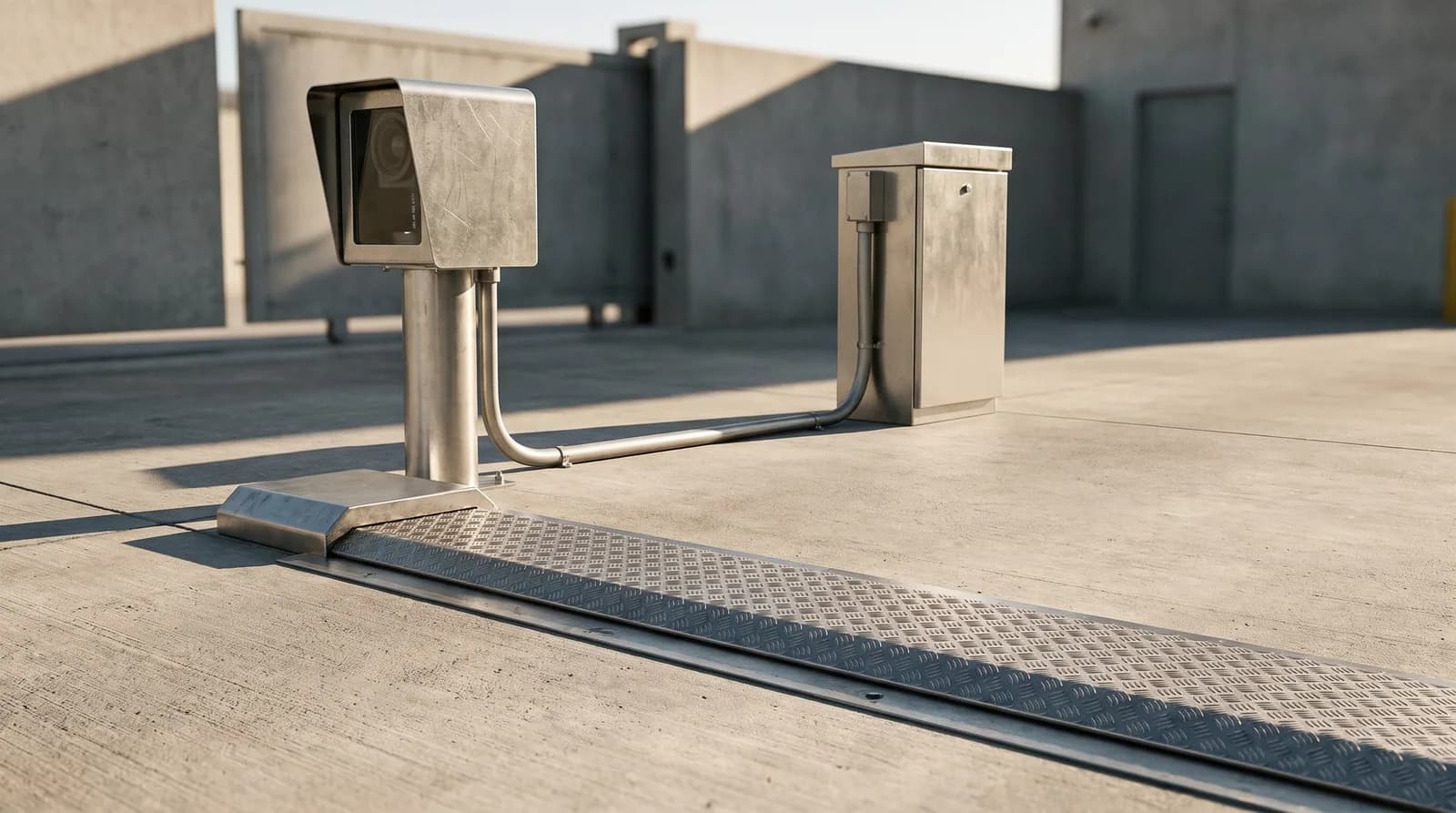
Illustrative — generated visual, not a real project photograph. Illustrative category scene
Under-vehicle surveillance
Vehicle inspection equipment for an agreed security-screening workflow at controlled entry points.
Explore related service
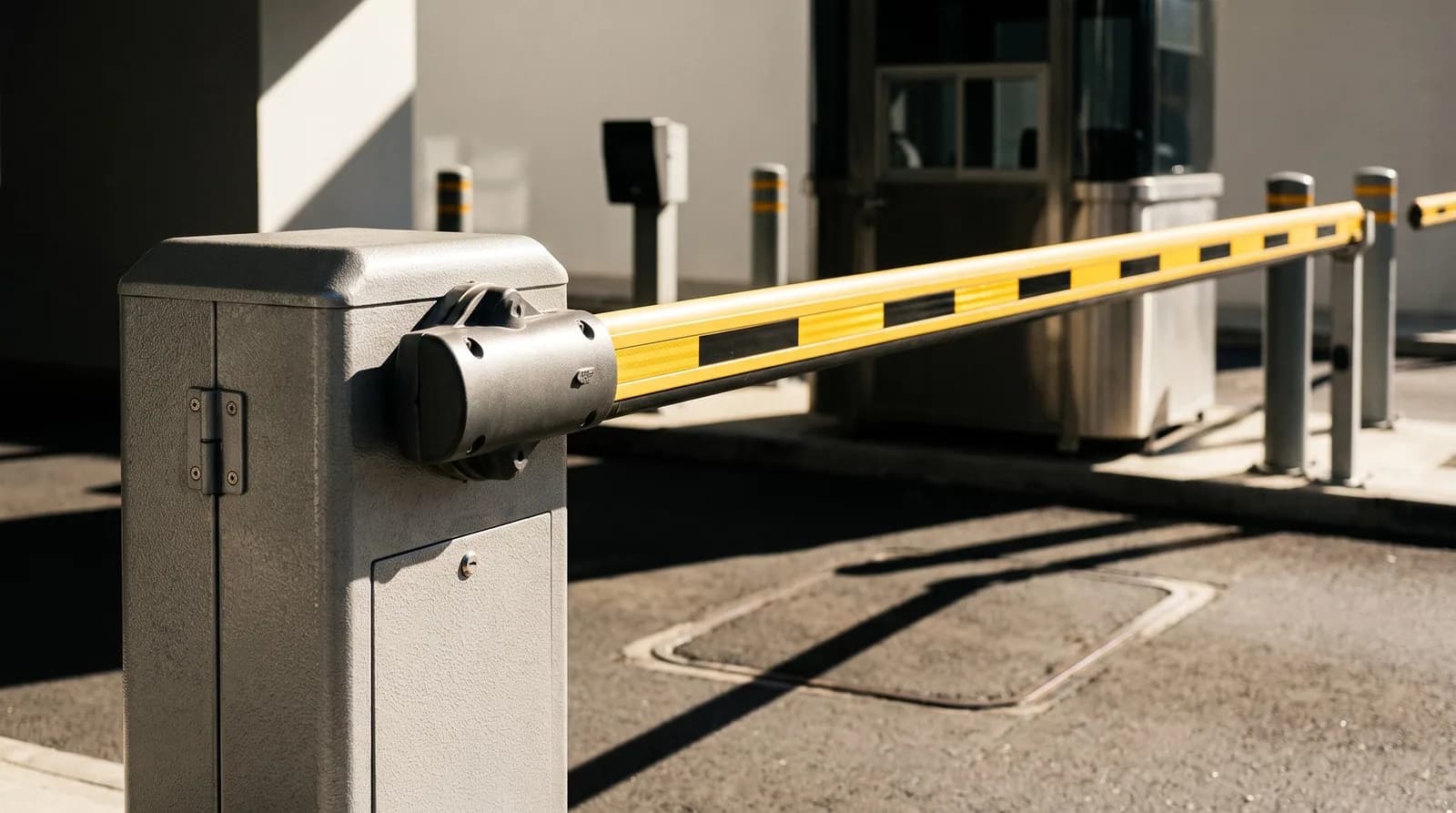
Illustrative — generated visual, not a real project photograph. Illustrative category scene
Boom barriers & motorised gates
Vehicle access equipment coordinated with entry permissions, safety interfaces and the site's traffic plan.
Explore related service
Illustrative — generated visual, not a real project photograph. Illustrative category scene
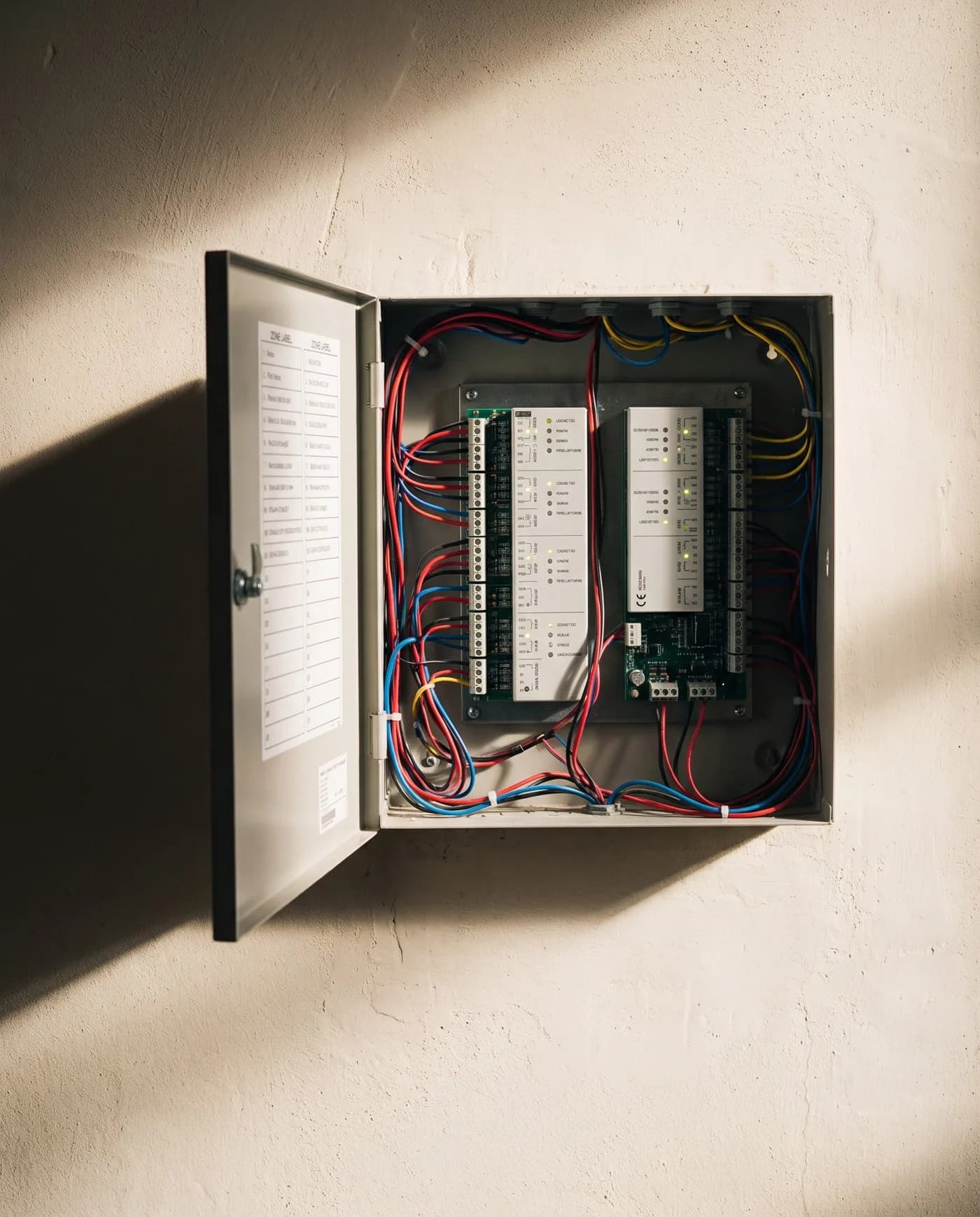
Fire alarm equipment
Detection and alarm equipment for the fire consultant's agreed design and applicable project requirements.
Explore related service
Illustrative — generated visual, not a real project photograph. Illustrative category scene
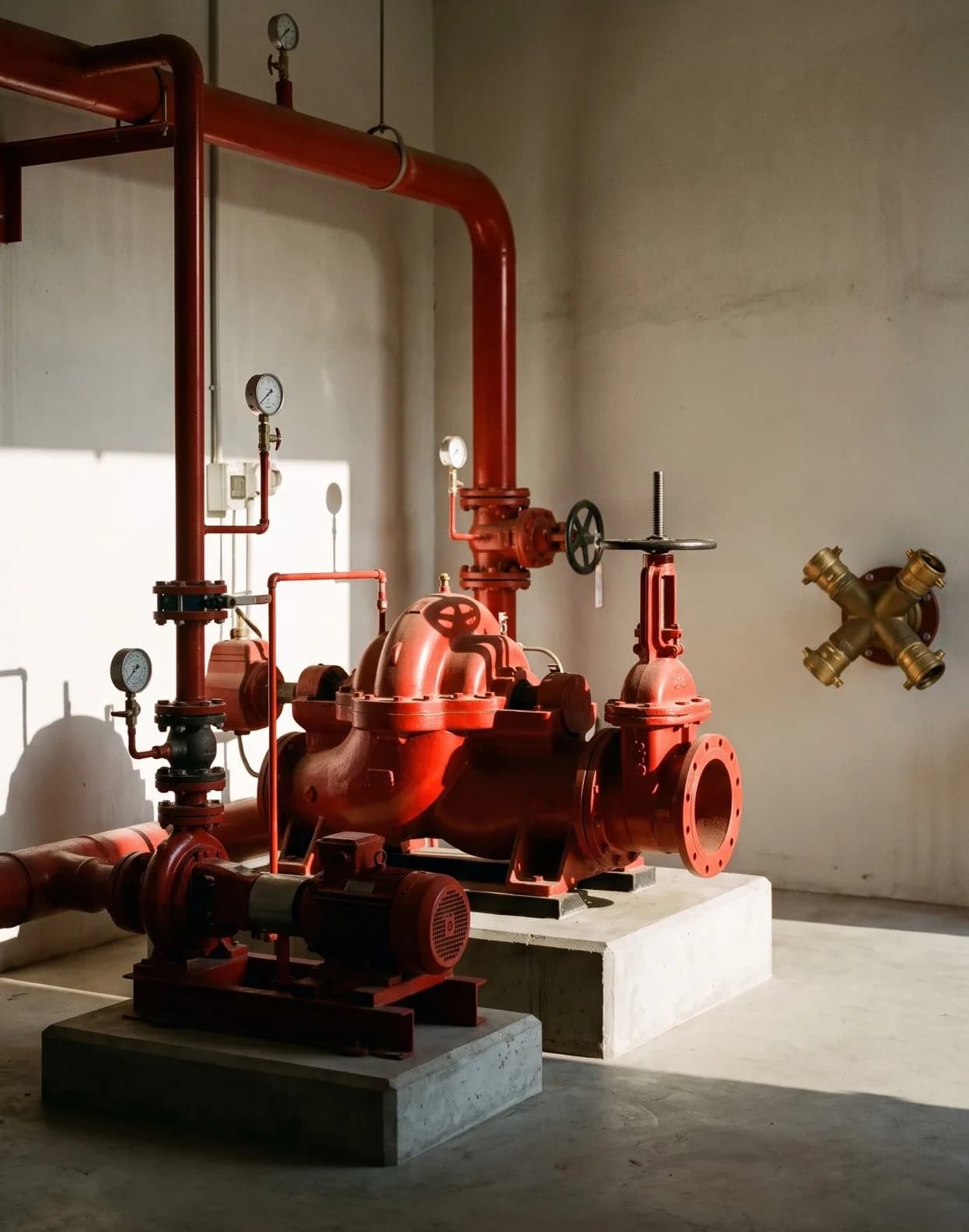
Fire hydrant equipment
Hydrant equipment coordinated with the approved fire-protection design, water supply and commissioning scope.
Explore related service
Illustrative category scene
Fire-protection goods
Extinguishers, hose reels, fire blankets, egress signage and cabinet hardware, supplied against the building's agreed fire-protection schedule with refill and inspection dates recorded.
Explore related service
Explore 2 more equipment categories
Illustrative — generated visual, not a real project photograph. Illustrative category scene
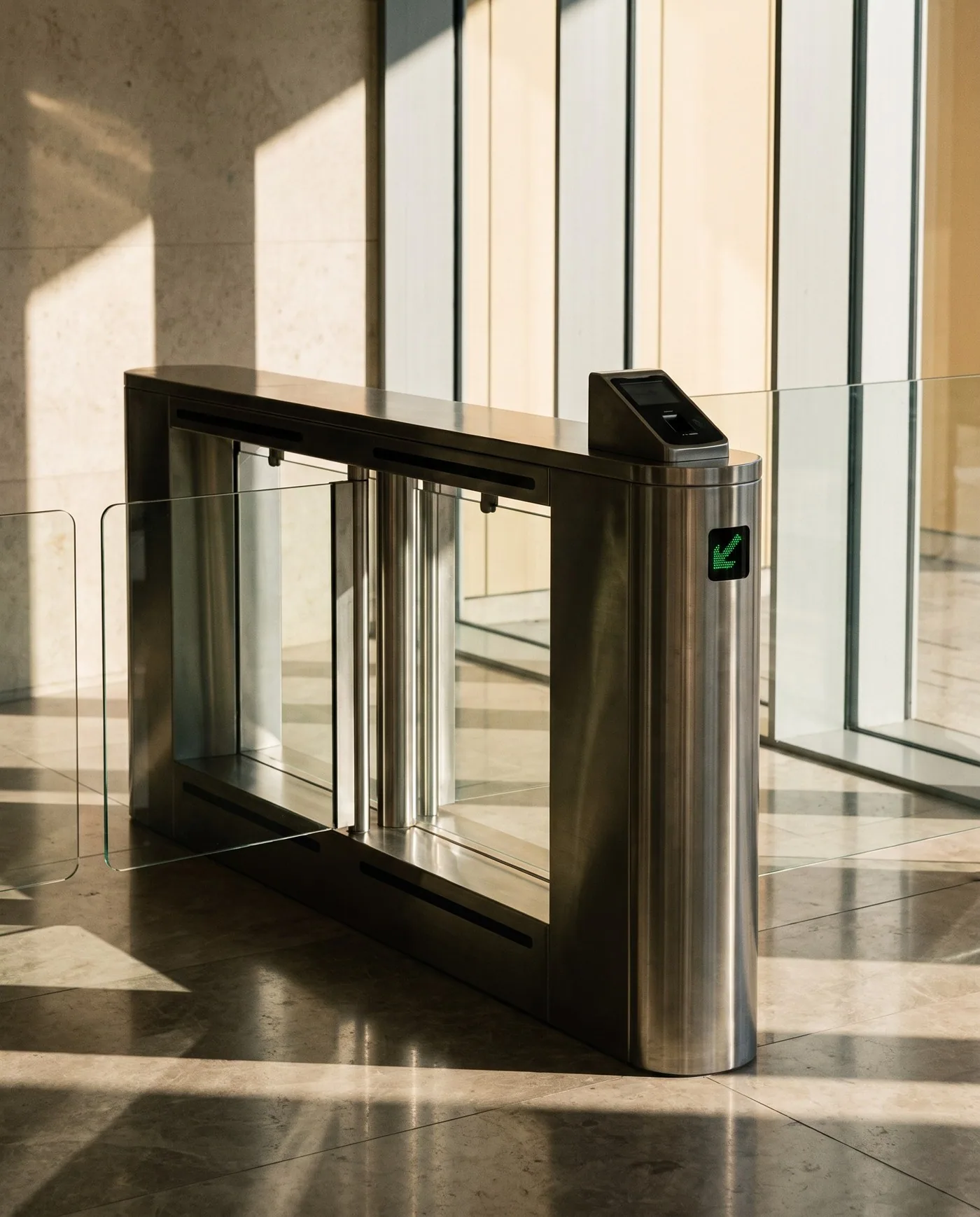
Access control equipment
Readers and door-control equipment coordinated with access permissions and the project's door and egress requirements.
Explore related service
Illustrative — generated visual, not a real project photograph. Illustrative category scene
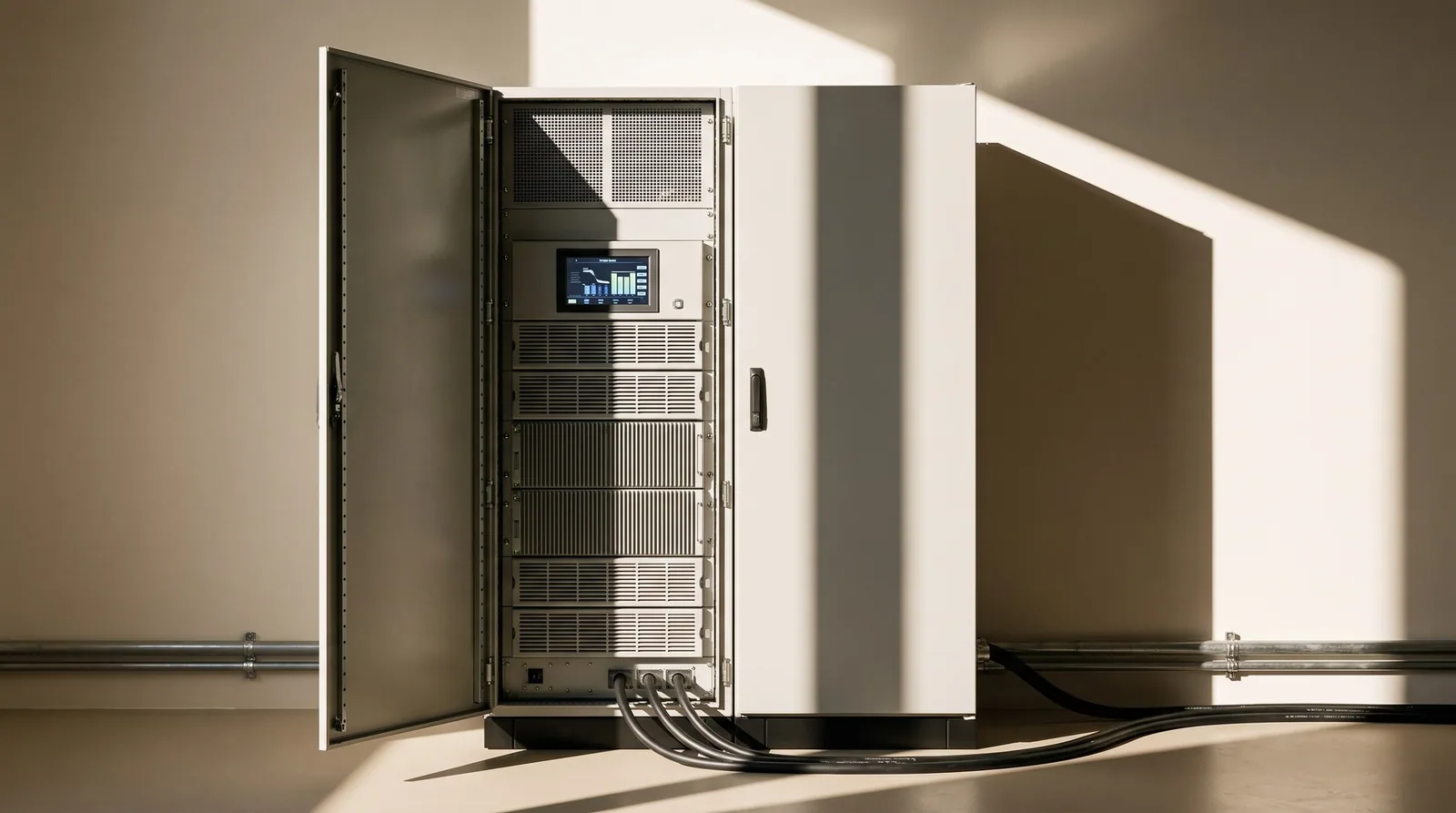
Online UPS equipment
UPS equipment selected against the connected load and a confirmed backup requirement.
Explore related service
· Frequently asked
Industrial —
what buyers ask first.
What systems can TechnoGuru support for a factory, warehouse or logistics hub?
For factories, godowns, warehouses, tea estates, logistics hubs and production units, TechnoGuru can plan and integrate CCTV and perimeter surveillance with long-range cameras, warehouse monitoring, PA and announcement, fire alarm and fire-hydrant safety systems, access control with attendance / biometrics, boom barriers, gate automation and bollards where required, industrial Wi-Fi, fibre and structured cabling, control-room display systems, network- and server-rack planning, online UPS (with BESS-based backup where required), digital safety signage, electronic rodent-control systems, security sensors and intrusion alerts, and IT infrastructure for both office and warehouse — supported under preventive-maintenance AMC.
How is industrial security different from commercial CCTV?
Industrial CCTV uses hardened IP67/IK10 cameras, perimeter analytics, ANPR and UVSS at vehicle gates, and 90+ days of storage retention — sized to hazardous-area classifications and contractor flow. Industrial sites have hazardous-area classifications, larger perimeter footprints, contractor flow at scale, harsh thermal and chemical environments, and tighter compliance regimes. CCTV must use hardened cameras (IP67/IK10 ratings), perimeter analytics for trespass detection, ANPR and UVSS at vehicle gates, and storage retention sized to actual incident-investigation needs (typically 90+ days).
What's the right network architecture for an OT/IT environment?
Strict OT-IT segmentation — the OT network is air-gapped or segmented behind unidirectional gateways from the IT network, with separate VLANs, dedicated industrial switches and DPI firewalls. The OT network (DCS, SCADA, PLC, instrumentation) is air-gapped or segmented behind unidirectional gateways from the IT network (office, SAP, email). We design with separate VLANs, dedicated industrial switches, and DPI firewalls between segments. Network security here is a compliance requirement, not an option.
How do you handle fire safety in industrial premises with hazardous-area classifications?
Industrial fire safety begins with proper hazard-area classification (Zone 0/1/2 per IS/IEC 60079), intrinsically-safe detection in each zone and suppression matched to the protected asset. Hazard-area classification (Zone 0/1/2 per IS/IEC 60079) and certified intrinsically-safe detection equipment in each zone. Detector type (heat, IR, UV, multispectrum) is matched to the fuel risk. Suppression strategy — water mist, FM-200, CO₂, foam, dry powder — is specified per the protected asset. We coordinate with the plant's process-safety lead on every design.
What's an industrial UPS-and-BESS architecture meant to do?
Industrial UPS-and-BESS does two things: ride-through during grid events for critical instrumentation, control systems and emergency lighting; and peak-shaving against demand-charge tariffs, where the BESS discharges during peak windows to cut the demand peak that drives the bill. How quickly that pays back is a function of your demand-charge exposure and load profile, not a published figure — we model it and share the commercial case, including an indicative payback, in a written estimate after review.
Can you take on a brownfield retrofit without shutting down operations?
Yes — brownfield retrofits are sequenced around the plant's shutdown calendar, with new and legacy systems running in parallel during migration so critical systems are never uncovered. Sequenced around the plant's shutdown calendar, run new and legacy systems in parallel during the migration, and schedule controller swaps for off-hours or planned-maintenance windows. Critical systems are never left without coverage during the migration.
How do you coordinate with the EPC contractor and the plant's own electrical and instrumentation team?
Coordination with EPC and the plant's E&I team runs through a documented interface schedule agreed at design stage, with hand-off points written and signed against the single-line diagram. A documented interface schedule agreed at design stage. Our scope, the EPC's scope and the plant's scope are mapped against the single-line diagram, with hand-off points written and signed. Cause-and-effect for fire, gas detection and emergency shutdown is integrated with the plant's existing DCS/SCADA where it exists. We do not work around the EPC; we work with them to a coordinated commissioning plan.
What's the right approach to perimeter security at a large industrial site?
Industrial perimeter security is layered: ANPR and UVSS at vehicle gates, intelligent fencing or beam intrusion along the boundary, hardened thermal-and-IP cameras for night, plus guard-tour analytics. ANPR and UVSS at vehicle gates, intelligent fencing or beam intrusion detection along the boundary, hardened thermal-and-IP camera coverage for night and adverse-weather visibility, and patrol-route discipline backed by guard-tour analytics. The aim is detection at the perimeter rather than discovery at the asset — the further out the response begins, the better the outcome.
How do you handle warehouse and logistics-hub specifics versus heavier industrial sites?
Warehousing emphasises asset-tracking, dock-management and high-bay aspirating fire detection; heavier industrial sites add hazardous-area classification, gas detection and OT-network discipline. Asset-tracking, dock-management, vehicle-loading discipline and high-bay fire detection (typically aspirating systems for early-warning at racking height). Heavier industrial sites add hazardous-area classification, gas detection, plant-integrated emergency shutdown and OT-network discipline. Both want hardened cameras, perimeter security and uptime — but the specification curves separate quickly. We design to the actual operational profile rather than a generic 'industrial' template.
Engineering decisions
Decisions that shape industrial projects
Decision · Networking & IT
On-premises IP PBX vs cloud telephony
You are deciding where the call platform should live for a site whose voice has an operational job, not just a desk-phone job.
Decision · Networking & IT
Single-mode vs multimode fibre backbone
You are specifying the backbone fibre grade for a new build or a re-cable and want it sized for the building's life rather than the current switch generation.
Decision · Power & UPS
Online UPS vs BESS-backed backup — the right ride-through
You are deciding how to protect a critical load and are weighing instantaneous ride-through against longer-duration backup or an energy strategy.
Decision · Power & UPS
Online UPS vs line-interactive UPS — the topology decision
You are choosing UPS topology for a specific load group and need to know whether a transfer event is acceptable to the equipment behind it.
Engineering toolkit
Tools we use for industrial work
Calculators and reference checkers our engineers reach for first on projects in this sector.
- BMS · BESS
BESS Sizer
Peak demand + solar + storage strategy in, indicative LFP battery size, inverter rating, daily throughput and cell life out. Vertiv, Delta and Fuji-class deployments.
LFP · kWh · cell lifeOpen - ELV · Surveillance
CCTV Coverage Calculator
Building dimensions and risk profile in, recommended camera count, retention storage and bandwidth out. Densities are planning conventions, not a code rule.
Cameras · TB · MbpsOpen - Life-safety · 28 states + 8 UTs
NBC Fire-Safety by State
State or union territory, building height and occupancy in — list of sprinkler, voice-evac PA, wet-riser and Fire-NOC triggers out, with explicit source-status tiering across all 28 Indian states and 8 union territories.
NBC 2016 · state ruleOpen
/ Engineering notes
Long-form reading for industrial projects
Insight
CCTV design for hospitals: privacy zoning, retention windows and the camera count nobody calculates
Hospital surveillance is not a commercial brief with a medical sticker. Patient privacy, infection-control zoning, NABH audit retention and clinical-engineering veto rights mean the camera plan, the storage sizing and the analytics rules all read differently. The design discipline we have built around it.
Insight
Redundancy & failover engineering: N+1, 2N, hot-standby and the discipline of designing for the day something fails
Cross-discipline redundancy philosophy — when N+1 is enough, when 2N is the only honest answer, how cold/warm/hot-standby actually behave at switchover, and the failover patterns that separate a building from a critical-infrastructure asset.
Insight
UPS runtime: the misconceptions that turn a 30-minute spec into a 12-minute reality
UPS holdover on the catalogue is a nameplate kVA at unity power-factor and a fresh battery bank at 25°C. UPS holdover in the building is the actual load at the actual power-factor on a 30-month-old battery bank at the actual operating temperature. The gap is where the runtime spec breaks down.
Every calculator, checker and planner curated for industrial projects lives on one directory page.
All industrial tools →· Begin
Project in industrial?
Begin a brief.
The first reply will come from a project lead, not a sales gateway, within two working days.