Skip to content
TechnoGuru — Think Technology, Think TechnoGuru
01 / MethodSeven stages · 7 chapters

The seven stages
behind every project.

Sixteen years of practice have given us a delivery methodology we trust. It is documented, repeatable and accountable — and it is what we mean when we say turnkey.

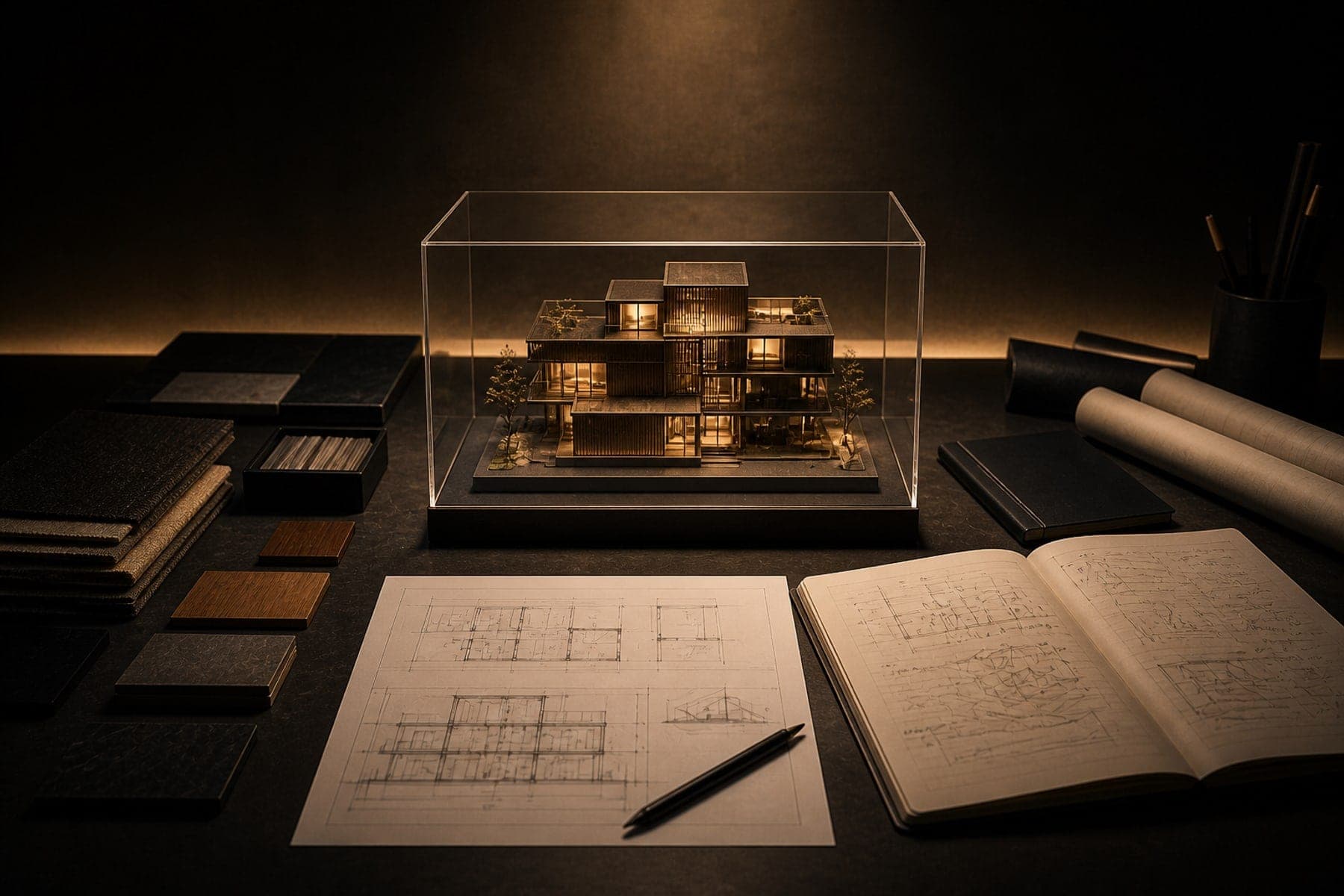
A pinned project board — drawings, schedules and notes that govern delivery.

02 / Principles

Six commitments
we will not negotiate around.

The principles underneath the method. They survive every project, every brand cycle, every team change.

01

Architecture first

The systems serve the building, not the other way round. We work to the architect's intent and elevate it; we do not impose our discipline over it.

02

Design for year three

Every loop, every panel, every controller is sized for the load and use-pattern the building will have three years after handover, not on launch day.

03

One contract, one accountable hand

Where the project crosses three or more disciplines, we deliver as a single integrated contractor. The seams between disciplines become our problem, not yours.

04

Documented, not promised

Response times in writing. Test plans in writing. Brief in writing. Brand choices in writing. We do not rely on memory or relationships to resolve disputes that should never have arisen.

05

Brand-neutral by design

Forty-plus brand ecosystems, vendor-neutral specifications. Our compensation is unaffected by the brand we recommend; the recommendation follows the project.

06

After handover is when integration begins

AMC is the practice that distinguishes serious systems integration from project-by-project installation. Every system we hand over is enrolled, calendared and answerable.

Engineering pack open on a worktop — single-line diagrams, panel layouts, cable schedules.

· Design earns the premium

Drawings before cable.

03 / The work, end-to-end

From first conversation
to AMC.

  1. I

    45–90 minutes

    The first conversation.

    A serious project begins with a serious conversation. We meet — at our Lachit Nagar office, at your site, or by video — and we listen first. The questions we ask early are the ones that decide everything afterwards: who will use the building, when, in what mood, against what brief from your architect, against what operational reality your facilities team will be expected to maintain.

    We do not present a slide deck on the first call. We take notes. By the end of the meeting we will have a working sense of the brief, the budget envelope, the architectural constraints, the timeline, and whether what you are asking for is actually what you need.

  2. II

    5–10 working days

    The written brief.

    From the first conversation, we write a one-document brief: scope, constraints, success criteria, risks, exclusions and the budget envelope you have agreed. The document goes to you for review and amendment. It sits underneath every subsequent decision and protects both of us from the slow drift that turns reasonable projects into unreasonable ones.

    If the brief is clear, the work that follows is fast. If the brief is unclear, we will say so before we sign anything. We will not chase a budget against a moving target.

  3. III

    3–8 weeks

    Design and engineering.

    Design is where the project earns its premium. We produce a complete engineering pack — architectural-coordination drawings, single-line diagrams, panel and rack layouts, cable schedules, controller programming pseudo-code, acoustic and lighting calculations, BMS points lists, surveillance and storage calculations, written cause-and-effect matrices for life-safety. We attend the architect's coordination meetings as a discipline lead, not a vendor.

    Every system is designed to the longest meeting, the largest event, the loudest film, the worst-case fire — and then tuned to feel effortless against that ceiling for everyday use. We design for the building as it will exist in year three, not on launch day.
  4. IV

    Concurrent with engineering

    Procurement.

    We work across forty-plus manufacturer ecosystems selected by project fit, availability and client requirements. Procurement runs through our central desk in Guwahati; international shipments are routed through Jebel Ali (Dubai) customs into the destination market. We coordinate factory lead times, cross-border customs and last-mile freight against the architect's commissioning calendar so the build never stops waiting on us.

    Brand selection follows the project, never the other way round. Our compensation is unaffected by which brand we recommend. Where two brands are equally suitable, we will say so and let you choose; where one is decisively right, we will recommend it and explain why, in writing.

  5. V

    Project dependent

    Installation.

    Installation is staged against your civil contractor's calendar. Our cable-pull engineers, panel-build technicians, network technicians and AV riggers work to a published shop-drawing schedule, with site supervision by a named project lead who is on-site daily during active phases and whose number you have. We label, document and photograph every installation against the as-built drawing pack — the document that will protect your maintenance team five years from now when somebody needs to find a specific termination.

  6. VI

    1–4 weeks

    Commissioning.

    Commissioning is where the system is born. We test against a written test plan with documented pass criteria for every device, every cause-and-effect link, every interlock, every redundancy path. We calibrate cinema rooms with measurement microphones, balance audio chains to reference, run live fire-cause-and-effect drills, and stress-test the network against year-three load. The commissioning report is signed by our project lead and your representative; it is the document you will hold us to.

  7. VII

    Day one and forever after

    Handover and AMC.

    Handover is not a relief; it is a transition. We deliver a documentation pack — as-built drawings, panel and rack labelling schedules, controller configuration files, calibration reports, software-licence registers, AMC enrolment and an operations manual written for the people who will actually use the system. We train your team on-site, with follow-up sessions scheduled in the first quarter.

    Every install we hand over is enrolled, by default, into a documented support programme. Calendars for preventive checks. Response targets in writing. Spares held in our Lachit Nagar office for active deployments. Firmware-and-config baselines stored offline so we can recover any controller from a clean slate. After handover is when integration begins.

· One accountable hand

Turnkey, end-to-end.

Design, procurement, installation, commissioning, AMC — single contract, single project lead, single point of accountability across the disciplines.

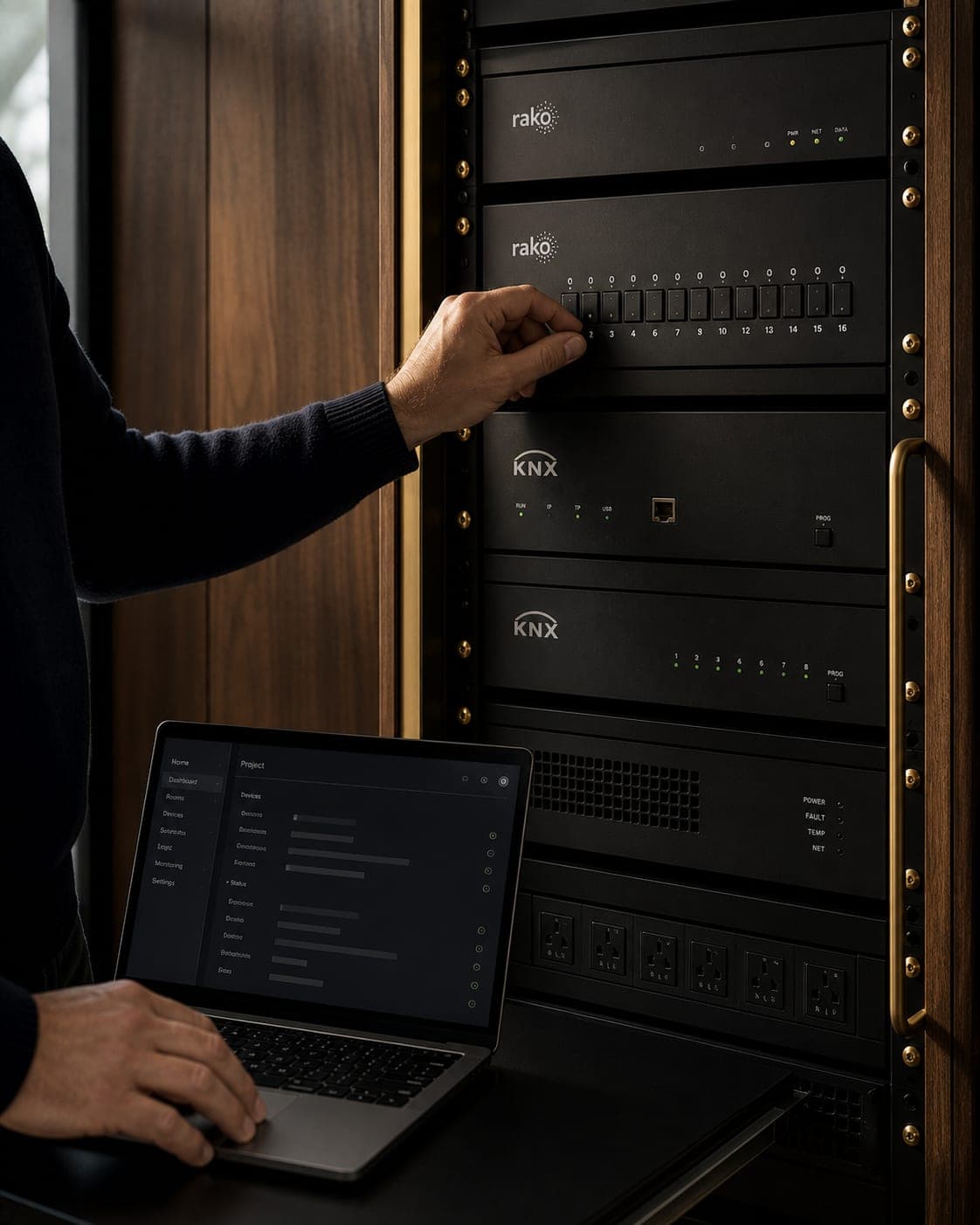
Turnkey site with rack-build, cable management and commissioning underway.

04 / On timeline

We do not promise
faster than the work allows.

A residential automation project of moderate complexity takes six to ten weeks of design and engineering before the first cable is pulled. A commercial fit-out runs eight to fourteen weeks. A turnkey hospitality or healthcare project, twelve to twenty-four. We will not compress these to win a contract. We will tell you the realistic timeline at the brief stage and we will hold to it; if anything changes, we will write to you.

05 / Begin

Begin a brief.

We will write back with a considered first reading and the stage-by-stage timeline this project would actually need.

Our Process — How we engineer, deliver and support a project | TechnoGuru