
Hospitality.
Guest experience, engineered.
Hotels, resorts, boutique stays and serviced apartments — guest-room control, in-room entertainment, PMS-integrated voice, BMS, life-safety and surveillance.
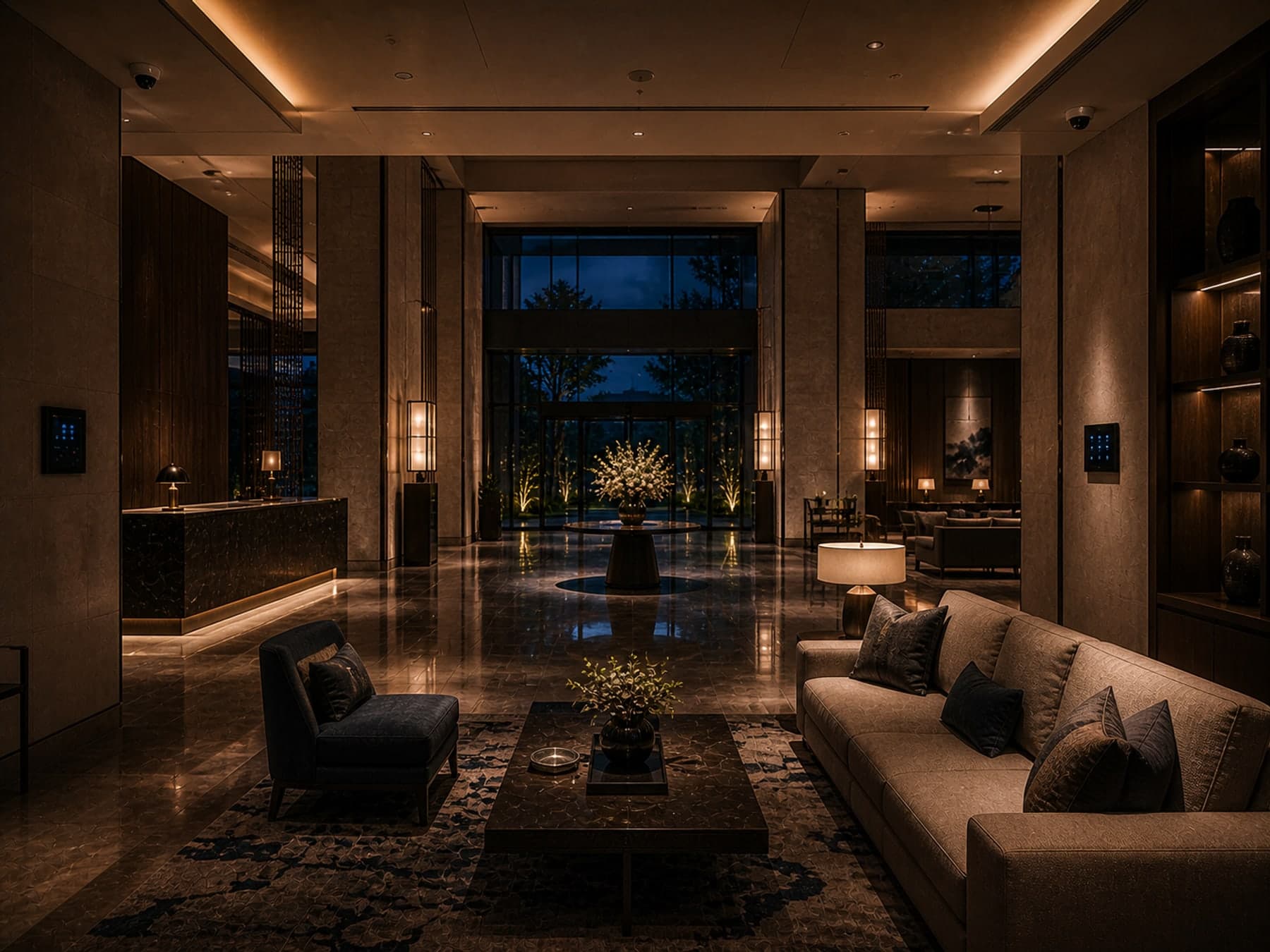
| Aspect | Piecemeal fit-out | TechnoGuru — coordinated |
|---|---|---|
| Life safety | Fire alarm sized only to pass inspection | Detection and voice evacuation engineered to NBC 2016 and the building's layout |
| Guest experience | AV, music and automation added by separate vendors | Room automation, AV and background music planned as one guest journey |
| Operations | Several support numbers across trades | One maintenance contract across the property's systems |
Educational comparison of delivery models — not a statement about any specific installer.
A guest-room is not a residence in miniature. It is an operational unit that must reset itself between every stay, recognise housekeeping, surface the right language at the right moment, defer gracefully on check-out, and never put the guest in front of a control surface they need to be taught. We engineer hospitality guest-room control to that operational discipline — PMS-integrated occupancy sensing, do-not-disturb propagation, housekeeping mode, multi-language signage on the bedside panel and a single reset gesture that returns the room to its check-in baseline without housekeeping intervention.
Around the guest-room sits the rest of the hospitality estate — lobby, restaurants, ballrooms, fitness, pool and back-of-house. Each carries its own AV, lighting, audio, access and life-safety scope, and each has to defer to the front-office and engineering operations team rather than the guest. Our hospitality fit-outs are engineered as one connected system: a BMS that catches a single fan-coil drawing 15% extra current before a guest files a complaint, a voice-evacuation PA that NBC will accept on first audit, addressable fire alarm cause-and-effect matrices that the local fire authority signs, distributed audio that holds the venue's sound NOC, and surveillance that the duty manager can actually use during an incident.
We engineer for the operational reality of running a property over twenty years — graceful failure modes, parts on the shelf, configuration baselines archived offline, and AMC discipline that scales from boutique stays through full-service hotels.
· Selected clients · Hospitality
Systems delivered across hospitality sites in the North-East.
- Novotel Hotels & Resorts
- Vivanta by Taj — Guwahati
- Hotel Vivor
- Attic Cafe
- Niathu Resort
- Noune Resort
- Hotel Palacio
Organisations across whose sites and facilities we have delivered systems — directly or as a specialist sub-contractor. Most engagements stay under contractual confidentiality; listing implies no endorsement or exclusivity, and trademarks remain the property of their owners. The full roster.
· What we coordinate in hospitality
From the guest room to the back of house — engineered as one property.
Hotels, resorts, guest houses, serviced apartments and banquet venues run on dozens of systems that have to behave as one. These are the systems TechnoGuru can plan, integrate and support across the property — sized to the brief, the operating model and site conditions.
Guest experience
The in-room layer a guest never has to be taught.
- Guest-room automation
- Lighting and curtain control
- Room mood scenes
- Electronic guest-room locking (RFID / mobile key)
- Bedside / door-plate panel — DND and make-up-room
- IPTV and hotel TV systems
- In-room background music
Public-area audio and video
Lobby to ballroom, one coordinated AV idea.
- Multi-zone audio — lobby, restaurant, spa, banquet, corridors
- Banquet-hall AV systems
- Conference and meeting-room AV
- Projector, LED wall and display systems
- PA and announcement systems
- Digital signage
Security and life safety
Protection and code compliance, planned together.
- CCTV and surveillance
- Access control for staff and restricted areas
- Fire alarm system
- Fire hydrant and safety systems
- Boom barrier and parking access
Network and telephony
Guest internet and back-of-house, on one backbone.
- Guest Wi-Fi and internet
- IT networking and rack setup
- EPABX / IP-PBX telephony
- UPS and power backup for critical systems
Operations and support
Engineered for years of running the property.
- BMS integration where required
- Service and AMC support
Engineered for the operational reality of running a property over its life, with AMC discipline after handover. We agree the detail privately against the drawings — no device counts, quantities or layouts are published here.
Illustrative cause-and-effect sequence: when the trigger event fires — Front-desk check-in · Room 408 (PMS event fired · arrival window 30 min.) — the integrated systems respond in order: HVAC pre-condition: Setback released, target 22°C, dehumidify 55% RH.; Welcome scene: Lighting at 35%, drapes half-open, fragrance hold.; In-room display: TV wakes to personalised welcome screen, guest name lower-third.; DND inhibit: Doorbell muted for 15 min so the guest isn't disturbed mid-arrival.; Housekeeping audit: Room flipped to 'Occupied' with timestamp; minibar and turn-down queues reset.. The animation steps through each response with the same information; use the Run and Reset controls to replay it. This is a demonstration of how the systems are wired together, not a recording from a live site.
— Cause & effect · Hospitality
Check-in. Room readies itself.
Front-desk check-in triggers room conditioning, scene pre-set, paging suppression and the housekeeping audit row — so the guest opens the door to a room already in welcome mode.
Front-desk check-in · Room 408
PMS event fired · arrival window 30 min.
- 01
HVAC pre-condition
Setback released, target 22°C, dehumidify 55% RH.
BMS - 02
Welcome scene
Lighting at 35%, drapes half-open, fragrance hold.
Automation - 03
In-room display
TV wakes to personalised welcome screen, guest name lower-third.
AV - 04
DND inhibit
Doorbell muted for 15 min so the guest isn't disturbed mid-arrival.
Automation - 05
Housekeeping audit
Room flipped to 'Occupied' with timestamp; minibar and turn-down queues reset.
BMS
· Core services
11 services
delivered to this sector.
Grouped by the engineering layer each system belongs to — the way the scope is actually coordinated on site.
Indicative coordination scope. Not every project engages every layer; the working scope is agreed against the drawings before anything is specified.
· Delivered as turnkey
Whole-property fit-outs under one accountable hand
Equipment categories
See the equipment behind the solution.
Explore equipment we supply and the services around it. The final specification follows your space, operating needs and agreed scope.
Equipment illustration
Interactive kiosks
Interactive kiosk equipment for visitor information and service-counter applications. The software and workflow are agreed for each project.
Explore related service
Equipment illustration
Kiosk LED displays
Kiosk-format LED displays for information and promotional content, selected around viewing position and the installation setting.
Explore related service
Equipment illustration
Commercial LED panels & displays
Commercial display equipment for presentation and public-facing content. Display technology and operating requirements are specified for the room.
Explore related service
Equipment illustration
Digital signage TVs & displays
Signage screens for menus, directions and information. Content scheduling and management are scoped alongside the display equipment.
Explore related service
Equipment illustration
Interactive flat panels
Touch flat panels for classrooms, training rooms and boardrooms — supplied directly and through GeM. Panel size, mounting and the room's source and control arrangement are confirmed for each order.
Explore related service
Equipment illustration
POS machines & systems
Point-of-sale equipment for retail and food-service counters. Billing software, payment interfaces and compatibility need project-specific confirmation.
Explore related service
Explore 8 more equipment categories
Equipment illustration
KOT printers
Kitchen order ticket printers for restaurant, café and hospitality workflows. The ordering system and connection method are confirmed before supply.
Explore related service
Illustrative — generated visual, not a real project photograph. Illustrative category scene
CCTV cameras
Surveillance cameras and recording equipment selected around the documented coverage and retention brief.
Explore related service
Illustrative — generated visual, not a real project photograph. Illustrative category scene
Fire alarm equipment
Detection and alarm equipment for the fire consultant's agreed design and applicable project requirements.
Explore related service
Illustrative — generated visual, not a real project photograph. Illustrative category scene
Fire hydrant equipment
Hydrant equipment coordinated with the approved fire-protection design, water supply and commissioning scope.
Explore related service
Illustrative category scene
Fire-protection goods
Extinguishers, hose reels, fire blankets, egress signage and cabinet hardware, supplied against the building's agreed fire-protection schedule with refill and inspection dates recorded.
Explore related service
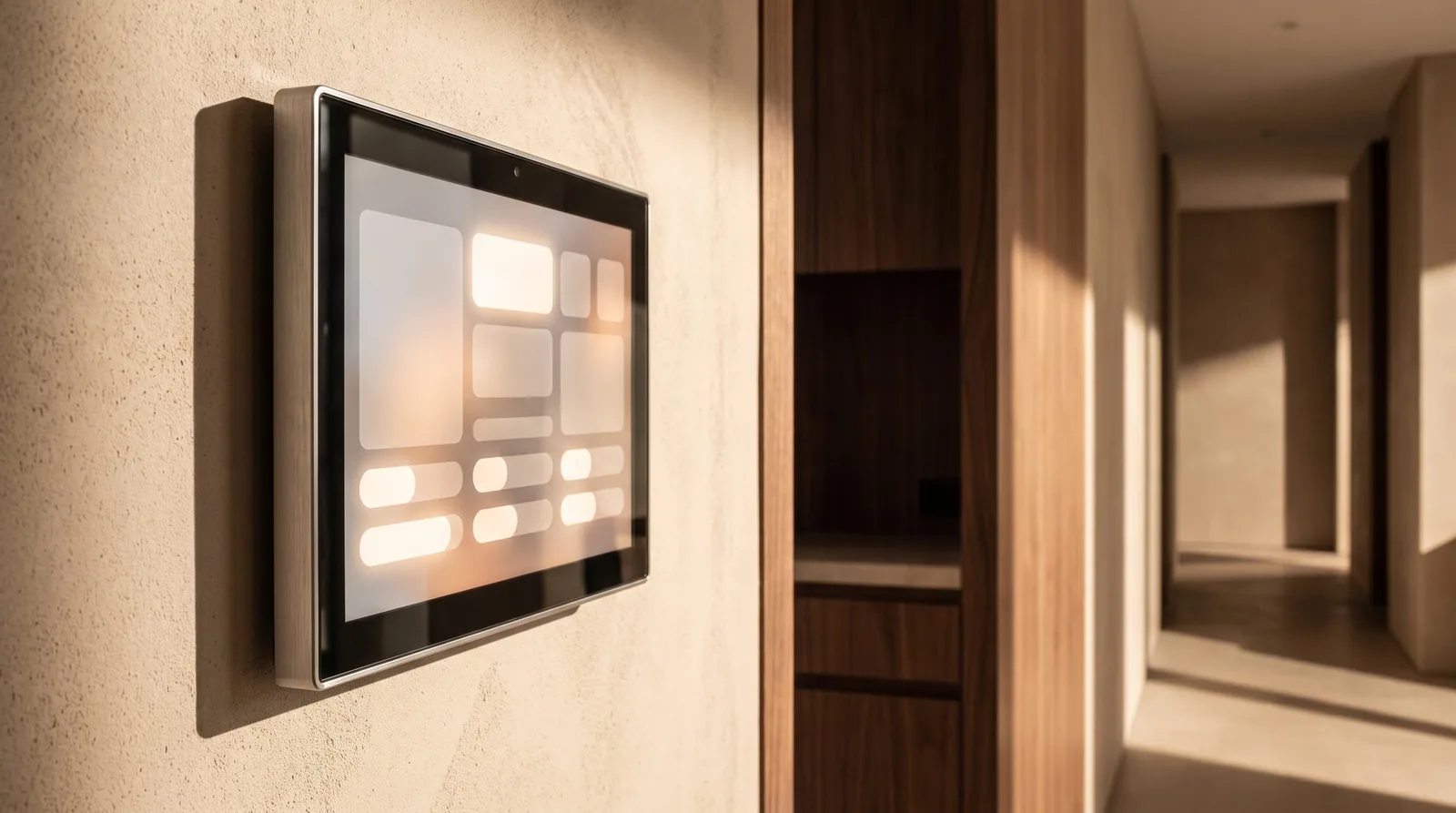
Illustrative — generated visual, not a real project photograph. Illustrative category scene
Lighting automation controls
Lighting controls and interfaces coordinated with luminaires, the control protocol and the room's operating scenes.
Explore related service
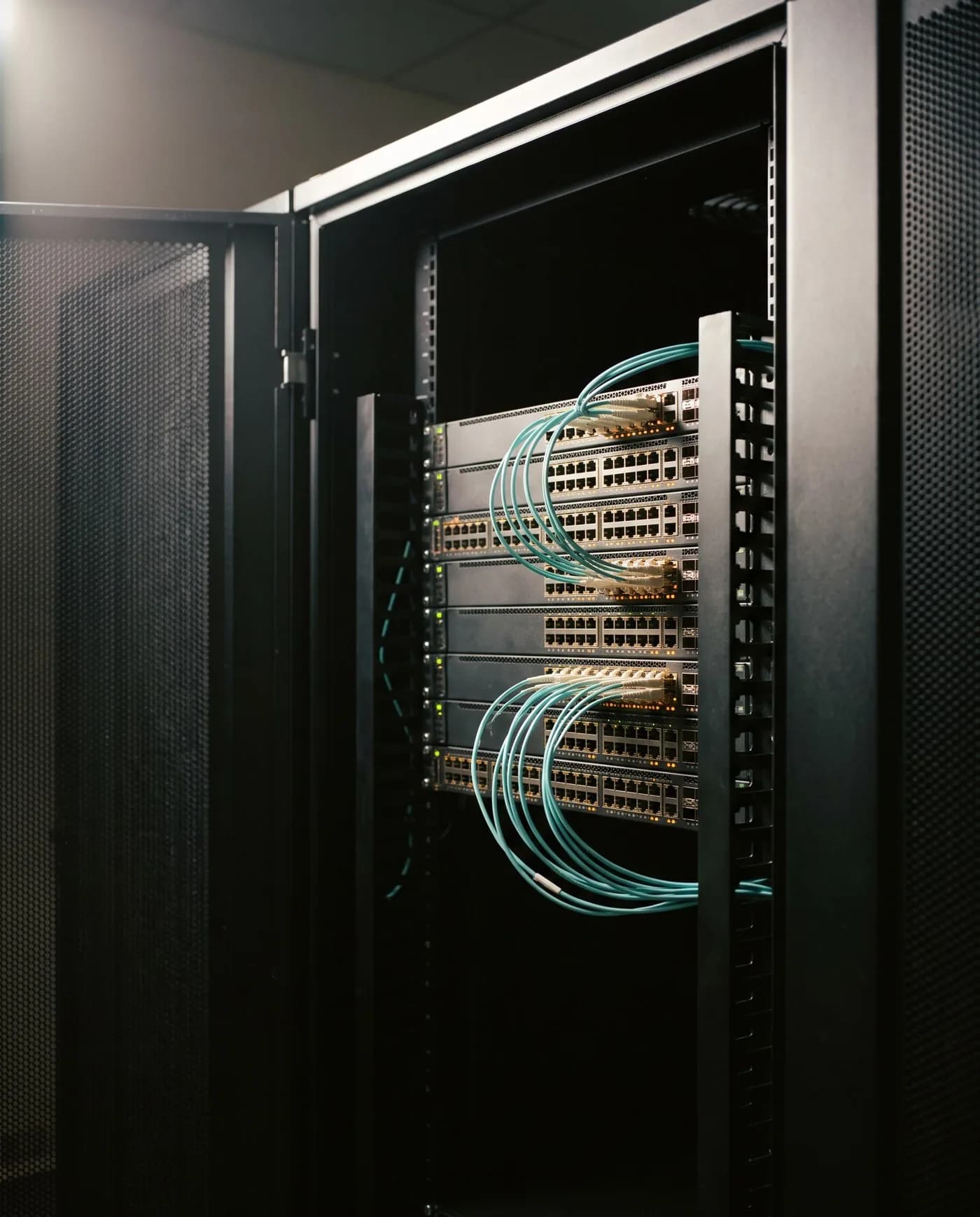
Illustrative — generated visual, not a real project photograph. Illustrative category scene
Networking equipment
Switching, wireless and network infrastructure planned around connected devices and the building's operating needs.
Explore related service
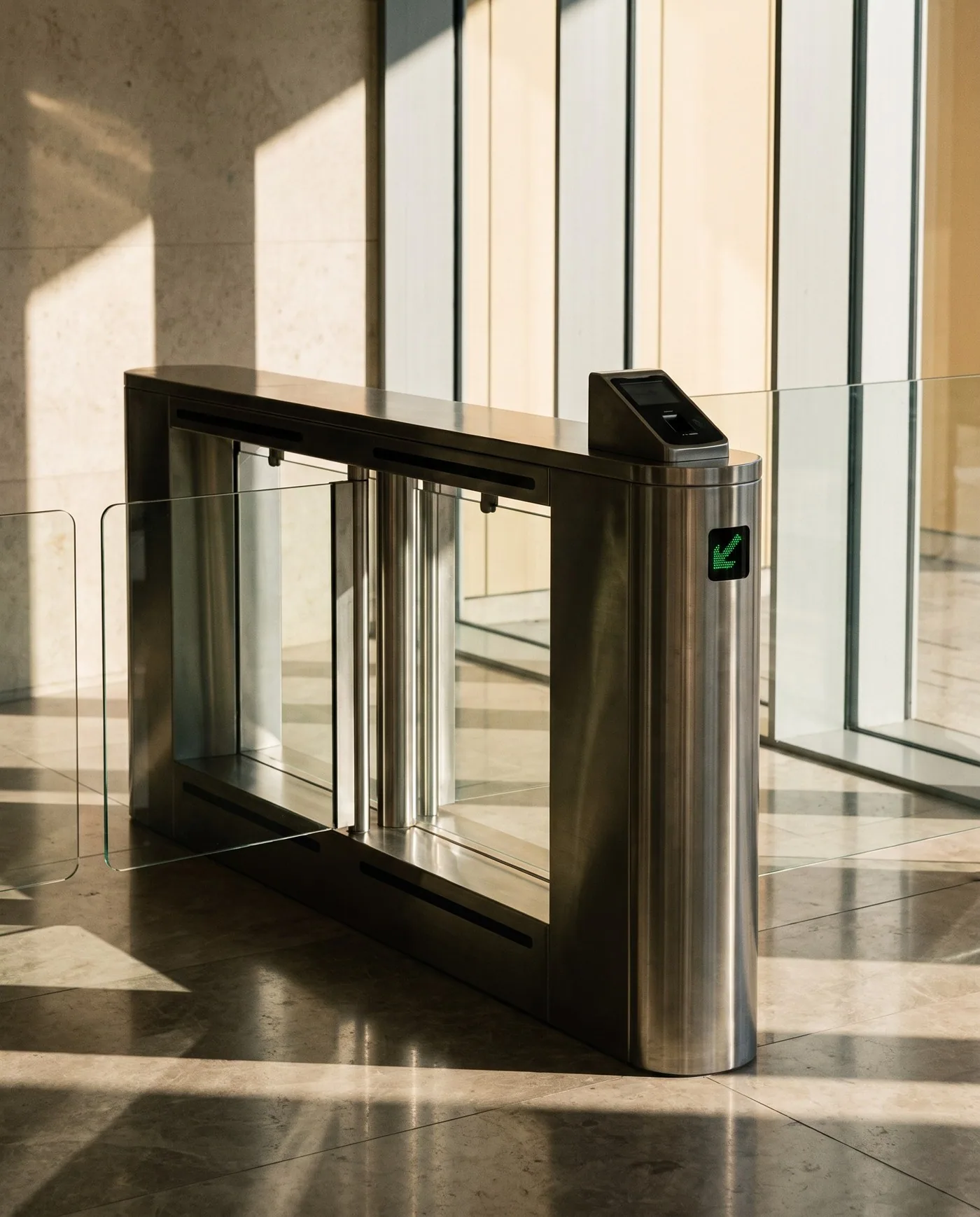
Illustrative — generated visual, not a real project photograph. Illustrative category scene
Access control equipment
Readers and door-control equipment coordinated with access permissions and the project's door and egress requirements.
Explore related service
· Frequently asked
Hospitality —
what buyers ask first.
What systems can TechnoGuru support for a hotel, resort or banquet property?
For a hotel, resort, guest house, serviced apartment or banquet property, TechnoGuru can plan and integrate guest-room automation and mood scenes, IPTV and in-room entertainment, multi-zone background music across lobby, restaurant, spa and corridors, banquet and conference AV with projectors, LED walls and PA, CCTV and access control, guest Wi-Fi and IT networking, EPABX / IP-PBX telephony, fire alarm and fire-hydrant safety systems, boom barriers, digital signage, and UPS backup for the systems that have to stay on — coordinated as one connected estate. BMS integration is added where required, and the property is supported afterwards under an AMC. Exact scope depends on the property, the brief and site conditions.
What's the difference between hotel and home guest-room control?
Hotel guest-room control adds PMS integration, housekeeping mode, language preferences and graceful check-out reversion — none of which exist in residential. Operational priorities. A hotel guest-room control system has to know who is in the room (via PMS integration), what their preferences are (lighting, climate, language), how housekeeping interacts with it (housekeeping mode, do-not-disturb), and how the system gracefully reverts on check-out. None of that exists in residential. We design hotel rooms to that operational discipline.
Does the BMS in a hotel really pay back?
The mechanism is strong, but the number depends on your tariff and your existing control maturity, so we do not publish one. A hotel runs HVAC and lighting 24/7 across hundreds of rooms, which is why chiller and AHU control is where the load sits. Beyond energy, the BMS catches faults early — a fan-coil drawing more current than its peers — before guests file complaints, which is operationally significant for any property tracking review scores. We model the case against your actual tariff and load profile and share it, with an indicative payback, in a written estimate after review.
Which life-safety systems are mandatory under hospitality codes?
Hotel life-safety scope under NBC 2016 covers automatic fire detection and alarm, voice-evacuation PA, a wet-riser hydrant network, emergency lighting, smoke management and fire NOC compliance, each triggered by occupancy and height thresholds. NBC does not specify addressable versus conventional detection — that is an engineering choice — but hotel floor plates and phased evacuation almost always make addressable the defensible one. We engineer to these as the baseline and document the cause-and-effect matrix that ties them together for the local fire authority.
Can your AV in restaurants, ballrooms and bars handle live performances?
Yes — our hospitality F&B AV is engineered for live performance up to concert SPL with cardioid sub arrays for residential boundary control. Ballrooms get configurable PA with line-array and centre-cluster options. Bars and lounges get DJ-booth integration, façade lighting, and acoustic isolation that lets the venue hold its sound NOC.
How do you handle PMS integration for the in-room phone, voice and entertainment?
PMS integration runs through the PMS interfaces the Grandstream, NEC and Yeastar IP-PBX platforms publish, against property systems including Opera, IDS and Hotelogix — check-in fires the room-prep scene, registers the guest's name and language preference, opens billing and configures voicemail; check-out reverses every step. The interface is specified per property against that property's PMS version, documented, and tested on site before soft-opening.
What's the right approach to pre-opening commissioning so the soft-launch is not a stress test?
Pre-opening commissioning follows a written test plan coordinated with the hotel opening programme. Guest-room functions, PMS interfaces, life-safety interactions and PA are tested within the agreed scope, and the operations team receives training. The time required depends on system scope, procurement, approvals, room readiness and coordination; outstanding defects and opening dependencies are recorded.
How do you handle the technology refresh cycle on a hotel property over its operating life?
Hotel technology refresh runs to a written lifecycle plan: 7–10 years for in-room control and PMS phones, 8–12 years for CCTV and access, 12–15 years for BMS controllers. A written lifecycle plan agreed with ownership at handover. In-room control panels and PMS-integrated phones typically have a 7–10 year cycle; CCTV and access control 8–12 years; BMS controllers 12–15 years. We flag end-of-life 18 months ahead with staged migration options, so refresh becomes a planned capital expense rather than a forced one driven by failure.
Can you serve a small boutique stay or are your projects only for larger properties?
Yes — we serve both 12-room boutiques and 200-key resorts to the same engineering discipline, sized to a budget the property can sustain. Both — and the design discipline is the same. A 12-room boutique gets the same standard of guest-room control, PMS integration, life-safety and PA we deliver to a 200-key resort, sized to a budget the smaller property can sustain. We will tell you up-front if the brief and budget are misaligned, rather than promising a five-star spec on a three-star envelope.
What should a hotel project share before asking TechnoGuru for an estimate?
Share the architectural drawings, the room schedule or key count, the banquet and F&B space list, the BOQ where one exists, and the operator's brand standards if the property is flagged — that is enough for a coordinated scope review and a written estimate after review. TechnoGuru does not publish standard prices or budget bands; commercial figures are prepared per project once the drawings, BOQ or a site survey have been reviewed, because the same key count can carry very different system depths. Earlier is better: at drawing stage the containment, riser and equipment-room decisions are still free to make.
Can hotel procurement and vendor-registration teams request TechnoGuru's onboarding documents?
Yes — procurement and vendor-onboarding teams can request the vendor onboarding pack: company profile, statutory registrations (GST, PAN, IEC, Udyam/MSME, GeM seller identity), membership and credential summaries, brand authorization documents where held, and project references suitable for procurement review. Sensitive items such as bank details are shared through each organization's official onboarding channel, never published. Registration remains subject to each organization's own process, eligibility and documentation requirements. Write to info@technoguru.in with the portal or format involved.
Does TechnoGuru take hotel projects outside Guwahati?
Yes — hotel, resort and banquet projects across Northeast India and the wider eastern region are planned and delivered from the Guwahati headquarters, with GST registrations in Nagaland and Tripura supporting service and project coordination there. Site presence is mobilised per project phase — survey, installation, commissioning, handover — rather than through local branch offices, and AMC support arrangements are agreed against the property's location before contract.
Engineering decisions
Decisions that shape hospitality projects
Decision · Networking & IT
Wi-Fi 6 vs Wi-Fi 7 — which generation to design for
You are provisioning wireless for a new building or a refresh and want to size the AP grid, cabling and switching for the right generation.
Decision · Networking & IT
Managed Wi-Fi vs consumer mesh — the right wireless for the building
You are deciding the wireless class for a home, office, retail or hospitality space and want it matched to the real client load and ownership model.
Decision · AV & Audio
Architectural audio vs conventional loudspeakers — the design approach
You are choosing a loudspeaker approach for a design-sensitive space and weighing concealment and even coverage against conventional flexibility and cost.
Decision · Display & Collaboration
LED wall vs projector — the right large display
You are choosing the large-format display for a room and want it matched to the ambient light, viewing distance and how the room is used.
Engineering toolkit
Tools we use for hospitality work
Calculators and reference checkers our engineers reach for first on projects in this sector.
- BMS · Energy
Energy & Efficiency Estimator
Adjust building variables and see indicative energy and CO₂ savings (kWh) for a BMS-driven energy upgrade plus daylight-harvesting LED retrofit. Conservative; defensible in a first conversation.
kWh · CO₂ savedOpen - Life-safety
NBC Compliance Checker
Building height, type and occupancy in — the life-safety and ELV systems NBC 2016 indicates for that building, citing NBC 2016 and the relevant IS codes.
NBC 2016 · IS codesOpen - IT · Networking
Network & PoE Calculator
Sized to year-three load — switches, Wi-Fi 7 access points, PoE budget (watts), Cat6A run count, port/AP sizing. Cisco / HPE Aruba / Juniper-class enterprise gear.
Switches · APs · PoE WOpen
/ Engineering notes
Long-form reading for hospitality projects
Insight
Anatomy of a premium villa automation scope — an anonymised discipline breakdown
An anonymised, discipline-by-discipline breakdown of a real 2,800 sq-ft North-East India villa fit-out — lighting automation, shading, multi-room audio, AV, CCTV, access control, structured cabling, Wi-Fi, UPS and AMC. What each discipline actually contains, the brand bands and the trade-offs we made. Pricing is project-specific and follows a written estimate after review.
Insight
Enterprise Wi-Fi density: the attenuation realities that defeat uniform AP-class deployments
Wi-Fi density on the spec sheet is per-square-metre; Wi-Fi density in the building is per-attenuation-event between every AP and every client. Stone walls, RCC slabs, glass partitions, low-E coatings and tenant fit-outs all bend the catalogue answer. Mixed AP-class deployment is the engineering answer to the spec-sheet trap.
Insight
Voice-evacuation intelligibility: STI per seat in a real evacuation, not a clean room
Voice-evacuation PA is engineered to STI on the spec sheet and tested to STI at commissioning — but the evacuation event happens with the alarm sounding, the audience standing, the doors opening and the announcement competing against panic. The intelligibility that matters is what the evacuating population actually hears, not the empty-room measurement.
Every calculator, checker and planner curated for hospitality projects lives on one directory page.
All hospitality tools →· Begin
Project in hospitality?
Begin a brief.
The first reply will come from a project lead, not a sales gateway, within two working days.