
Retail & Malls.
Footfall, loyalty, footprint.
Shopping malls, flagship retail and showrooms — surveillance with people-counting analytics, BMS, life-safety, PA, video walls and digital signage.
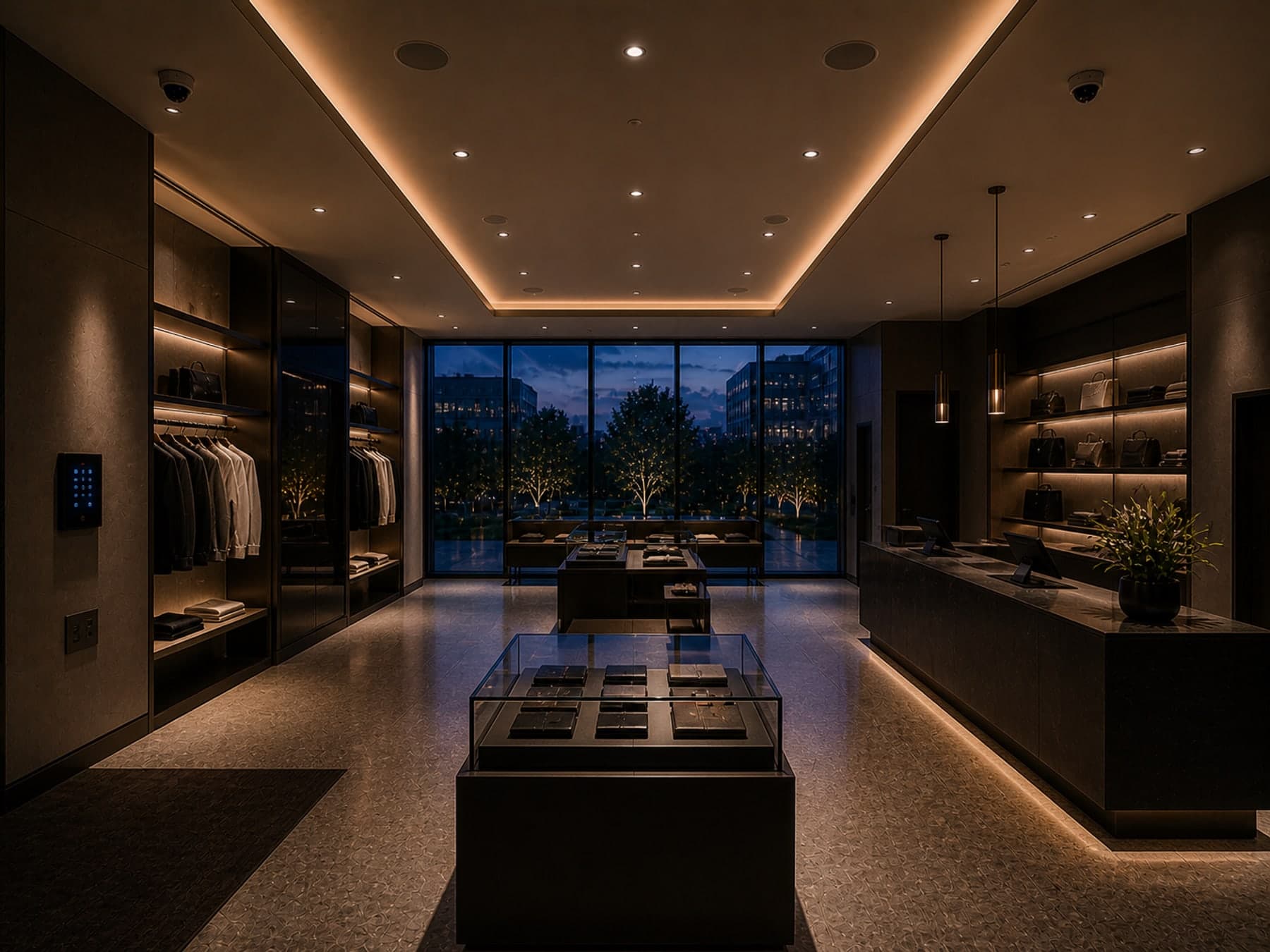
| Aspect | Piecemeal fit-out | TechnoGuru — coordinated |
|---|---|---|
| Surveillance | Cameras as a security feed only | Analytics-ready CCTV that also drives footfall and dwell dashboards |
| Life safety | PA and fire coordinated late | Voice-evacuation PA priority-linked to the addressable fire alarm |
| Tenant fit-out | Each fit-out improvises its services | A published mall-services standard every fit-out contractor builds to |
Educational comparison of delivery models — not a statement about any specific installer.
Retail systems are measured by the data they capture. People-counting analytics on the CCTV plane, dwell-time at brand windows, queue-length monitoring at checkout, footfall heat-maps for store planning. We integrate the surveillance, signage and PA so the marketing team has dashboards instead of footage.
Planning technology for a mall is mostly a sequencing exercise. The systems that touch life-safety — addressable fire detection, voice-evacuation PA and hydrant coordination — have to be designed toward the fire NOC from the first drawings, because a high-occupancy retail building cannot open without them. Surveillance and access control are planned as coverage principles agreed with the operator — entries, service corridors, car parks, high-value zones — and the specifics stay private; we never publish layouts or control-room detail. Parking automation with boom barriers, ANPR where specified, and the digital-signage backbone ride on the same structured-cabling plan, which is why designing them together costs less than procuring them apart.
Our mall and retail work in Assam and the wider North-East runs from the Guwahati practice — the BMS automation scope at PM Ekta Mall, Guwahati, delivered for NCC Limited, is the current reference of this profile. Beyond opening day, the discipline that keeps a mall's systems coherent is the published tenant-services standard: every fit-out contractor builds to the same power, data, fire-detection and BMS interface rules, so the central systems survive hundreds of tenant changes. Background music, promotional screens and mall-wide paging are zoned so the operations desk runs the floor without ever touching the life-safety layer.
· Selected clients · Retail
Systems delivered across retail sites in the North-East.
- Brahmaputra City Center
- People (Fashion & Accessories)
- Peter England
- Puma
- Sohum — The Family Store
- Easyday Club
- Linen Club
- Rosso Brunello
- Da Milano
- Amanora Mall, Pune
Organisations across whose sites and facilities we have delivered systems — directly or as a specialist sub-contractor. Most engagements stay under contractual confidentiality; listing implies no endorsement or exclusivity, and trademarks remain the property of their owners. The full roster.
· What we coordinate in retail
Music, signage, security and POS networks — across the whole floor.
Malls, showrooms, retail chains, supermarkets and lifestyle stores. These are the systems TechnoGuru can plan, integrate and support — from the customer experience on the floor to the POS network behind the till — sized to the format and supported under an AMC.
Customer experience
Sound and light that set the floor's mood.
- Store background music
- Mall-wide PA with zone-wise control
- Music and announcement systems
- Lighting automation for premium retail
- Pixel-mapped / media-façade feature lighting for flagship zones
Display and signage
The screens that promote and inform.
- Digital signage
- LED displays and promotional screens
- Queue and billing display support
Security and access
Protecting stock, staff and shoppers.
- CCTV and surveillance
- People-counting / analytics-ready CCTV where required
- Electronic article surveillance (EAS) anti-theft gates where scoped
- RFID stock-accuracy and asset tracking where scoped
- Access control for staff areas
- Intrusion detection with hold-up / panic alarms
- Security sensors where required
- Boom barrier and parking integration
Network and POS support
Tills, Wi-Fi and back-office on one network.
- Wi-Fi and networking
- POS-network cabling
- IT-rack setup
- UPS backup for networking, security and POS systems
Life safety and support
Code-compliant safety, maintained over time.
- Fire alarm system
- Fire safety systems
- AMC and service support
Analytics-ready CCTV and footfall features are scoped where required. We agree the detail privately against the drawings — no device counts, quantities or layouts are published here.
Illustrative cause-and-effect sequence: when the trigger event fires — Footfall spike · Entry A (People-count > 90/min for 3 min · threshold breached.) — the integrated systems respond in order: Digital signage: Atrium playlist switches to seasonal campaign; brand zones rotated.; HVAC re-balance: Atrium AHU steps up; food-court AHU staged based on dwell-time forecast.; CCTV priority: Entry-A cluster bumped to top tier on the operator wall.; Queue nudge: Food-court ordering kiosks prompt mobile-pay; lift dispatch favours upper floors.; Ops audit: Event logged with footfall delta, dwell-time and revenue-zone heatmap.. The animation steps through each response with the same information; use the Run and Reset controls to replay it. This is a demonstration of how the systems are wired together, not a recording from a live site.
— Cause & effect · Retail & malls
Footfall spike. Mall flexes for the crowd.
A people-counter spike at a mall entrance triggers signage refresh, HVAC re-balance, security camera priority and the queue-management nudge — coordinated so the building reads the crowd rather than the other way round.
Footfall spike · Entry A
People-count > 90/min for 3 min · threshold breached.
- 01
Digital signage
Atrium playlist switches to seasonal campaign; brand zones rotated.
Signage - 02
HVAC re-balance
Atrium AHU steps up; food-court AHU staged based on dwell-time forecast.
BMS - 03
CCTV priority
Entry-A cluster bumped to top tier on the operator wall.
CCTV - 04
Queue nudge
Food-court ordering kiosks prompt mobile-pay; lift dispatch favours upper floors.
Automation - 05
Ops audit
Event logged with footfall delta, dwell-time and revenue-zone heatmap.
BI
· Core services
15 services
delivered to this sector.
Grouped by the engineering layer each system belongs to — the way the scope is actually coordinated on site.
- CCTV & SurveillanceCoverage. Storage. Evidence.
- Access ControlRight person. Right door. Right time.
- Intrusion Detection & AlarmKnow the moment a boundary is crossed.
- Fire Alarm SystemDetection that pinpoints. Response that is coordinated.
- Fire Hydrant SystemHigh-volume water, precisely where it's needed.
- Video WallsPixels at the scale of architecture.
- Digital Signage & WayfindingThe right message, in the right place, on schedule.
- Professional Audio & PA SystemsIntelligible, every seat in the house.
- IP Paging & AnnouncementPage the right zone, over the network.
- Queue Management SystemTake a token, watch the counter, walk up.
Indicative coordination scope. Not every project engages every layer; the working scope is agreed against the drawings before anything is specified.
· Delivered and maintained
Delivered turnkey, then supported across its life
· Selected proof
Reference work in
retail.
Owner-approved projects, shown with project-safe public scope. Each links to a written case study.
Public project summaries describe systems and outcomes only — BOQ values, quantities, device counts and security layouts are kept off public surfaces.
Equipment categories
See the equipment behind the solution.
Explore equipment we supply and the services around it. The final specification follows your space, operating needs and agreed scope.
Equipment illustration
Interactive kiosks
Interactive kiosk equipment for visitor information and service-counter applications. The software and workflow are agreed for each project.
Explore related service
Equipment illustration
Kiosk LED displays
Kiosk-format LED displays for information and promotional content, selected around viewing position and the installation setting.
Explore related service
Equipment illustration
Commercial LED panels & displays
Commercial display equipment for presentation and public-facing content. Display technology and operating requirements are specified for the room.
Explore related service
Equipment illustration
Digital signage TVs & displays
Signage screens for menus, directions and information. Content scheduling and management are scoped alongside the display equipment.
Explore related service
Equipment illustration
POS machines & systems
Point-of-sale equipment for retail and food-service counters. Billing software, payment interfaces and compatibility need project-specific confirmation.
Explore related service
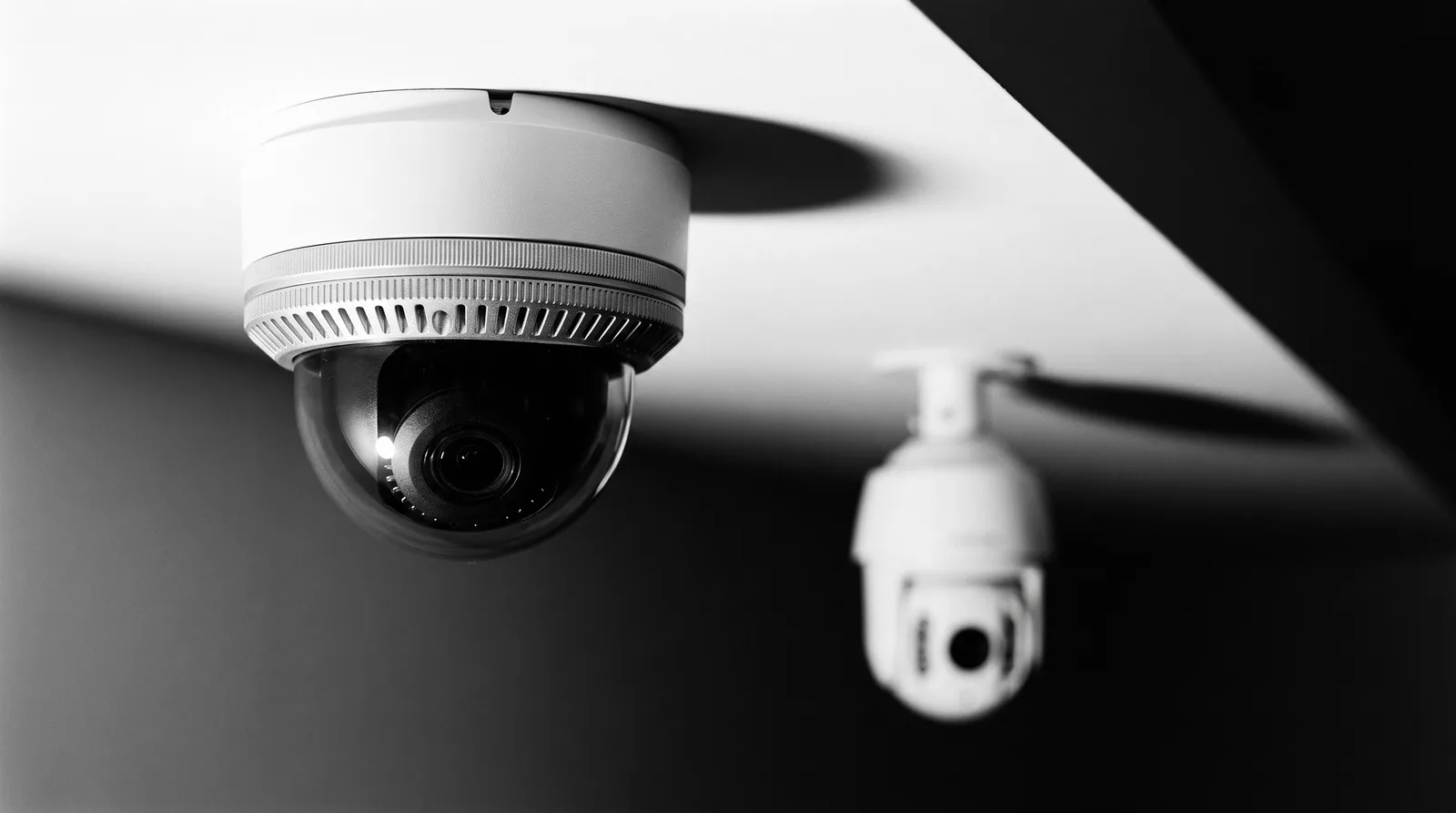
Illustrative — generated visual, not a real project photograph. Illustrative category scene
CCTV cameras
Surveillance cameras and recording equipment selected around the documented coverage and retention brief.
Explore related service
Explore 3 more equipment categories
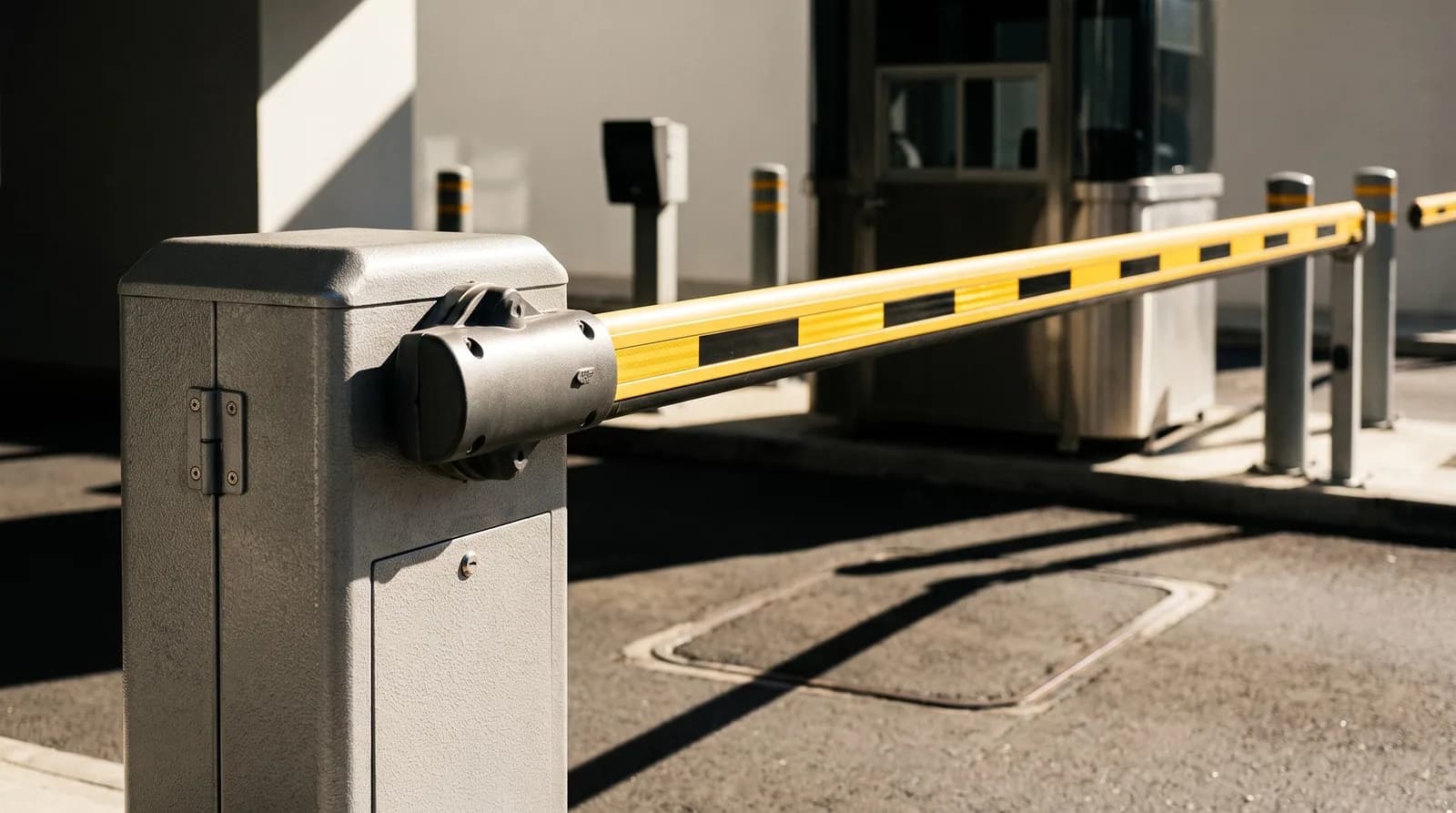
Illustrative — generated visual, not a real project photograph. Illustrative category scene
Boom barriers & motorised gates
Vehicle access equipment coordinated with entry permissions, safety interfaces and the site's traffic plan.
Explore related service
Illustrative category scene
Fire-protection goods
Extinguishers, hose reels, fire blankets, egress signage and cabinet hardware, supplied against the building's agreed fire-protection schedule with refill and inspection dates recorded.
Explore related service
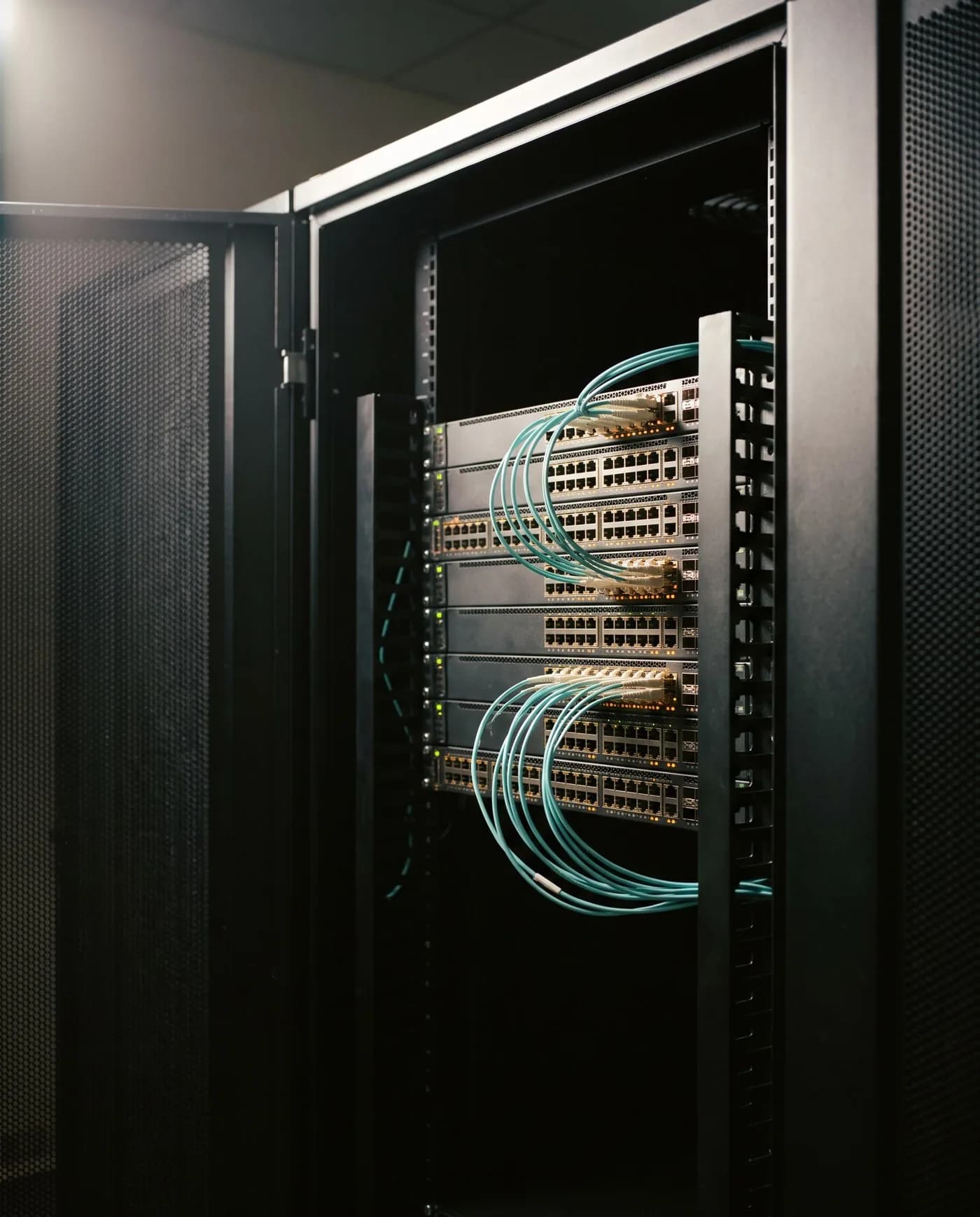
Illustrative — generated visual, not a real project photograph. Illustrative category scene
Networking equipment
Switching, wireless and network infrastructure planned around connected devices and the building's operating needs.
Explore related service
· Frequently asked
Retail —
what buyers ask first.
What systems can TechnoGuru support for a mall, showroom or retail chain?
For malls, showrooms, retail chains, supermarkets and lifestyle stores, TechnoGuru can plan and integrate store background music and mall-wide PA with zone-wise control, digital signage and LED promotional screens, CCTV (including analytics-ready cameras where required), access control for staff areas, fire alarm and safety systems, Wi-Fi, POS-network cabling and IT-rack setup, queue and billing display support, boom barriers and parking integration, UPS backup for networking, security and POS, and lighting automation for premium retail — coordinated across the floor and supported under an AMC.
What technology drives mall operations day-to-day beyond surveillance?
Mall operations run on BMS, analytics-grade CCTV, video walls, PA, NBC-compliant fire and hydrant networks, and Wi-Fi covering tenants and common zones. BMS for HVAC, lighting and energy across the common areas; analytics-grade CCTV for footfall, dwell-time and queue monitoring; video walls for atrium and façade signage; PA for routine paging and life-safety; fire alarm and hydrant networks per NBC for high-occupancy retail; structured cabling and Wi-Fi covering tenant areas and common zones. We are currently delivering the BMS automation scope at PM Ekta Mall, Guwahati for NCC Limited.
How do you measure footfall, dwell and conversion analytically?
Footfall and dwell are measured via video analytics overlays on the existing CCTV plane: people-counting at entries, dwell-time at brand windows, queue and heat-map analytics for store planning. Video analytics overlays on the existing CCTV plane: people-counting at entries, dwell-time at brand windows, queue-length monitoring at checkout and food-court, heat-map generation for store planning. The analytics drive a marketing dashboard rather than just a security feed — and the same camera infrastructure serves both purposes.
What's the right approach to mall PA and life-safety integration?
Mall voice-evacuation PA follows NBC 2016 Part 4's voice-evacuation provisions, with IS 2189 on the fire-alarm side — EN 54-16 and IEC 60849 are the equipment benchmarks a mall PA specification is written against, not instruments Indian code puts in force. The life-safety requirement is the coordination itself: the PA and the addressable fire alarm are commissioned as one cause-and-effect chain, so any alarm event overrides routine paging instantly. Routine paging (mall announcements, lost-child broadcasts, marketing calls) runs on the same backbone with separate priority routing. We engineer this priority logic into every mall PA we deliver, and intelligibility across the evacuation zone is established by measurement at commissioning rather than asserted from the equipment schedule.
Can the BMS serve tenant cross-charging?
Yes — tenant-zone sub-metering drives automated monthly cross-charging reports broken out from common-area utility load, eliminating disputes over flat per-area rates. Sub-metering at tenant-zone level drives an automated cross-charging report each month — actual electricity, water and HVAC consumption per tenant, cleanly broken out from common-area utility load. This eliminates the disputes that come with flat per-area rates and provides every tenant with their actual usage data.
What's the typical mall integration timeline?
Mall integration is sequenced against the agreed opening programme, with BMS, CCTV, life-safety and networking coordinated where included in scope. Procurement, approvals, civil readiness, tenant access and integration testing determine the schedule. We agree those dependencies before setting the commissioning and operator-training milestones.
How do you support tenant fit-out coordination once the mall is operational?
Tenant fit-out coordination runs through documented tenant-services schedules — power, data, fire-detection points and BMS interface published as a mall-services standard each fit-out contractor builds to. Documented tenant-services schedules. Each retail unit is handed over with its known services — power, data, fire-detection points, BMS interface — and tenant fit-out contractors work to a published mall-services standard. We act as the technical liaison for tenant fit-outs that touch the building's life-safety, BMS or analytics layer, so the central systems remain coherent across hundreds of tenant changes.
Can flagship retail and brand showrooms be served at the same standard as full malls?
Yes — flagship retail and brand showrooms get the same engineering discipline as a mall, with a higher emphasis on visual integration into the brand's interior architecture. Brand-flagship retail typically wants a smaller but more design-led specification — recessed AV, hidden audio, façade lighting that follows the brand's identity, analytics-grade cameras for footfall and dwell. We design these as miniature integrated environments, with the same engineering discipline as a mall but a far higher emphasis on visual integration with the interior architecture.
What goes wrong most often on retail projects, and how do you avoid it?
Retail projects most often fail through late life-safety coordination with tenants and undersized networks for analytics-and-tenant-Wi-Fi load — both preventable through design discipline. Two failures repeat. Coordinating life-safety with tenant fit-out late — leading to fire-NOC delays at opening — is avoided by publishing the mall-services standard early and enforcing it. And undersizing the network for analytics and tenant-Wi-Fi load is avoided by designing for year-three concurrent device count, not opening day. Both failures are predictable; both are preventable through discipline at design stage.
Can you fit anti-shoplifting / EAS gates and stock RFID for a store?
Yes — merchandise protection is planned with the store, not bolted on. Electronic article surveillance (EAS) puts detection pedestals at the exit and a tag or label on the stock, deactivated or detached at the till so only an un-purchased item alarms; we select RF, AM or RFID to the merchandise and format, position the gates away from metal and adjacent-gate interference, and tune the false alarms out. Where stock accuracy matters, RFID inventory and asset tracking read items in bulk for faster cycle counts. Both cross-link to the CCTV and ride the same structured-cabling and network plan as the rest of the store systems. Coverage principles are agreed with the operator; we never publish gate positions or store layouts.
Engineering decisions
Decisions that shape retail projects
Decision · AV & Audio
70V/100V distributed audio vs low-impedance audio
You are deciding how loudspeakers will be distributed across a building or venue and need to know which architecture each area should use.
Decision · Security & Surveillance
DVR vs NVR — which CCTV recorder architecture to specify
You are choosing the recording architecture for a CCTV system and want it matched to the cabling that exists, the resolution required and how the system will grow.
Decision · Security & Surveillance
Dome vs bullet camera — choosing the camera body for the position
You are selecting camera bodies for known positions and want each housing matched to its mounting surface, exposure and servicing reality.
Decision · Security & Surveillance
IP vs analogue camera — which surveillance camera type to specify
You are setting the camera and transmission technology for a surveillance system and want it matched to existing cabling, resolution requirements and the site's network policy.
Engineering toolkit
Tools we use for retail work
Calculators and reference checkers our engineers reach for first on projects in this sector.
- BMS · Energy
Energy & Efficiency Estimator
Adjust building variables and see indicative energy and CO₂ savings (kWh) for a BMS-driven energy upgrade plus daylight-harvesting LED retrofit. Conservative; defensible in a first conversation.
kWh · CO₂ savedOpen - ELV · Surveillance
CCTV Coverage Calculator
Building dimensions and risk profile in, recommended camera count, retention storage and bandwidth out. Densities are planning conventions, not a code rule.
Cameras · TB · MbpsOpen - AV · LED
LED Wall Size Calculator
Direct-view LED wall sizing across a source-cited model catalogue including Samsung, LG MAGNIT, Sony, Philips, Leyard, Absen, Unilumin, ROE Visual, AOTO, INFiLED, Daktronics, Planar, Nanolumens and more. Cabinet count, native resolution, brightness adequacy, power and weight — with pitch-vs-distance honesty and camera-refresh flags. Sources cited per model.
50 brands · pitch-awareOpen
/ Engineering notes
Long-form reading for retail projects
Insight
CCTV design for hospitals: privacy zoning, retention windows and the camera count nobody calculates
Hospital surveillance is not a commercial brief with a medical sticker. Patient privacy, infection-control zoning, NABH audit retention and clinical-engineering veto rights mean the camera plan, the storage sizing and the analytics rules all read differently. The design discipline we have built around it.
Insight
Voice-evacuation intelligibility: STI per seat in a real evacuation, not a clean room
Voice-evacuation PA is engineered to STI on the spec sheet and tested to STI at commissioning — but the evacuation event happens with the alarm sounding, the audience standing, the doors opening and the announcement competing against panic. The intelligibility that matters is what the evacuating population actually hears, not the empty-room measurement.
Insight
Anatomy of a premium villa automation scope — an anonymised discipline breakdown
An anonymised, discipline-by-discipline breakdown of a real 2,800 sq-ft North-East India villa fit-out — lighting automation, shading, multi-room audio, AV, CCTV, access control, structured cabling, Wi-Fi, UPS and AMC. What each discipline actually contains, the brand bands and the trade-offs we made. Pricing is project-specific and follows a written estimate after review.
Every calculator, checker and planner curated for retail projects lives on one directory page.
All retail tools →· Begin
Project in retail?
Begin a brief.
The first reply will come from a project lead, not a sales gateway, within two working days.