
Places of Worship.
Voice that carries. Light that holds.
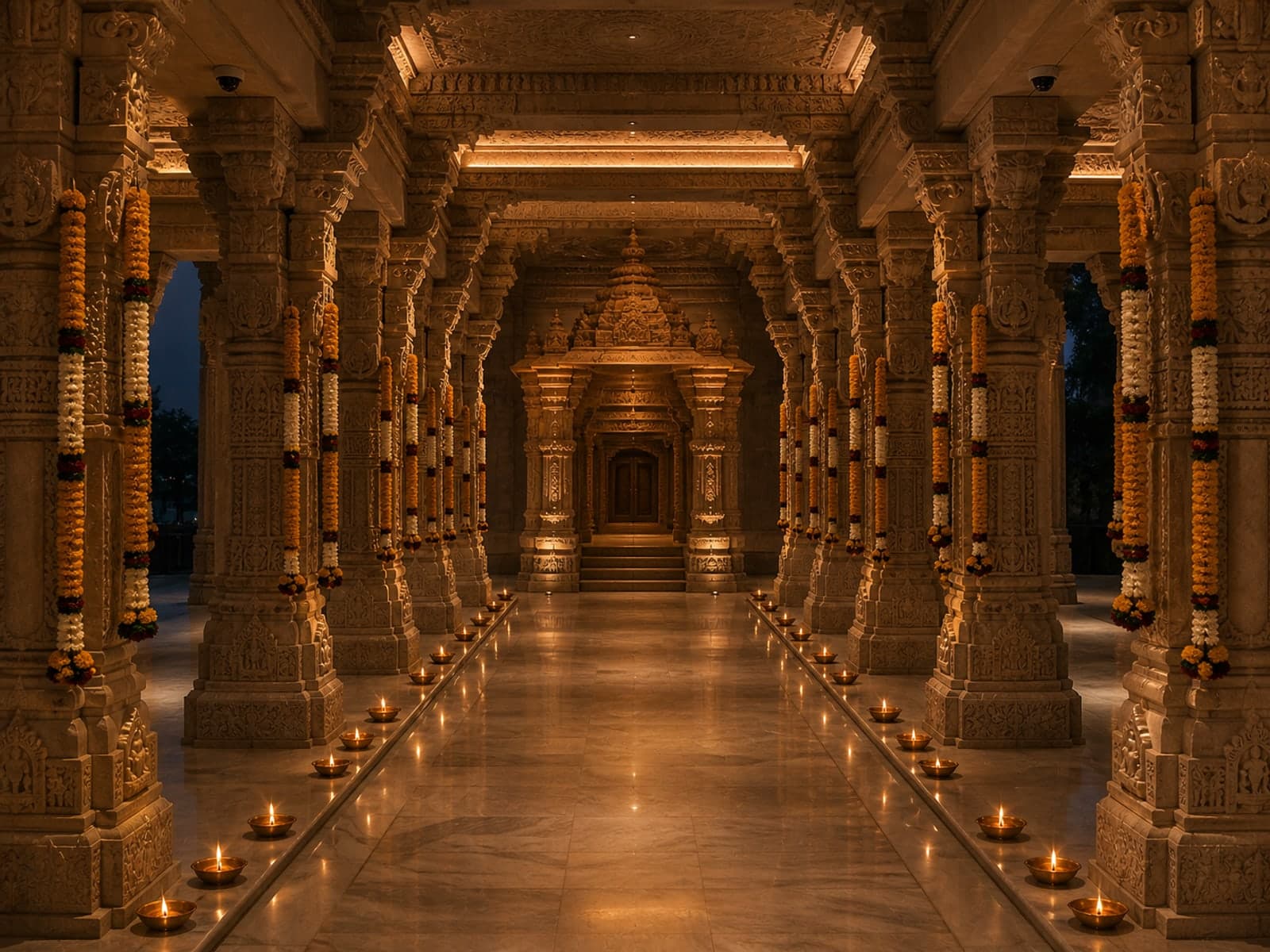
Temples, churches, mosques, gurdwaras and monasteries — PA designed for intelligibility, lighting designed for ceremony, life-safety designed for high occupancy.
| Aspect | Off-the-shelf approach | Engineered approach |
|---|---|---|
| Intelligibility | Louder speakers in a reverberant hall | Treatment plus an engineered PA designed for clarity in every row |
| Installation | Surface-mounted, visible kit | Equipment recessed or paint-matched into the architecture |
| Heritage fabric | Fixed cabling that damages the building | Reversible fixings and hidden routes that respect the structure |
Educational comparison of design rigour — not a statement about any specific installer.
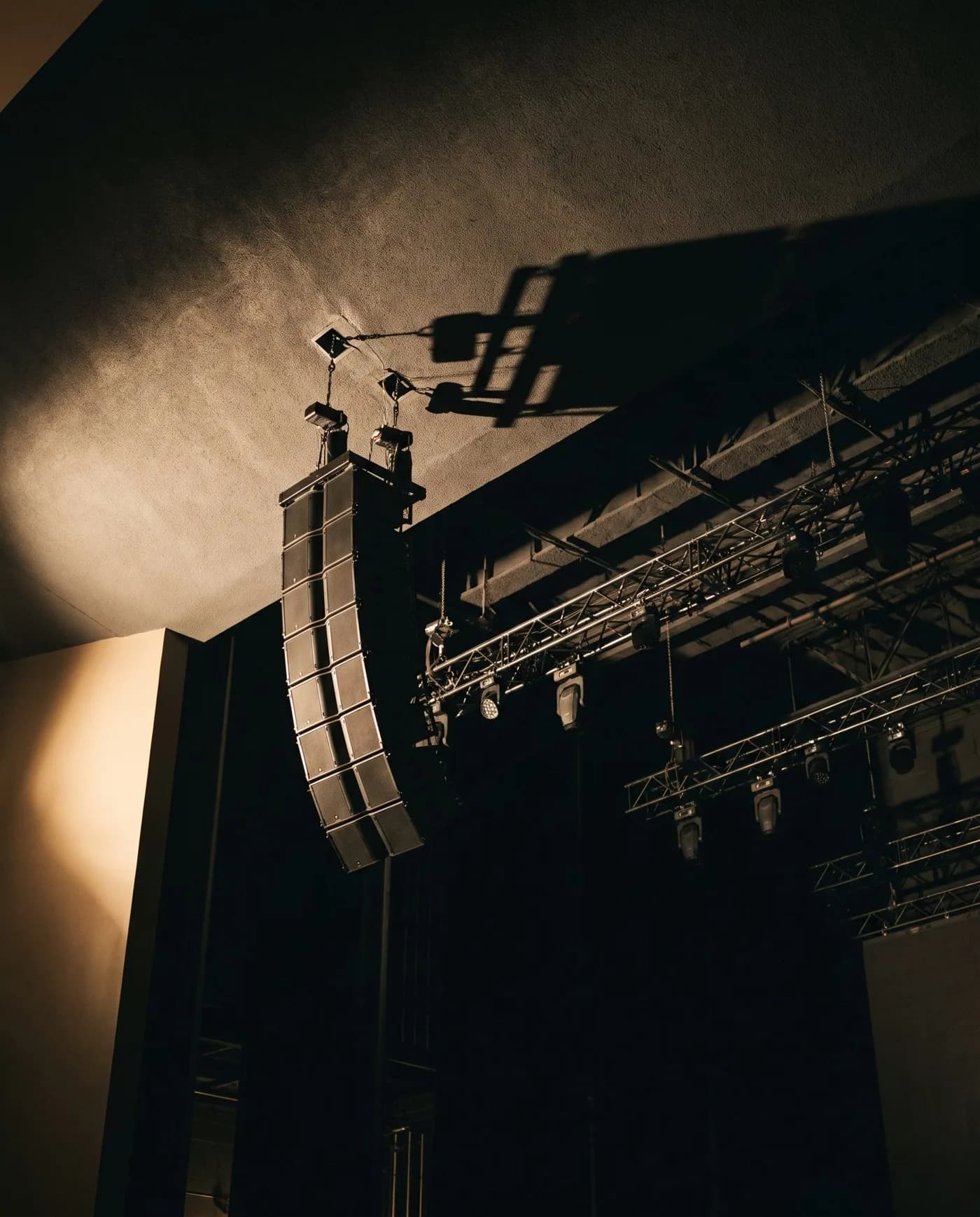
A place of worship is the most acoustically ambitious building most communities will ever build. Stone, glass, vaulted ceilings — every surface reflects, every sermon must remain intelligible. We design line-array PA, cardioid subwoofer arrays and acoustic treatment that respects the sanctity of the space while delivering STI ≥ 0.55 in every pew.
Most of our worship-space work across the North-East is survey-led: reverberation measured before anything is specified, speaker coverage calculated across the actual seating plan, and treatment proposed only where the geometry demands it. On heritage structures the discipline tightens further — reversible fixings, cabling routed through existing cavities, and drawings a conservation authority can review — so the system could be removed in fifty years and leave the building unchanged.
Because these projects are usually community-funded, we design the full system once and phase the delivery — intelligibility first, ceremony lighting next, live-streaming and recording as funds allow — with each phase engineered to integrate with the next rather than arriving as an isolated purchase. Trustees receive a plain-language scope they can review and approve without specialist knowledge, and the streaming layer is designed for a community volunteer to operate, not a broadcast professional.
· What we coordinate for places of worship
From the spoken word to the overflow hall — sound that carries, cleanly.
Temples, churches, mosques, monasteries, prayer halls and community halls. These are the systems TechnoGuru can plan, integrate and support — built around intelligible speech and respectful, discreet installation — sized to the building and supported under an AMC.
Speech and worship audio
Every word intelligible, everywhere it is needed.
- Speech-focused audio systems
- PA systems
- Distributed speaker systems
- Microphone systems
- Mixer and control setup
- Acoustic treatment where required
Streaming and display
Services that reach beyond the hall.
- Live-streaming setup
- Camera systems for stage, altar or main area
- LED display or projection
- Outdoor announcement systems
Safety and surveillance
Watching over the congregation and the building.
- CCTV and surveillance
- Fire alarm system
- Fire safety systems
Cabling and backup
Clean, discreet and resilient.
- Wi-Fi and networking
- Rack planning and clean cabling
- UPS backup for audio, cameras and networking
Lighting and multi-zone reach
Light for ceremony, sound for every space.
- Lighting control
- Stage / focus lighting where required
- Multi-zone sound for halls, outdoor areas and overflow spaces
On heritage buildings we plan around restricted wall and ceiling penetrations. We agree the detail privately against the drawings — no device counts, quantities or layouts are published here.
Planning for the room
What makes a hall carry voice and ceremony
Worship spaces are demanding rooms: long, reverberant and emotionally important. These are the priorities we plan around so the room serves the gathering.
- Speech intelligibility first
- The system is planned so the spoken word stays clear across the whole congregation, which is the hardest thing to get right in a large hall.
- Loudspeaker topology to the room
- Coverage is shaped to the architecture rather than forced from a single position, so every seat hears evenly.
- Lighting for ceremony and camera
- Lighting is planned for both the human eye and any cameras present, so the space looks right in person and on a stream.
- Recording and streaming readiness
- Where it is wanted, recording and streaming are planned in from the start rather than patched in later.
· Core services
6 services
delivered to this sector.
Grouped by the engineering layer each system belongs to — the way the scope is actually coordinated on site.
Indicative coordination scope. Not every project engages every layer; the working scope is agreed against the drawings before anything is specified.
· Delivered as turnkey
Ceremony and assembly halls, delivered end to end
On turnkey auditorium and cultural-infrastructure work — such as Town Hall Dimapur and the Cultural Capital Complex, Kohima — our scope is not limited to supply or installation. It can span audio, video, IT, acoustics, fire hydrant, fire alarm and fire extinguisher works where applicable to project scope, HVAC, stage furnishing, stage lighting, auditorium seating, step lighting and controlled / dimmable indoor lighting, alongside BOQ / design coordination and interior planning / design coordination where required by the auditorium scope — coordinated as one accountable hand from requirement to handover, subject to drawings, AHJ / consultant review and project scope.
Equipment categories
See the equipment behind the solution.
Explore equipment we supply and the services around it. The final specification follows your space, operating needs and agreed scope.
· Frequently asked
Worship —
what buyers ask first.
What systems can TechnoGuru support for a temple, church, mosque or prayer hall?
For temples, churches, mosques, monasteries, prayer halls and community halls, TechnoGuru can plan and integrate speech-focused audio and PA with distributed speakers, microphones and a mixer / control setup, acoustic treatment where required, live-streaming and camera systems for the stage, altar or main area, LED display or projection, outdoor announcement, CCTV, Wi-Fi and networking, lighting control with focus / stage lighting where required, fire alarm and safety systems, UPS backup for audio, cameras and networking, clean rack planning and cabling, and multi-zone sound for halls, outdoor areas and overflow spaces — supported afterwards under an AMC.
Why do most places of worship struggle with sound intelligibility?
Places of worship struggle with intelligibility because their stone, marble, glass and vaulted-ceiling geometry produces 3–6 second reverberation tails — fixed with treatment plus an engineered PA, not louder speakers. Acoustic geometry. Stone, marble, glass, vaulted ceilings, double-height halls — every surface a hard reflector. Reverberation tails of 3–6 seconds make speech intelligibility scores fall below 0.45 STI, which is the human threshold for clarity. The solution is targeted acoustic treatment plus a properly engineered PA — not louder speakers.
What kind of PA system is right for a temple, church, mosque or gurdwara?
The right PA for a temple, church, mosque or gurdwara is a line-array with cardioid sub arrays where applicable, designed to STI ≥ 0.55 in every pew with ±2 dB coverage. A line-array system with cardioid subwoofer arrays where applicable, designed to STI ≥ 0.55 in every pew or row. Coverage is calculated to within ±2 dB across the audience plane. For halls above 5,000 sq ft we typically also recommend distributed delay zones to keep arrival time of speech consistent.
Will the equipment be visible or can it be hidden in the architecture?
Yes — equipment can be paint-matched, recessed into pillars, hidden behind acoustically transparent fabric or placed above sightlines for full visual integration. We engineer for visual integration. Speakers can be paint-matched, recessed into pillars, hidden behind acoustically transparent fabric panels, or placed above sightlines. For heritage structures, we work with the trustees and any conservation authority to identify cabling routes that respect the existing fabric. The treatment reads as architecture, not retrofit.
What about stage and architectural lighting for ceremony and performance?
Stage and architectural lighting for ceremony and performance runs on DMX/Art-Net for cued events plus Rako or DALI for façade composition, integrated so scenes change everything together. We deliver DMX/Art-Net stage lighting for cued events (sermons, festivals, choirs, weddings), architectural lighting for sanctity and façade composition, and acoustic-and-lighting integration so that programmed scenes change everything together at one operator press.
Are these projects typically managed by trustees, contractors or architects?
All three — we work with trustee committees on heritage sites, contractors on new constructions and architects on conservation-and-restoration projects. We work directly with trustee committees on heritage sites, with contractors on new constructions, and with architects on conservation-and-restoration projects. Our scope-of-work is documented in plain language so trustees can review and approve without specialist knowledge.
How do you approach a heritage place of worship where wall and ceiling penetrations are restricted?
With a survey-led design that respects the existing fabric — reversible fixings, hidden cabling routes and conservation-authority-compliant drawings so the system could be removed in 50 years and leave the building unchanged. A survey-led design that respects the existing fabric. Cabling routes follow existing services or hidden cavities; speaker mounts use reversible fixings; control panels are placed where future trustees can remove them without trace. Where a conservation authority is involved, our drawings carry the detail their review process needs. The aim is a system that can be removed in fifty years and leave the building unchanged.
What kind of community fundraising and phased delivery do these projects typically run on?
Most worship projects are community-funded and run in phases — we design the full system at the start and sequence phases so each delivers a usable outcome (PA first, lighting next, live-stream later). Funded through community contribution and run in phases as funds allow. We design the full system at the start, then sequence the phases so each phase delivers a usable outcome — phase one might be the PA and intelligibility treatment, phase two the architectural lighting, phase three the live-stream and recording layer. Each phase is engineered to integrate cleanly with future phases rather than being an isolated install.
Can you support live-streaming and recording for sermons, services and festivals?
Yes — live-streaming and recording covers PTZ auto-tracking cameras, dedicated PA-console audio feeds, encoders for YouTube/Facebook Live and an archive layer designed for community-volunteer operators. PTZ cameras with auto-tracking, dedicated audio feeds from the PA console, encoder appliances streaming to YouTube, Facebook Live or the community's preferred platform, and content-management for the sermon archive. We design these layers for an operator who is a community volunteer, not a broadcast professional — one-button start, automatic levels, no on-the-day technical decisions required.
Engineering decisions
Decisions that shape worship projects
Engineering toolkit
Tools we use for worship work
Calculators and reference checkers our engineers reach for first on projects in this sector.
- AV · Projection
Projector Throw Distance Calculator
Engineering-grade throw distance calculator across a verified multi-brand projector catalogue — Sony, JVC, Epson, BenQ, LG, Optoma, ViewSonic, Panasonic, Barco, Christie, Canon, InFocus, Maxell, Casio, EIKI, Philips, Nebula, JMGO, Dangbei, Boxlight, ASUS, Leica, Xiaomi, WEMAX, Ricoh and more. Searchable picker, throw range, lens-shift envelope, viewing distance, pixel density, feasibility flags and a custom-throw fallback. Sources cited per model.
51 brands · sourcedOpen - AV · Audio · Coverage
Speaker Coverage Planner
Engineering-grade speaker coverage and SPL planner across a source-cited public model catalogue spanning pro touring, commercial audio and architectural speakers. Predicts SPL at listener distance, the horizontal coverage width at that distance on the -6 dB dispersion axis, and the quantity needed for the room.
45 brands · SPL predictionOpen - Auditorium AV · Readiness
Auditorium AV Scope & Readiness Planner
A scope-level self-check for an auditorium, convention or multipurpose hall — the AV signal chain (sources, mixing & DSP, amplification & loudspeaker zones, projection, stage-lighting, assistive listening, recording, control), plus acoustics, infrastructure and operations — with the gap list and who owes what. Statuses and bands only; no seat counts, SPL targets or model choices.
Advisory · readinessOpen
/ Engineering notes
Long-form reading for worship projects
Insight
Digital signage architecture: pixel pitch, content orchestration and the part of the brief nobody writes
Pixel pitch against viewing distance, brightness against ambient light, content distribution architecture, signal redundancy and the thermal/load realities that decide whether a signage deployment ages well or fails in eighteen months.
Insight
Voice-evacuation intelligibility: STI per seat in a real evacuation, not a clean room
Voice-evacuation PA is engineered to STI on the spec sheet and tested to STI at commissioning — but the evacuation event happens with the alarm sounding, the audience standing, the doors opening and the announcement competing against panic. The intelligibility that matters is what the evacuating population actually hears, not the empty-room measurement.
Every calculator, checker and planner curated for worship projects lives on one directory page.
All worship tools →· Begin
Project in worship?
Begin a brief.
The first reply will come from a project lead, not a sales gateway, within two working days.