22 services in ELV Systems
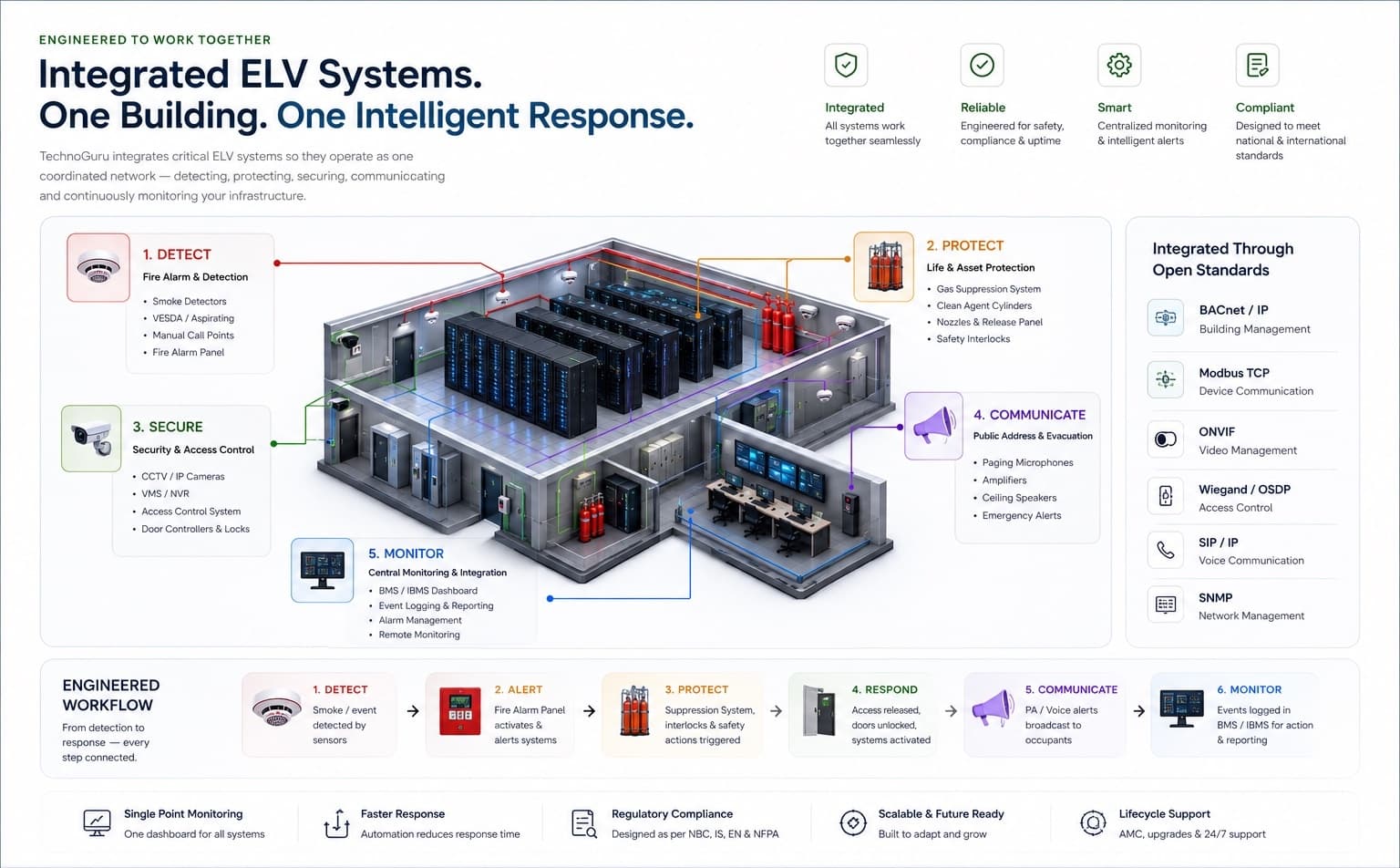
CCTV, fire alarm, hydrant, PAVA voice-alarm, access control, nurse call and boom barriers — engineered to NBC, IS and NFPA codes on one command surface.
CCTV & Surveillance
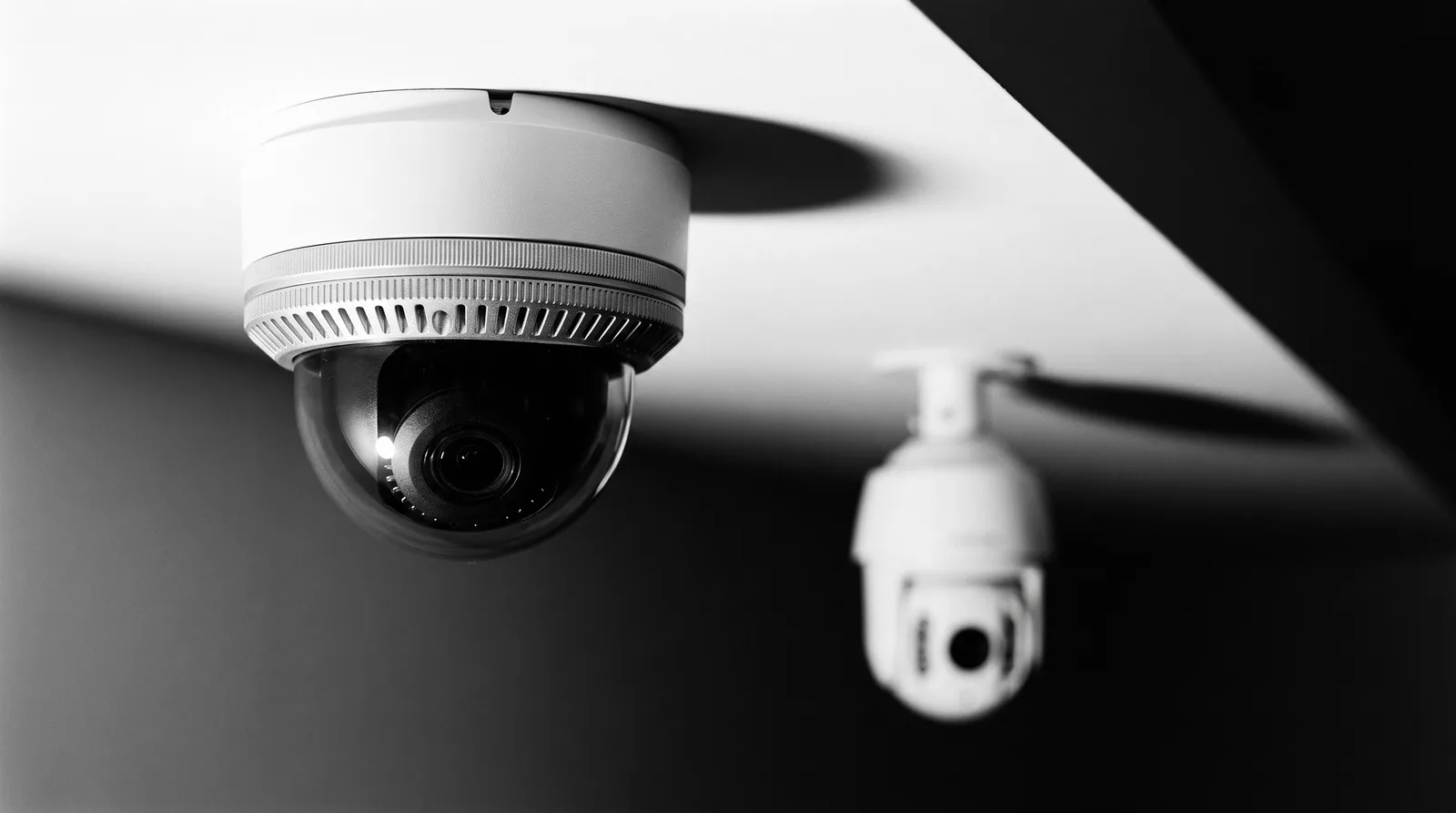
IP video surveillance — Hikvision, Dahua, Axis, Bosch — designed to coverage, recording-bandwidth and retention specifications, with VMS and AI-analytics overlays.
Capabilities
- Camera selection and placement to face/IDR capture
- VMS deployment (Honeywell Pro-Watch, Bosch BVMS, Hikvision HCP)
- Storage sizing to retention and bitrate
- AI analytics — ANPR, face-search, line-cross, intrusion
- PoE+/PoE++ network design
- Integration with access control and alarm
- Video Management System (VMS) integration
- Facial-recognition analytics
- ANPR / number-plate recognition
Brand stack
Hikvision, Dahua, Axis, Bosch
Access Control
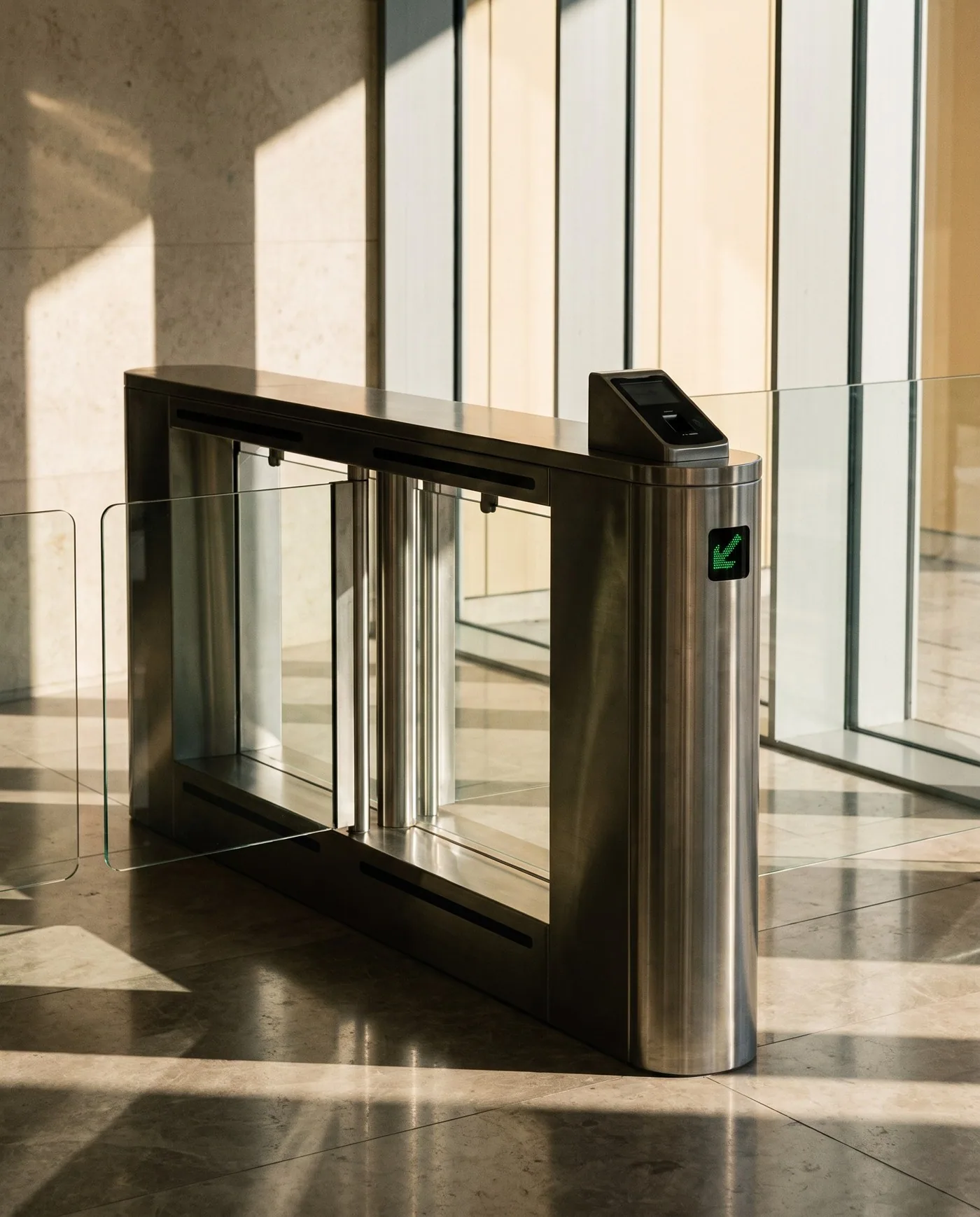
Card, biometric, mobile-credential and visitor-management — Honeywell, HID, Matrix and Suprema — integrated with CCTV, intrusion and HR systems.
Capabilities
- Multi-credential readers (card, biometric, mobile)
- Anti-passback, mantrap and turnstile integration
- Visitor management and pre-registration
- HR / Active Directory / SAP HCM integration
- Audit, compliance and forensic event log
- Yale digital smart locks
- Hotel guest-room electronic locking — RFID and mobile-key locks, encode-on-check-in via the PMS, offline door-event audit
- Biometric and facial-recognition attendance
- Queue and token management
Brand stack
Honeywell, HID, Suprema, Lenel, Yale
Fire Alarm System
Addressable and conventional fire detection and alarm — one of the three fire families (fire alarm, fire hydrant, fire extinguishers) — Honeywell, Bosch, Notifier and Siemens panels — integrated with PA, BMS, access control and emergency lighting to readiness per NBC, IS 2189 and NFPA 72, for consultant and AHJ review.
Capabilities
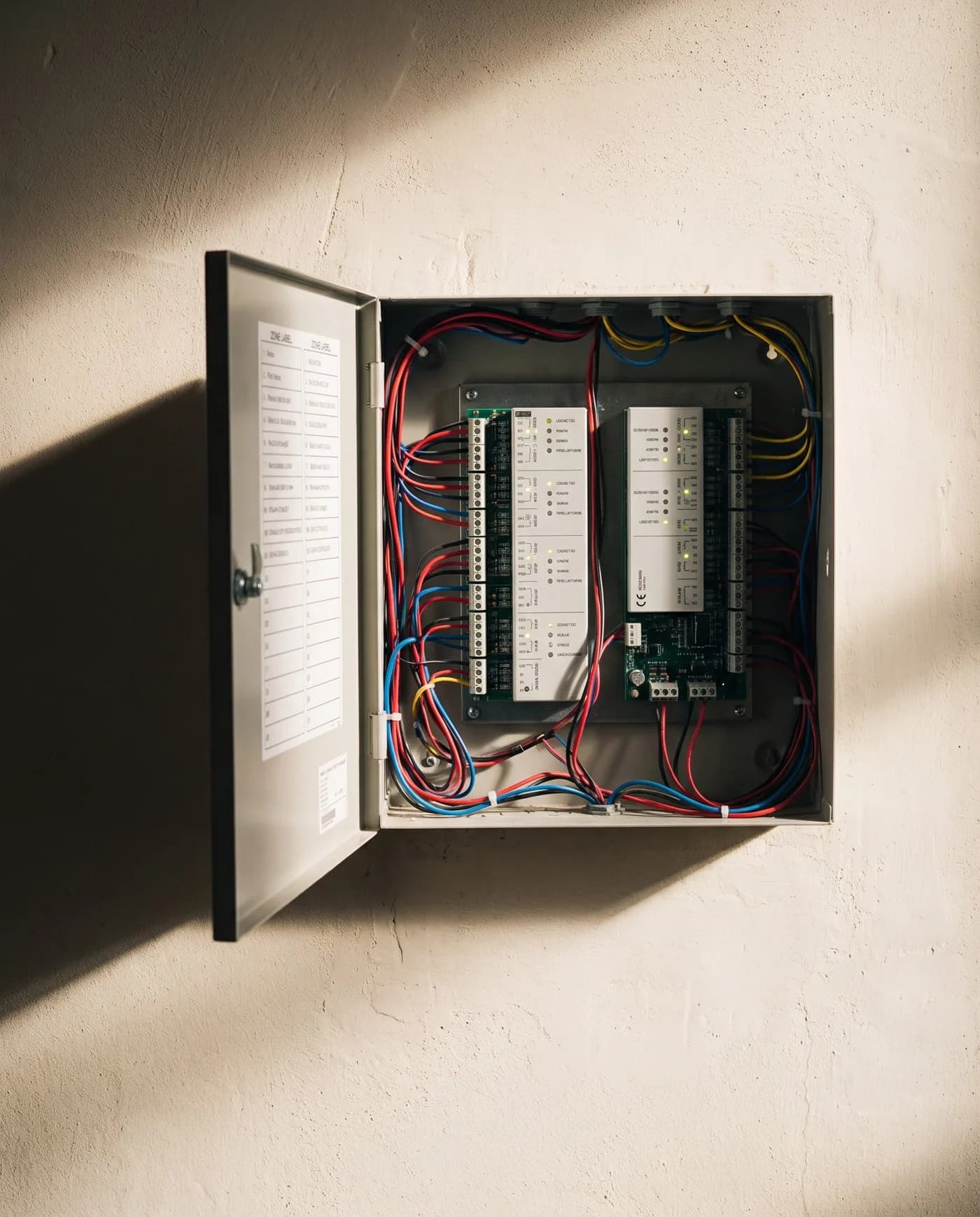
- Addressable loop design and panel sizing
- Cause-and-effect programming
- Integration with PA, BMS, lifts, access control
- Aspirating smoke detection (VESDA) for critical zones
- Wireless detection for heritage and retrofit
- Fire NOC drawings and statutory liaison
Brand stack
Honeywell, Bosch, Notifier, Siemens
Fire Hydrant System
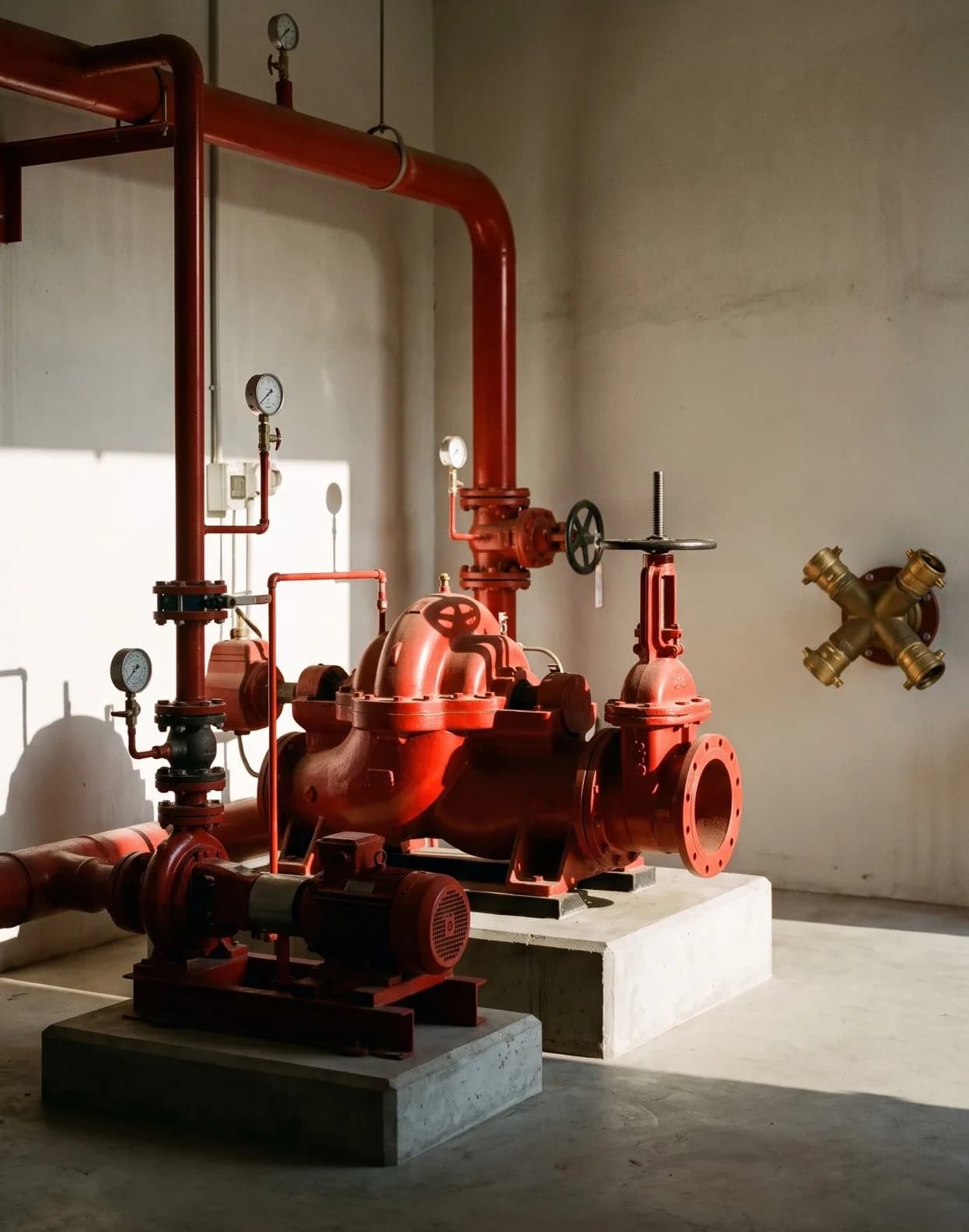
Wet- and dry-riser hydrant systems — one of the three fire families (fire alarm, fire hydrant, fire extinguishers) — jockey-and-main pump rooms, yard hydrants and four-way fire-brigade inlets, engineered to readiness per NBC, IS 13039 and NFPA 14 for consultant and AHJ review.
Capabilities
- Hydraulic calculation and pump sizing
- Wet-riser, dry-riser and ring-main design
- Underground and overhead static-water reservoir
- Yard hydrants, hose reels, hose cabinets
- Four-way fire-brigade inlets
- AMC, mock drills, hose pressure testing
- Portable fire extinguishers (supply and refill)
Brand stack
Newage, Grundfos, Kirloskar
X-Ray Baggage Scanners
Dual-energy X-ray baggage and parcel scanners for airports, hotels, government buildings, courts, malls and corporate lobbies.
Capabilities
- Single- and dual-view tunnel scanners (60×40 to 150×180)
- Dual-energy material discrimination
- Threat-image projection (TIP) for operator training
- Network and central monitoring integration
- AERB radiation safety certification support
Brand stack
Smiths Detection, Rapiscan, Nuctech
Under Vehicle Surveillance (UVSS)
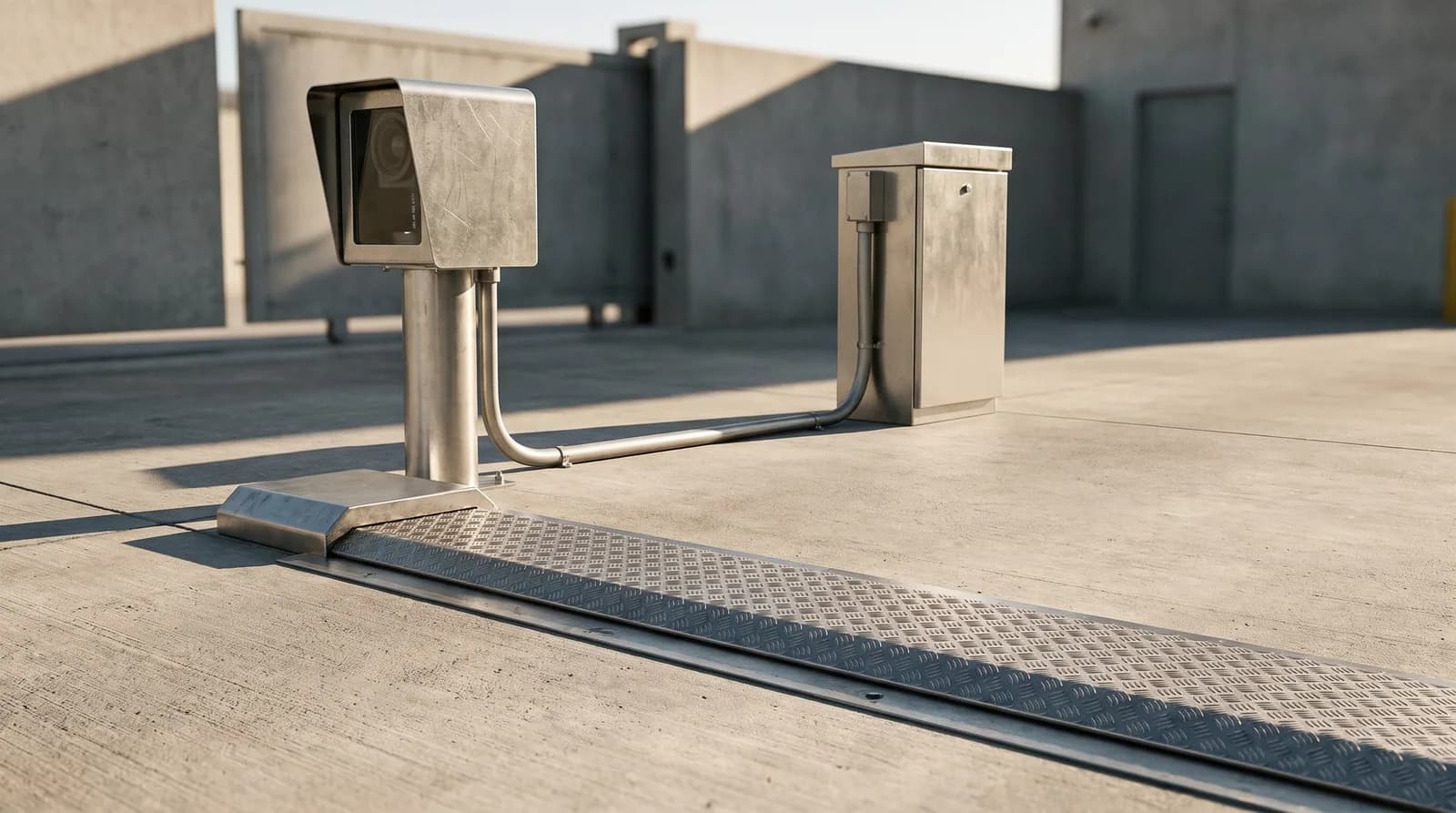
Embedded high-resolution UVSS with ANPR and driver-occupant cameras — a critical first line of defence at every vehicle entry point.
Capabilities
- Full-chassis high-resolution imaging
- ANPR plate-read with database comparison
- Driver and occupant camera capture
- Difference-detection alerting
- Integration with boom barriers and access control
Brand stack
Comm Port
Door-Frame Metal Detectors
Multi-zone DFMDs with adjustable sensitivity, pinpoint LED indicators and networked logging — for hotels, courts, places of worship, malls and government buildings.
Capabilities
- Multi-zone (8 to 33 zones) detection
- Programmable sensitivity per environment
- Networked event logging
- ESD-safe and radiation-safe
- Integration with X-ray and access control
- Handheld metal detectors (HHMD)
Brand stack
Smiths Detection
Boom Barriers & Motorised Gates
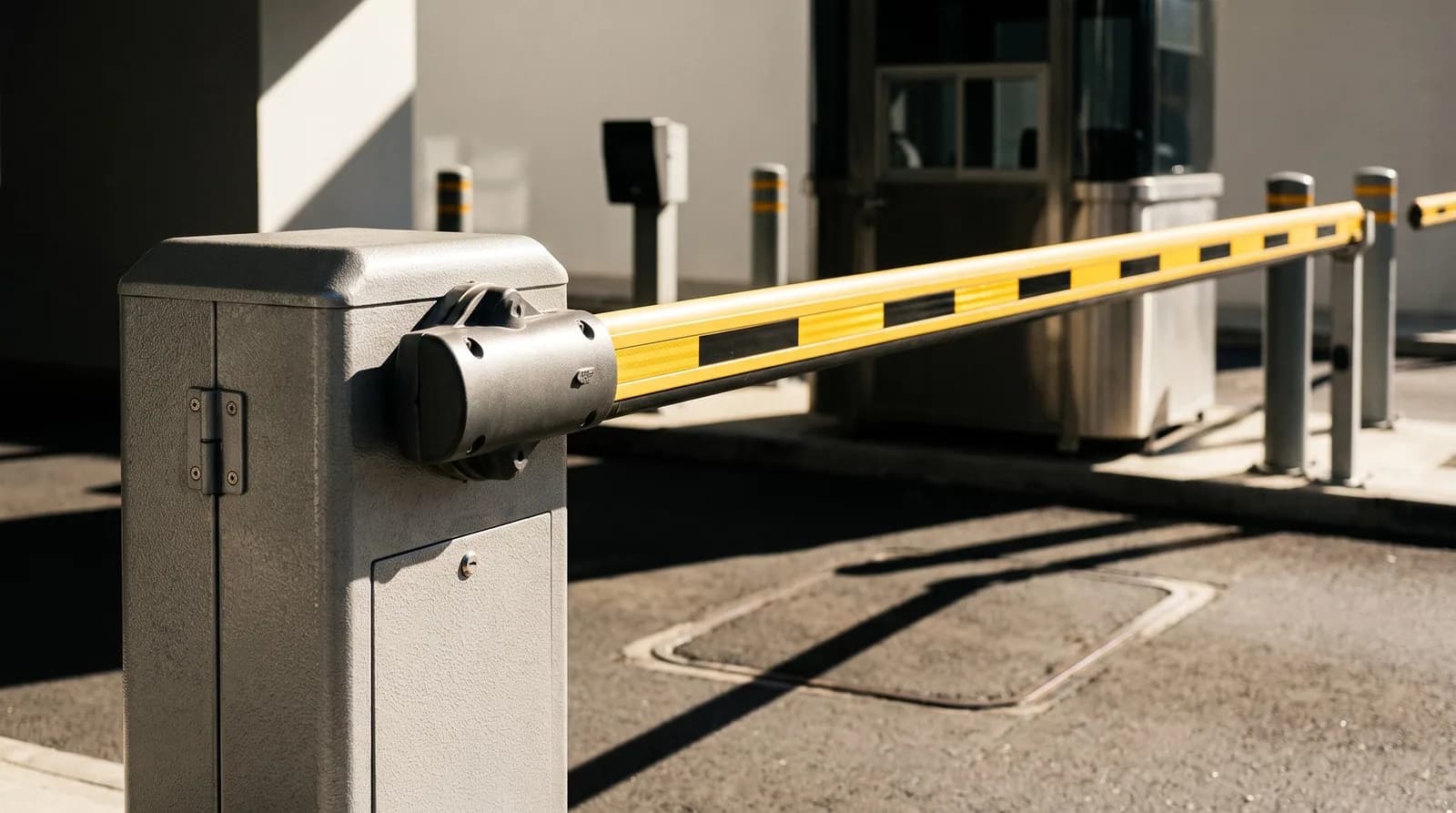
Boom barriers, sliding and swing gates, road blockers, bollards and turnstiles — integrated with ANPR, RFID and access control.
Capabilities
- High-speed boom barriers (1.5s open)
- Swing, sliding and cantilever gates
- Crash-rated bollards (K4 / K8 / K12)
- ANPR, RFID and UHF integration
- Loop and photocell safety
Brand stack
FAAC, BFT, Came
Nurse Calling System
IP-based nurse call systems with bedside, bathroom, code-blue and staff-presence stations, integrated with mobile and PA.
Capabilities
- Bedside, bathroom, code-blue, code-pink stations
- Staff-presence and assist buttons
- Corridor dome lights and zone displays
- Mobile-app and DECT pager integration
- Service-quality reporting
Brand stack
Honeywell
Gas Suppression System
Clean-agent and inert-gas fire suppression — the clean agent flooding system of consultant schedules — FM-200/HFC-227ea, fluoroketone-class NOVEC 1230, CO2 and inert-gas systems — for server rooms, data centres, archives, electrical and panel rooms and other spaces where water would do as much damage as the fire, engineered to readiness per NBC, relevant IS codes and NFPA 2001/12 for consultant and AHJ review.
Capabilities
- Enclosure integrity and agent-concentration design
- Clean-agent, inert-gas and CO2 agent selection
- Cross-zoned detection and discharge interlocks
- Abort, manual-release and pre-discharge warning logic
- Door-fan integrity testing at commissioning
- AMC: cylinder weighing, pressure checks, re-validation
Brand stack
Honeywell, Siemens, Tyco
Fire Sprinkler System
Automatic water sprinkler systems — wet, dry, pre-action and deluge — engineered to readiness per NBC, relevant IS codes and NFPA 13, and coordinated with the fire-hydrant and fire-alarm systems for consultant and AHJ review.
Capabilities
- Hydraulic calculation by occupancy and hazard class
- Wet, dry, pre-action and deluge system design
- Sprinkler head selection, spacing and zoning
- Flow- and pressure-switch interface to fire alarm
- Coordination with hydrant pump room and reservoir
- AMC: pump tests, flow tests, head inspection
Brand stack
Tyco, Viking, Grundfos
Emergency Lighting & Egress Signage
Emergency and egress lighting with photoluminescent exit and wayfinding signage — self-test luminaires, central-battery systems and IS-compliant signage — designed so occupants can find and follow a marked route to a final exit when normal power fails, engineered to readiness per NBC and relevant IS codes for consultant and AHJ review.
Capabilities
- Escape-route emergency lighting design to illuminance
- Self-test luminaire and central-battery system selection
- Photoluminescent exit and directional signage layout
- Open-area and high-risk-task emergency lighting
- Commissioning: strike-on-fail and duration testing
- AMC: discharge tests, signage checks, inspection records
Brand stack
Philips, Wipro, Eaton, Prolite Autoglo
Fire Doors & Fire-Rated Shutters
Fire-rated doorsets and rolling shutters — passive fire protection at compartment lines, staircases and service openings — with frames, closers, panic hardware and magnetic hold-open release coordinated with the fire alarm and the escape plan, supplied and installed where project-fit.
Capabilities
- Fire-rated doorsets and frames by rating class (30/60/120-minute categories)
- Fire-rated rolling shutters for service and compartment openings
- Closers, intumescent seals, vision panels and panic hardware
- Magnetic hold-open devices released by the fire-alarm panel
- Escape-plan and compartmentation coordination against the drawings
- Periodic inspection and maintenance with recorded findings
Fire Extinguishers & Fire-Protection Goods
Portable fire extinguishers — one of the three fire families (fire alarm, fire hydrant, fire extinguishers) — ABC dry powder, CO2, clean-agent, foam and water classes, with site-assessed placement, mounting, signage, refilling and AMC, along with related fire-protection goods and accessories.
Capabilities
- Extinguisher selection by risk class — ABC dry powder, CO2, clean-agent, foam, water
- Walk-through site assessment for placement and coverage
- Wall mounting, stands, cabinets and photoluminescent signage
- Refilling after discharge and scheduled servicing with pressure checks
- AMC with tagged units and inspection-ready records
- Supply of related fire-protection goods and accessories
Brand stack
Newage
Automatic Tube Fire Detection & Suppression
Automatic Linear Pneumatic Tube Detection systems — enclosure-level fire detection and suppression for electrical panels, server and network racks, battery enclosures and machine cabinets — operating standalone without external power, in direct- and indirect-discharge configurations.
Capabilities
- Linear pneumatic heat-sensing tube detection inside enclosures
- Direct-discharge systems — the tube ruptures and discharges at the hot spot
- Indirect systems discharging through fixed nozzles
- Clean-agent or dry-chemical agent selection by enclosure contents
- Standalone operation — no external power, wiring or control panel
- Pressure-switch monitoring to the fire-alarm panel where in scope
- AMC: tube condition, cylinder weight and pressure checks
Intrusion Detection & Alarm
Intrusion and perimeter detection — door/window contacts, dual-tech motion sensors, glass-break, vibration and fence sensors, panic and alarm panels with app and central-station-ready monitoring — integrated with CCTV and access control.
Capabilities
- Zoned detection design — contacts, dual-tech motion, glass-break
- Perimeter and fence-line detection (vibration / fence sensors)
- Panic, hold-up and tamper supervision
- Retail EAS / electronic article surveillance — RF, AM or RFID exit pedestals with tag and label detach-and-deactivate at the till, integrated with CCTV
- Alarm panels with app notification and partitioning
- Central-station-ready monitoring interface
- Integration with CCTV and access control
Brand stack
Honeywell, Bosch, DSC, Securico, Optex
Intercom & Video Door Phone
Intercom and video door phone (VDP) door-entry — audio and video door stations, indoor monitors, IP and 2-wire systems, lift and lobby intercom, apartment and villa door-entry — integrated with access control and mobile answer.
Capabilities
- Audio and video door stations with night illumination
- IP and 2-wire indoor monitors and call routing
- Apartment, villa and multi-tenant door-entry
- Lift and lobby intercom to facility desk
- Mobile-app answer, view and door release
- Integration with access control and door hardware
Brand stack
Syntel NEOS, Hikvision, Dahua, Grandstream, Cisco, NEC, Aiphone, Panasonic, 2N, Akuvox
Facial Recognition System
AI face-recognition for access, attendance and surveillance — face-based entry, watchlist and VIP/denied-entry alerts — integrated with CCTV and access control on a consent-aware, privacy-respecting deployment.
Capabilities
- Face-based access and touchless attendance
- Watchlist, VIP and denied-entry alerting
- Enrolment, matching-threshold and liveness tuning
- Integration with CCTV and access control
- Consent-aware deployment and audit event log
- On-premise template storage under client control
Brand stack
Hikvision, Dahua, Suprema
ANPR & Number-Plate Recognition
Automatic number-plate recognition for gate automation, parking and visitor logging — plate-read cameras with watchlist alerts, integrated with boom barriers and access control.
Capabilities
- Plate-read camera placement to approach geometry
- Barrier and gate automation on plate match
- Parking and visitor-vehicle logging
- Allow-list, watchlist and denied-vehicle alerting
- Integration with boom barriers and access control
- Day/night read tuning and event audit log
Brand stack
Hikvision, Dahua, Axis
AI Video Analytics
Video analytics is a layer, not a product — it runs on whatever streams the cameras already on site can genuinely deliver. We survey the estate first, establish what each camera can support, and integrate the analytics tier with the CCTV, access-control and network stack already in place.
Capabilities
- Camera-estate survey — make, model, firmware, codec, authentication method, concurrent-stream capacity and supported profiles recorded per device
- Stream-access testing on the live estate rather than a vendor compatibility matrix
- Field-of-view and pixels-on-target assessment against the DORI criteria described in IEC 62676-4
- Platform selection against the surveyed constraints — the available analytics set differs by platform and is confirmed before anything is committed
- Inference-topology design — on-camera, on-premise server or cloud — sized to concurrent decoded streams, per-site upload bandwidth and latency
- Per-camera rule configuration: line crossing, zone intrusion, loitering, people counting, occupancy, queue, vehicle and ANPR, abandoned object
- Forensic search, metadata indexing and event export for investigation workflows
- Structured tuning period with recorded false-positive review and rule revision
- Integration with the existing VMS, access control, intrusion and network layers, including multi-site federation, operator roles and audit trail
Brand stack
Axis, Bosch, Hikvision, Dahua
Centralised CCTV Monitoring
Head-office monitoring across branch sites commissioned years apart on different recorders — surveyed site by site, then built on what each recorder actually exposes. Upload bandwidth, local retention and operator audit decide the design long before the logo on the box does.
Capabilities
- Per-site survey of what each existing recorder and camera actually exposes over the network
- Stream inventory — codec and profile, sub-stream availability, authentication method, concurrent-session limits, firmware age
- Upload-bandwidth budgeting per branch against concurrent live view and post-incident export
- Local retention design so recording continues and stays retrievable through a link outage
- Federation versus central VMS assessment, recommended against the estate rather than against a product list
- Secure site-to-site connectivity designed jointly with the client's IT and network team
- Role-based operator permissions, regional scoping and a view/export audit trail
- Network segmentation, credential hygiene and a firmware-currency calendar for cameras and recorders
- Staged migration planning where ageing recorders cannot join the central layer as they stand
Brand stack
Hikvision, Dahua, Axis, Bosch
Fireman Talk-Back & Emergency Communication
Supervised fireman's telephone circuits and talk-back field stations — fixed jack points and handset outlets distributed through the building, calling a master console at the fire command point over dedicated two-wire circuits that are monitored, so a cut or a short shows up as a fault rather than as a surprise during an incident.
Capabilities
- Supervised fireman's telephone circuits from master console to field stations
- Talk-back field stations installed to the fire consultant's station schedule
- Master console and handset storage at the fire command point
- Fire-resistant / fire-survival cable selection with segregated containment and fire-stopping
- Independent power with standby capacity, monitored at the console
- Circuit fault annunciation — open, short and disconnected-station indication
- Interface to the fire alarm panel, documented and witness-tested as a defined boundary
- Coordination with PA / voice-evacuation scope as a separate system at the command point
- Station-by-station commissioning records and AMC-period functional testing
Brand stack
Honeywell, Bosch