
Unity Mall, Guwahati.
The shape of the deployment.
Structured engineering tagging — deployment archetype, infrastructure complexity, operational class and the named protocols the integration runs on.
- Infrastructure complexity
- Single Block
- Operational class
- Retail Commercial
- Deployment archetypes
- retail mall bmstenant sub meteringphase 2 integration pathway
- Protocols referenced
- BACnet/IP supervisory backboneModbus / BACnet MS/TP fieldTenant sub-metering pulse + Modbus
What we were asked to deliver.
An end-to-end Building Management System deployment for a flagship retail anchor in Guwahati, executed for NCC Limited as the principal contractor. The brief: turn the mall's mechanical, lighting and energy plant into a single dashboard the operations team can run from day one of opening.
The mall's HVAC, lighting and energy systems were engineered against the operations team's day-two reality, not the contractor's day-one handover. Chillers sequence on a programmed daily-load schedule that mirrors the mall's actual occupancy curve; AHUs modulate on CO₂ per tenant zone; sub-metering is granular at the lease-clause level; and the supervisory dashboard surfaces named alarms in plain English routed to nominated mobiles. The Phase 2 fire-alarm and access-control integration is already pathway-ready.
A frame from the engagement.
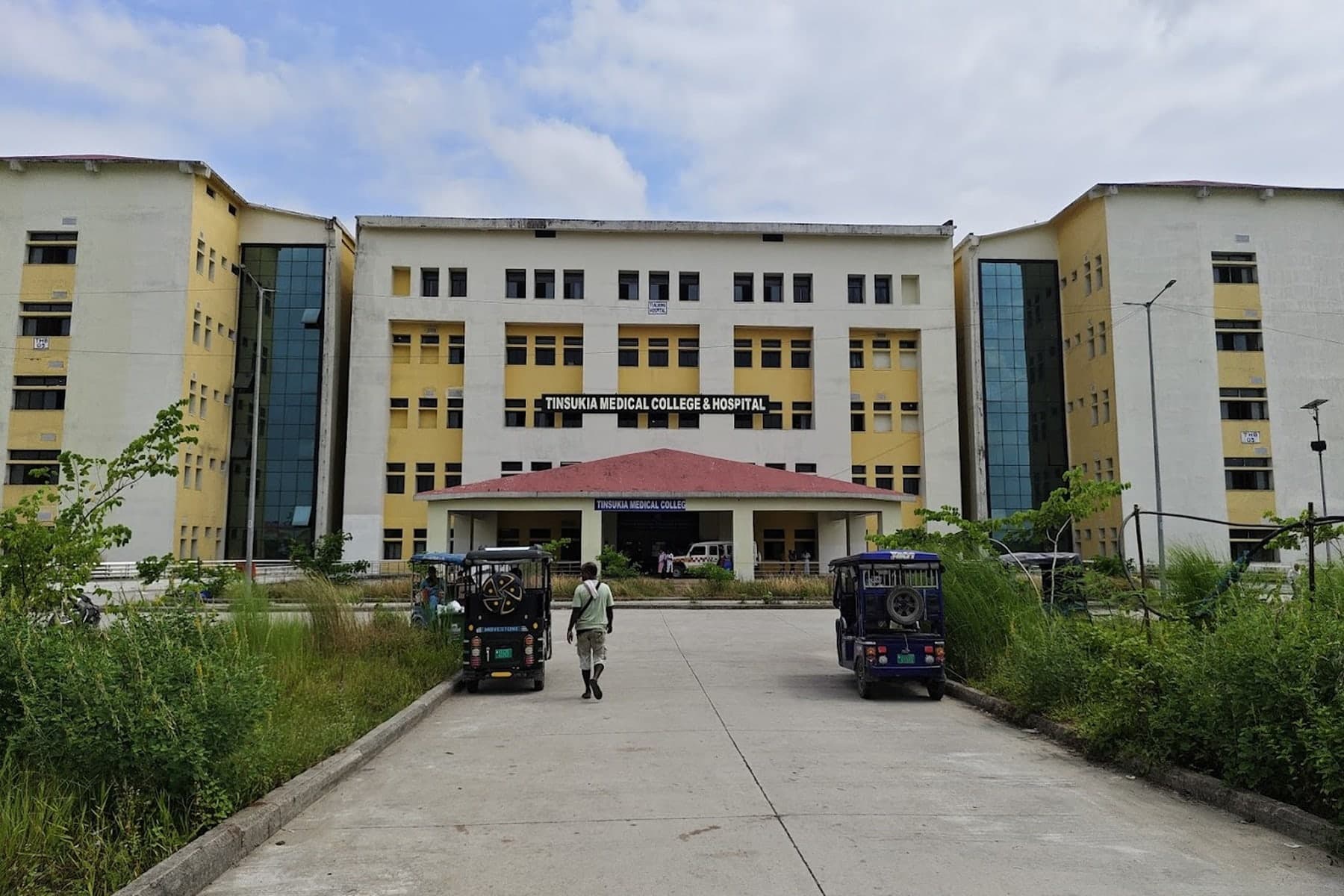
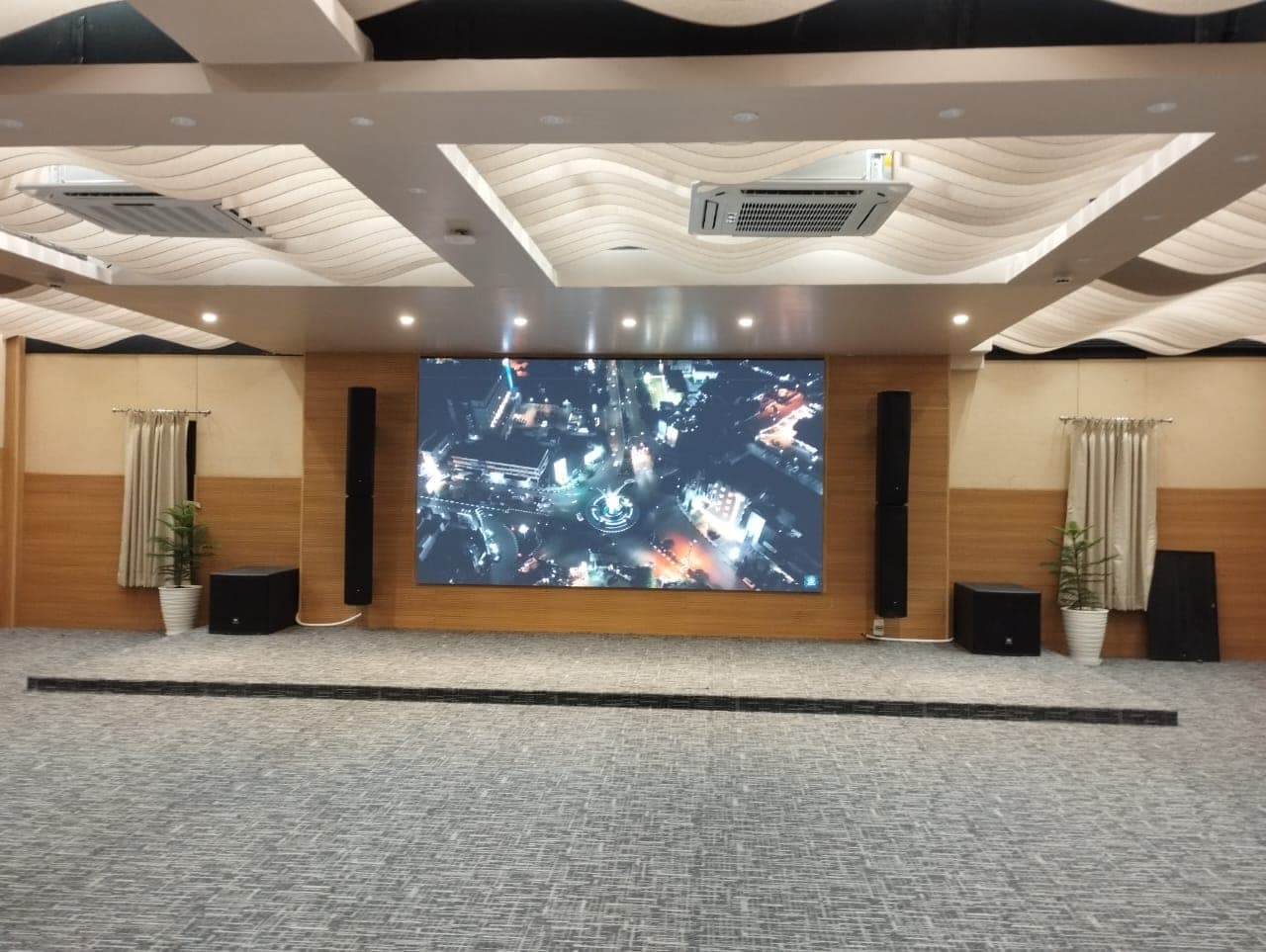
Photographs from the completed installation. Commercial documents and BOQ details remain private.
Signal & system architecture.
Systems integrated: 4 disciplines, one contract.
Lighting automation
Honeywell
Honeywell BMS
Bosch
- ↳Sequencing chillers around the mall's actual occupancy curve — F&B opens earlier, retail trades a longer envelope, weekend load peaks differ from weekday — solved by a programmed daily-load schedule rather than a flat setpoint.
- ↳Sub-metering tenant zones so the billing data is decision-useful for tenants and auditable for the operator — granular at the level of each retail unit, with the meter address exposed in the tenant lease.
- ↳Designing the BMS network with a future-ready integration pathway for fire-alarm and access control — VLAN design, DDC controller capacity and dashboard real-estate are all scoped against the Phase 2 brief, not just Phase 1.
- ↳Engineering AHU CO₂ logic that satisfies tenant-comfort expectations during peak weekend footfall without driving the chiller plant into demand-charge territory — CO₂ targets are zoned per tenant cluster, not blanket-set across the mall.
- ·Day-one operability for the facilities team — the mall opens with a working dashboard, named alarms in plain English, and a documented escalation calendar instead of a vendor handover that requires three months of stabilisation.
- ·Tenant-billing data ready for the lease's audit clauses from the first month of trading — sub-metering granularity matches the lease wording, not the BMS catalogue.
- ·Peak-demand visibility on the energy analytics dashboard — the operator can see the demand-charge driver before the bill arrives, not after.
- ·Phase 2 fire-alarm and access-control integration is a configuration exercise, not a re-cabling exercise — the pathway is already engineered.
What the floor told us when work started.
Mall occupancy curve refuses a flat chiller setpoint.
F&B opens earlier, retail trades a longer envelope, weekend load peaks differ from weekday — the BMS programmed daily-load schedule mirrors the mall's actual occupancy curve, not a manufacturer's default setpoint. Without that schedule, the chiller plant runs into demand-charge territory by the end of the first month.
Sub-metering granularity is a lease-clause decision.
The lease wording set the granularity of tenant sub-metering before the BMS catalogue did — each retail unit's meter address is exposed in the lease so the billing data is auditable from month one of trading. The BMS layout was redrawn twice to match the lease, not the other way round.
Phase 2 fire-alarm integration is a pathway, not a slogan.
The VLAN design, DDC controller capacity and dashboard real-estate are scoped against the Phase 2 fire-alarm and access-control brief, not just Phase 1 HVAC. Phase 2 is a configuration exercise; without that scoping it would be a re-cabling exercise.
What the engagement had to work around.
- TENANT BILLING
- Constraint —Sub-metering data must be auditable to the lease wording — granular at the level of each retail unit, exposed in the lease.
- Design response —Meter addresses defined in the lease, sub-meter installation done per unit, and the BMS layout was redrawn to match the lease rather than the BMS catalogue.
- DAY-ONE OPERABILITY
- Constraint —The mall opens with a working dashboard — no three-month stabilisation window.
- Design response —Named alarms in plain English, documented escalation calendar, mobile-routed alarms to nominated facilities-team handsets — handed over against an operations manual the facilities team can use without vendor support.
- PHASE 2 INTEGRATION HEADROOM
- Constraint —Future fire-alarm and access-control integration must not require a re-cabling exercise.
- Design response —VLAN design, DDC controller capacity and dashboard real-estate scoped against the Phase 2 brief; pathway-ready at Phase 1 sign-off.
What needed careful handover.
Tenant-by-tenant sub-meter walk-through
Sub-meter installation was verified per tenant unit at commissioning — meter ID, pulse output, polarity and Modbus address logged against the as-built tenant directory. A single mis-addressed meter at handover would cascade into tenant billing disputes within the first month.
EFFORT — Two-day systematic walk
Chiller-schedule sweep against actual trading hours
The default BMS chiller schedule was overridden with the mall's actual trading-day envelope (10:00-22:00 weekdays, 09:00-23:00 weekends), not the contractor's catalogue default. The schedule sweep was done on-site with the mall management present.
EFFORT — Half-day with mall ops
Public-address zone-level verification
Each tenant-zone PA loop was walked with an SPL meter; tenant-set volume defaults were locked at a calibrated ceiling so individual tenants cannot defeat the SPL cap. Priority-paging override was tested against every BGM source.
EFFORT — One day per floor
Seams that required cross-trade engineering.
SEAM 01
Tenant fit-out timing vs base-build BMS handover
Tenant fit-outs landed in waves over six months after base-build BMS handover; the supervisor schema had to support late-arrival tenants without breaking the existing tenant directory. The schema was designed for additive registration, not for re-mapping.
SEAM 02
Civil-works conduit + ELV trunk segregation
Mall service corridors were tight; segregating BMS field cabling from PA cabling and tenant power cabling required a coordinated cable-tray drawing at design freeze. The tray layout was issued as a shared engineering deliverable across BMS, PA and electrical trades.
What the design refuses to let take the whole system down.
Single AHU CO₂ sensor drift drives tenant-cluster over-cooling.
MEDIUMIsolated by —CO₂ targets are zoned per tenant cluster with cross-validation between adjacent zones; a single sensor drift surfaces as an alarm before it shows on the chiller demand.
Tenant sub-meter logs corrupted by network event.
MEDIUMIsolated by —Sub-meter data is logged at the meter, the DDC controller and the supervisor — three independent stores; reconciliation runs nightly and surfaces as an alarm before the tenant billing run.
Chiller schedule held against an obsolete trading pattern.
LOWIsolated by —Schedule review is on the 12-month and 24-month AMC calendar; the schedule is treated as a living document tied to actual mall traffic, not a one-shot programming pass.
What the team will live with.
- Chiller daily-load scheduleProgrammed schedule needs revisiting against actual trading-pattern data at the 12-month and 24-month marks; the BMS-side schedule is a living document, not a one-shot programming pass.
- Tenant sub-meter calibrationSub-meter accuracy drifts on a 5-year horizon under daily billing use; calibration is on the AMC calendar, with documented calibration certificates retained for tenant-audit purposes.
- BMS supervisor softwareHoneywell BMS supervisor lifecycle is 8–10 years; configuration baselines, alarm definitions and named-tab layouts are exported offline after every release so a supervisor migration is a configuration exercise, not a rebuild.
Where the design holds capacity for growth.
+ Phase 2 fire-alarm and access-control integration.
VLAN reserved on the BMS network; DDC controller capacity holds spare points; dashboard real-estate holds named tabs for the Phase 2 systems.
+ Additional tenant zones on the F&B mezzanine.
Sub-metering cable plant holds reserved circuits to the F&B mezzanine; the BMS supervisor's tenant database holds spare addresses keyed to the lease wording.
+ Solar-PV roof integration into the energy analytics dashboard.
Energy analytics dashboard already exposes generation-source aggregation; a Modbus or BACnet/IP feed from a solar inverter sits within the supervisor's standard integration profile.
What this engagement taught us, on the record.
- 01
Tenant billing reconciliation must be a daily process, not a monthly one.
The daily reconciliation pattern is now standard for every BMS engagement with sub-metered tenants — surfaces drift before it becomes a tenant relations issue. Saved the mall management three days per month of manual reconciliation work.
- 02
Schedule programming is a living document, not a one-shot pass.
Every retail BMS engagement now carries a 12-month and 24-month schedule-review clause in the AMC — chiller plant, lighting zones and AHU runs are all re-tuned against actual mall traffic patterns.
- 03
Priority-paging override must be hardware, not software.
Mall emergency communication design now mandates a hardware-level priority bus override across all tenant zones — software-controlled override has a non-zero failure surface that mall life-safety design cannot accept.
· Where to go next
Related engineering, insights and tools.
Read further
Engineering pages
- ASHRAE 90.1 — energy-efficient design for buildings
- ASHRAE 62.1 — ventilation for acceptable indoor air quality
- GRIHA / IGBC retail-mall energy benchmarks
- BIS / NEC — wiring and equipment-room practice

The systems and sectors behind Unity Mall, Guwahati.
Every discipline on this project is engineered as part of one integrated stack. Open the system practice, or the sector it sits inside — each page is a live brief you can start a similar project from.
Public project summaries describe systems and outcomes only. BOQ values, quantities, device counts, security and network layouts and private drawings are kept off public surfaces.

Specifying a commercial room for a real building?
Send the floor plates, the operating context and the documented brief. We return a sized scope and a written estimate after drawings and site review — typically within two working days.
Talk to the studio