
Capital Cultural Hall, Kohima.
The shape of the deployment.
Structured engineering tagging — deployment archetype, infrastructure complexity, operational class and the named protocols the integration runs on.
- Infrastructure complexity
- Single Block
- Operational class
- Civic Cultural
- Deployment archetypes
- cultural venue largefluid acoustic treatmentline array paactive led video wall
- Protocols referenced
- DMX-512 / Art-Net (stage)BSS BLU100 DSPJBL VLA line-array shadingAVoIP feed into video-wall
What we were asked to deliver.
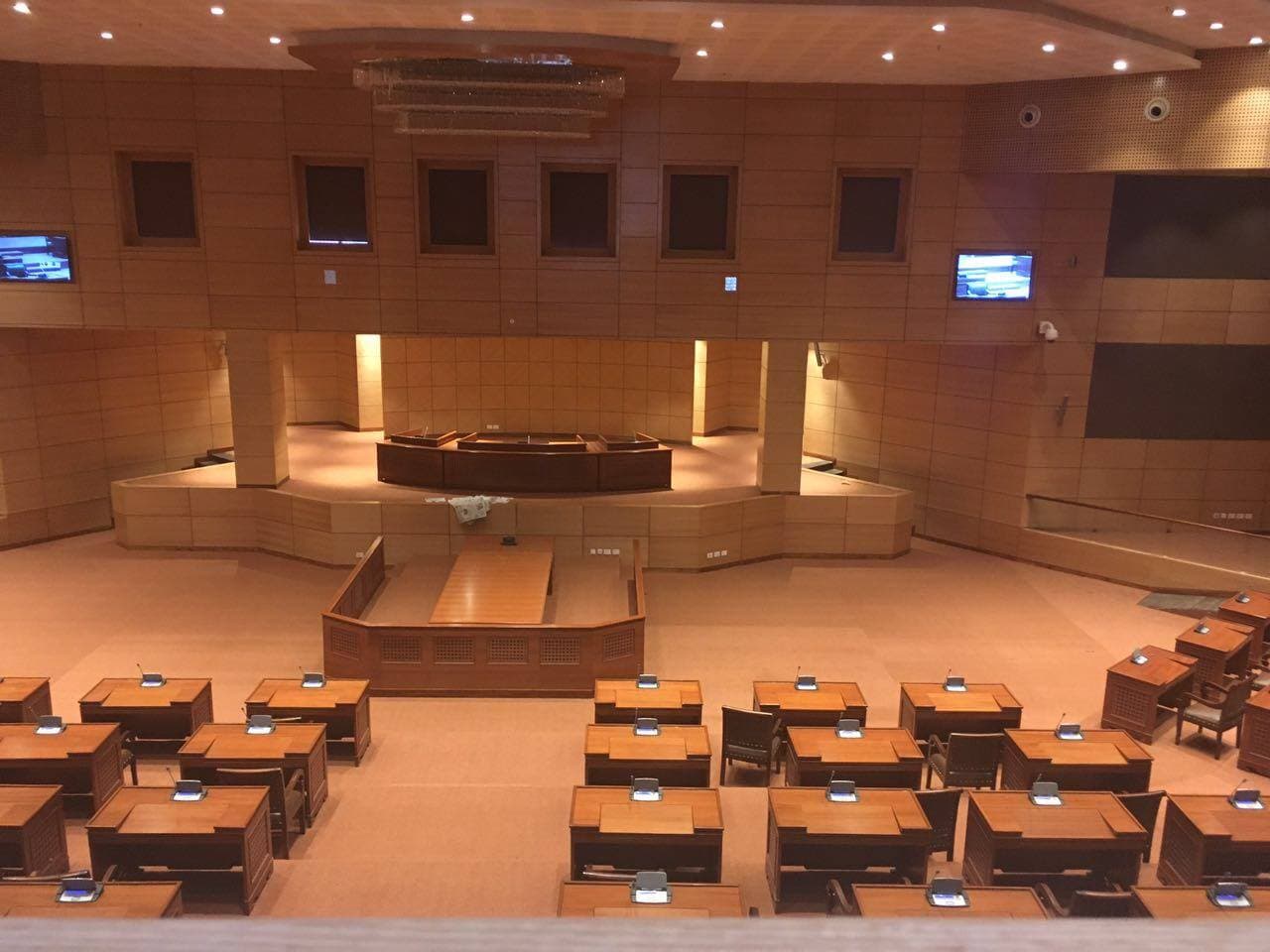
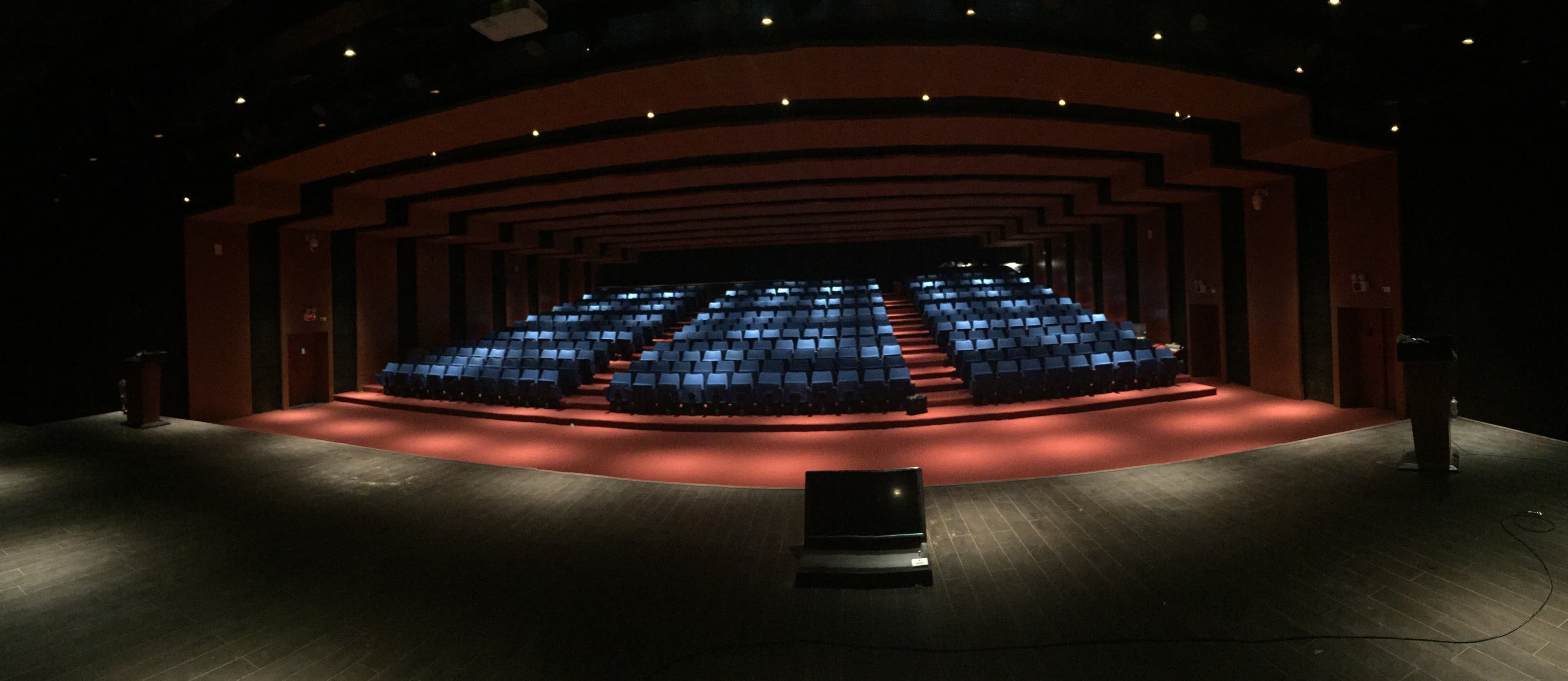
An 1,800-seat civic auditorium engineered for live cultural performance, public address, recorded music and government convocation — delivered as a coordinated build covering pro audio, active LED, acoustics, stage lighting, stage furnishing, fire alarm, fire hydrant and chair installation across the entire house.
The auditorium's six trades — pro audio, video, lighting, drapery, acoustics and seating — were engineered as one coordinated cause-and-effect, not six separate contracts with seams in between. Line-array DSP shading is calculated against the room's measured RT60. LED-wall luminance is set against measured stage-lighting illuminance. DMX/Art-Net runs on isolated VLANs so a stage cue cannot flicker an architectural fixture. Acoustic treatment is fluid — variable-density absorption, calibrated bass-traps, adaptive diffusion — and signed off on a measured impulse test rather than a panel-coverage spreadsheet.
A frame from the engagement.
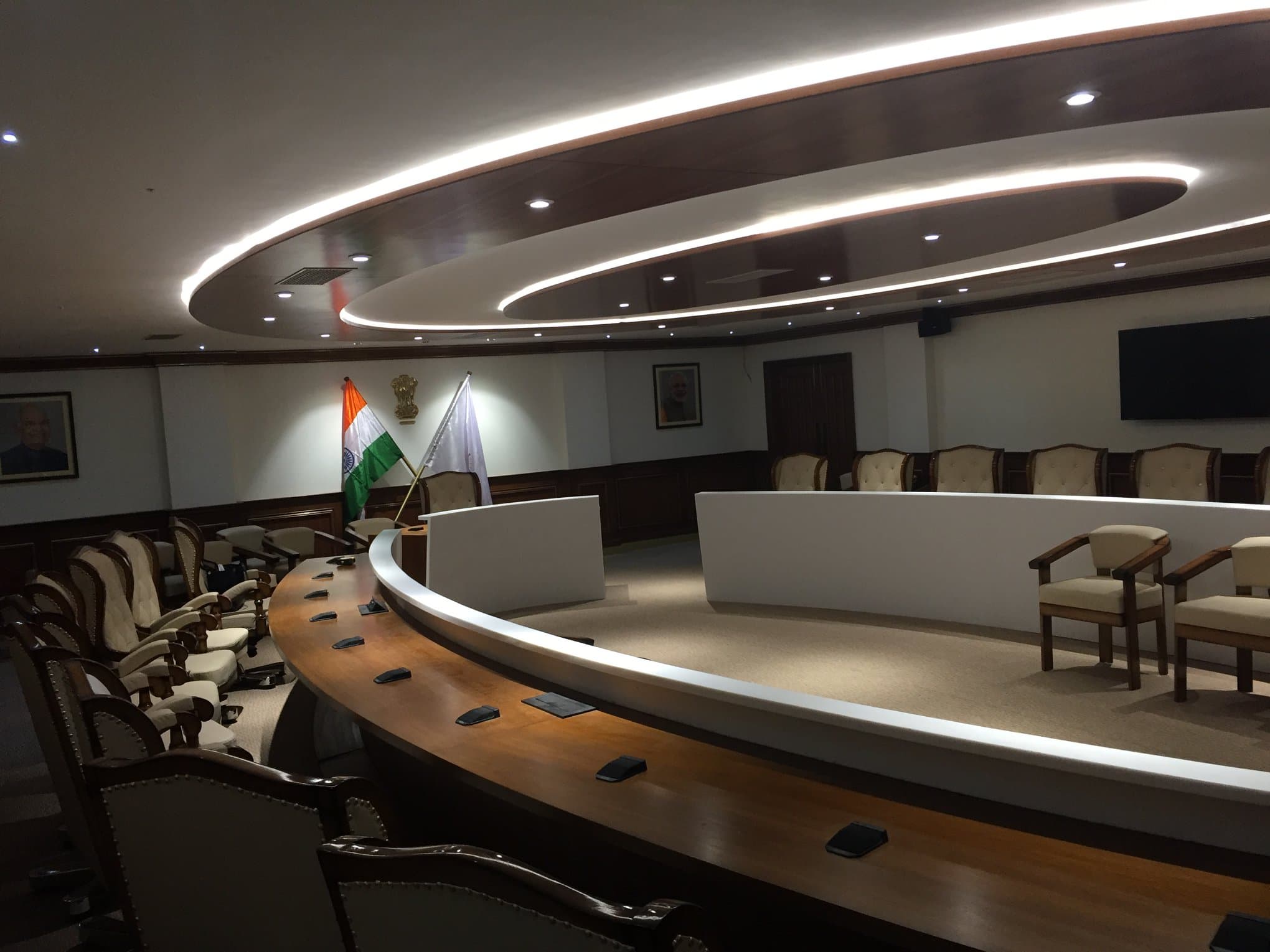
Photographs from the completed installation. Commercial documents and BOQ details remain private.
Signal & system architecture.
Systems integrated: 8 disciplines, one contract.
Auditoriums & Boardrooms
Professional Audio & PA Systems
Stage Lighting
Acoustic Solutions
LED Panels & Projectors
Fire Alarm System
Fire Hydrant System
Multi-System Project Delivery
- ↳Delivering speech intelligibility (STI ≥ 0.58) across 1,800 seats without over-damping the room for music programme — solved by fluid acoustic treatment rather than panel-only, with variable-density absorption per audience zone, calibrated bass-trap volume in the corners, and adaptive diffusion at the rear.
- ↳Designing a line-array hang that covers the audience plane evenly without hot-spotting the front rows — line-array DSP shading was used to deliver flat coverage from row A to row Z, measured at every twentieth seat at commissioning.
- ↳Tuning the LED video wall's brightness so the backdrop reads cleanly under stage lighting without visually competing with the performers — colour temperature and luminance targets were locked against measured stage-lighting illuminance, not against catalogue defaults.
- ↳Routing DMX/Art-Net lighting control across the stage and the architectural envelope without cross-talk — separated VLANs and physical-layer isolation were specified on the lighting control network so a stage cue does not flicker the lobby.
- ·STI 0.64 mean (0.58 minimum) measured across the audience plane — speech intelligibility delivered to civic-speech standard at every seat.
- ·RT60 curve tuned to a slight rising profile (1.6 s at 125 Hz, 1.4 s at 1 kHz, 1.2 s at 4 kHz) — the room reads as 'warm but clear' for music and 'present' for spoken word.
- ·One coordinated commissioning report — pro audio, video, lighting, acoustic and seating signed off as a single integrated package, not six separate trades.
- ·Active AMC engagement post-handover — the hall remains an operating engagement, not a project that closed.
What the floor told us when work started.
1,800 seats exceeds panel-only acoustic treatment.
Above 800 seats, panel-only treatment hits a wall — diffraction at edges, low-frequency build-up and audience-absorption variation between half-house and full-house. The hall carries fluid acoustic treatment: variable-density absorption keyed to audience zones, calibrated bass-traps in volume corners, and adaptive diffusion at calculated frequency bands. STI mean rose from a typical 0.48–0.55 (panel-only) to 0.64 at commissioning.
STI is measured at every 20th seat, not at three positions.
The commissioning STI sweep walked every 20th seat across the 1,800-seat plane, not three reference positions. Worst-case STI 0.58 sits at a known balcony-edge seat — documented in the commissioning pack with its position number, not buried in a mean.
DMX/Art-Net VLAN is isolated from architectural lighting.
Stage DMX/Art-Net runs on its own VLAN, physically isolated from the architectural lighting backbone — a stage-side lighting cue cannot bleed into the house-light controller, and a building-side LX fault cannot crash the show's cue stack mid-performance.
Cool-down cycle on the LED wall is non-negotiable.
The 40 sqm P3.9 LED video wall runs hot under festival-event use; the post-show cool-down cycle is held against a documented timer, not the operator's judgement. A hot-shutdown event accelerates the LED panel's colour-uniformity drift visibly within a single season of use.
What the engagement had to work around.
- ACOUSTIC
- Constraint —1,800-seat cultural hall — STI target 0.62+ across the audience plane, with audience-absorption variation between half-house and full-house.
- Design response —Fluid acoustic treatment: variable-density absorption per audience zone, calibrated bass-traps in volume corners, adaptive diffusion at calculated frequency bands; STI calibration at every 20th seat at full-house simulation.
- NETWORK ISOLATION
- Constraint —Stage DMX/Art-Net cannot share a backbone with architectural lighting — a stage fault must not cross over to building-side LX.
- Design response —Dedicated VLAN for stage DMX/Art-Net, physically isolated from the architectural lighting backbone; documented switch-port mapping at handover.
- LIFECYCLE
- Constraint —Cultural hall sees festival-event use — high duty cycle, long sessions, repeated thermal cycling on the LED video wall.
- Design response —Post-show cool-down cycle held against a documented timer; LED panel calibration on the AMC schedule; spare-panel inventory keyed to the wall, not the building's generic spares pool.
- OPERATOR HANDOVER
- Constraint —Cultural-hall operators are not full-time AV engineers — the console and the lighting board have to be operable by event-night crew.
- Design response —Soundcraft Si Impact named-show templates, BSS BLU100 named-scene library, DMX named-cue stack — every event has a named-template starting point, not a from-scratch programming pass.
What needed careful handover.
STI sweep at every 20th seat across the 1,800-seat plane.
STI measurement walked every 20th seat with a stand-in audience cohort in the seats — empty-room STI does not predict the half-house and full-house audience-absorption profile. Worst-case STI position recorded by seat number.
EFFORT — Two full evenings, post-build
BSS BLU100 line-array shading calibration against the calculated geometry.
DSP shading was calibrated against the JBL VLA line-array's published geometry — per-zone delay, EQ and gain values stored in named scenes (Opening Address / Music Performance / Cinematic Playback). Each scene was recalled and walked across the audience plane before sign-off.
EFFORT — Three calibration sessions
DMX named-cue stack handover with event-night crew.
Named cues (Curtain Up / Performance / Curtain Down / House Lights / Speech-Only) were rehearsed with the venue's nominated event-night crew across two cue-runs each before the venue went into festival use.
What the design refuses to let take the whole system down.
Stage DMX fault crashes architectural house-light controller.
HIGHIsolated by —Stage DMX/Art-Net runs on its own VLAN, physically isolated from the architectural lighting backbone; a stage-side cue cannot cross over to the building-side LX controller.
LED panel colour-uniformity drift accelerates from hot-shutdown event.
MEDIUMIsolated by —Post-show cool-down cycle is held against a documented timer; the operator handover script names the cool-down step as non-negotiable.
Soundcraft Si Impact show template overwritten by event-night crew.
MEDIUMIsolated by —Show templates are write-protected at the console level; named-scene library is exported offline after every venue-AMC visit so a corrupted template is recoverable from the archive.
What the team will live with.
- LED video-wall panel uniformityP3.9 fine-pitch panels show colour-uniformity drift over 5–7 years under festival-event duty; the post-show cool-down cycle is the single biggest lifecycle lever — held against a documented timer, not operator judgement.
- Acoustic-panel surface fatigueVariable-density absorption surfaces hold their absorption coefficient over a 10–12 year horizon under cultural-hall duty; visual inspection on the annual AMC catches surface fatigue before it shows on STI.
- JBL line-array driver complianceVLA-class drivers hold their compliance over an 8–10 year horizon under cultural-event use; the BSS DSP shading library is exported offline so a driver swap can be commissioned against the saved scene library.
Where the design holds capacity for growth.
+ Live broadcast tap from the Soundcraft Si Impact console.
Console holds an unused AES50 multi-channel tap; the audio-distribution rack has rack space for a broadcast-grade processor; the DMX/Art-Net VLAN has bandwidth headroom for a parallel broadcast cue feed.
+ Cinema-grade playback mode for film festival use.
BSS BLU100 has a reserved DSP scene slot; the JBL VLA line array's bandwidth supports cinema-format playback; the 40 sqm P3.9 LED wall supports the required frame rate.
What this engagement taught us, on the record.
- 01
Above 800 seats, panel-only acoustic treatment is a discipline trap.
Every auditorium engagement above 800 seats since this handover specifies fluid acoustic treatment — variable-density absorption per audience zone, calibrated bass-traps, adaptive diffusion — calibrated at full-house simulation, not at empty-room load.
- 02
STI measurement at every 20th seat catches the failures the three-position sweep misses.
Every cultural-hall and auditorium engagement carries an STI sweep discipline keyed to seat count, not reference position; the worst-case seat number sits in the commissioning pack, not the mean.
- 03
Named-template handover survives an event-night crew change.
Every cultural-hall handover ships named show templates, named scene libraries and named DMX cues — the event-night operator works from a starting point, not from a blank console.
· Where to go next
Related engineering, insights and tools.
Read further
Engineering pages
- ISO 3382-1 — measurement of room acoustic parameters in performance spaces
- AES-15id — sound system design for speech intelligibility
- DMX-512 / Art-Net — entertainment lighting control protocols



The systems and sectors behind Capital Cultural Hall, Kohima.
Every discipline on this project is engineered as part of one integrated stack. Open the system practice, or the sector it sits inside — each page is a live brief you can start a similar project from.
This project was delivered in Kohima, Nagaland. See how we work in Kohima — the disciplines we cover there, and how a project is planned and supported from the Guwahati office.
Public project summaries describe systems and outcomes only. BOQ values, quantities, device counts, security and network layouts and private drawings are kept off public surfaces.
Specifying a government room for a real building?
Send the floor plates, the operating context and the documented brief. We return a sized scope and a written estimate after drawings and site review — typically within two working days.
Talk to the studio