
Cinema Scenes — Home Cinema AV Control Interactive
— Interactive · cinema scenes
One panel. The room becomes a cinema.
Tap a scene. Projector source, screen aspect, processor preset, room lighting, climate and seating shift in concert.
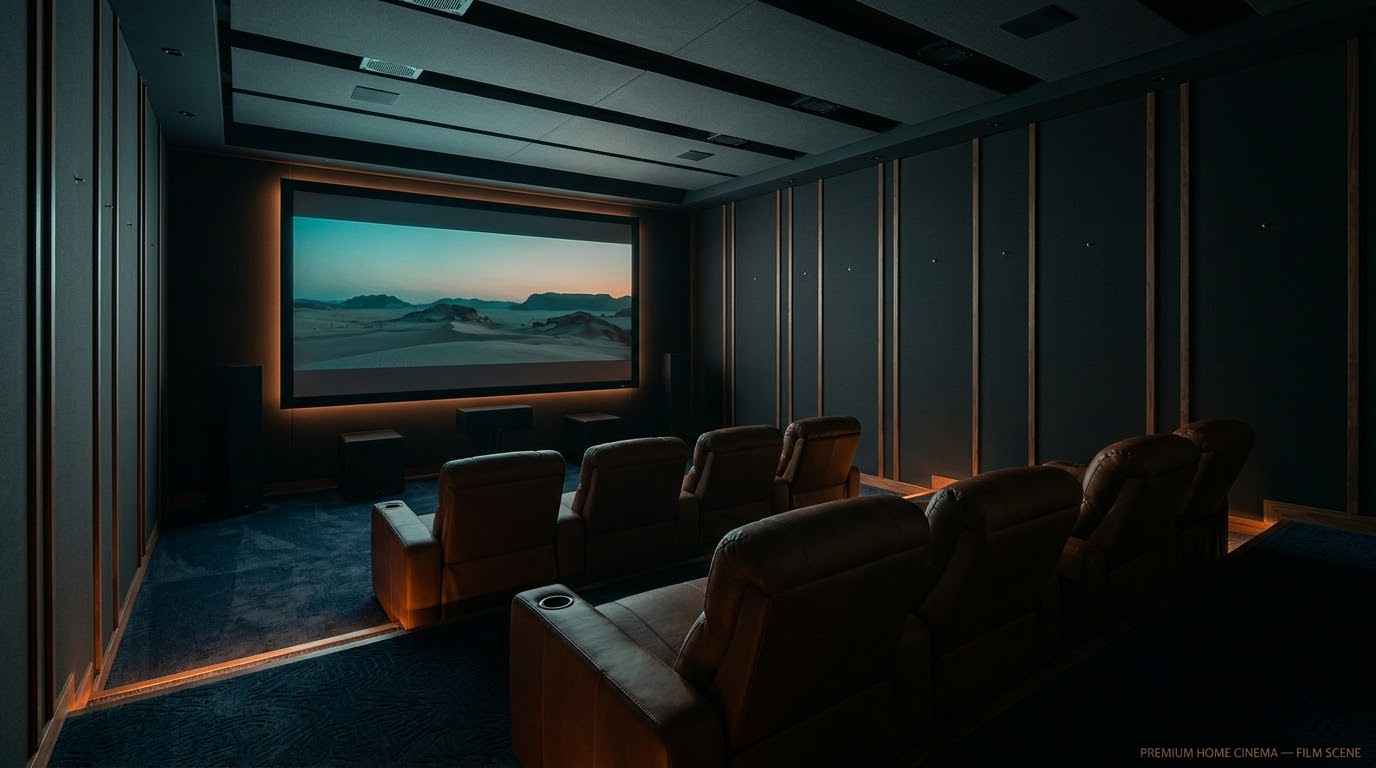
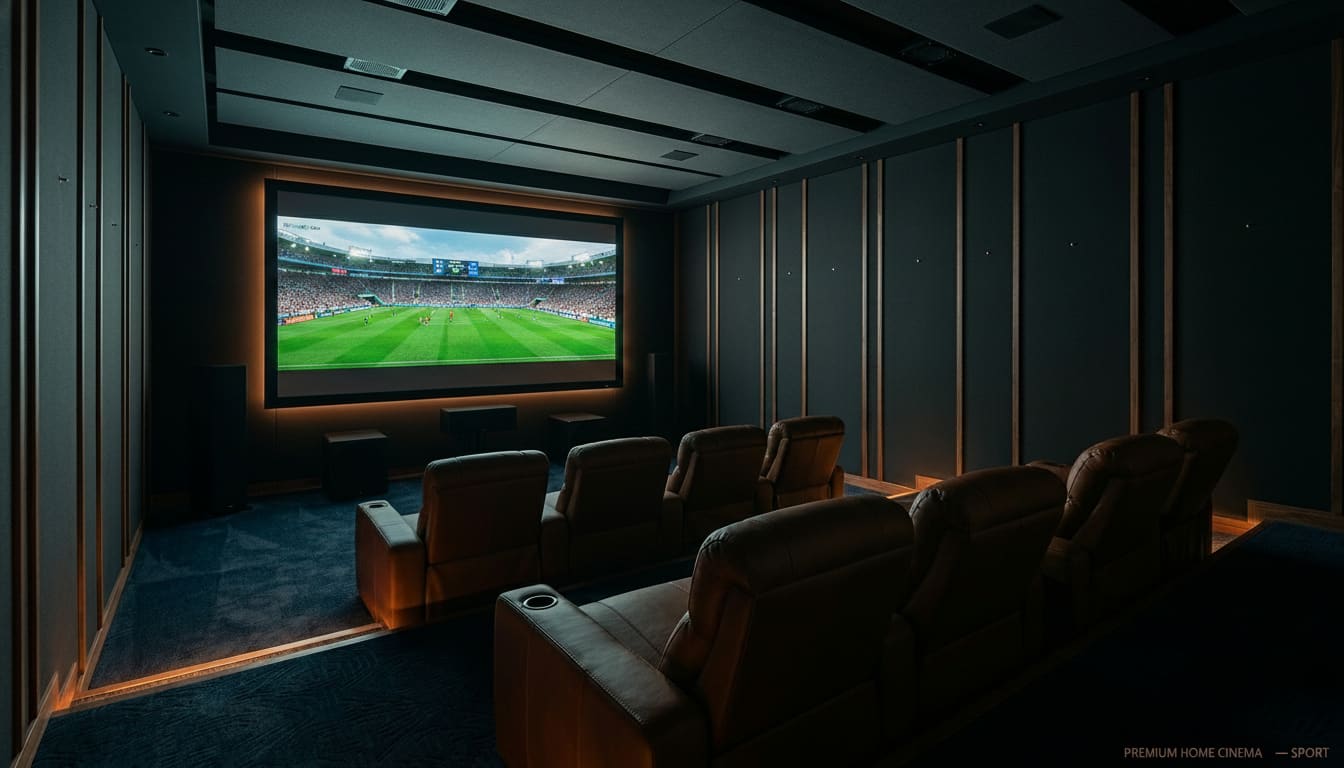
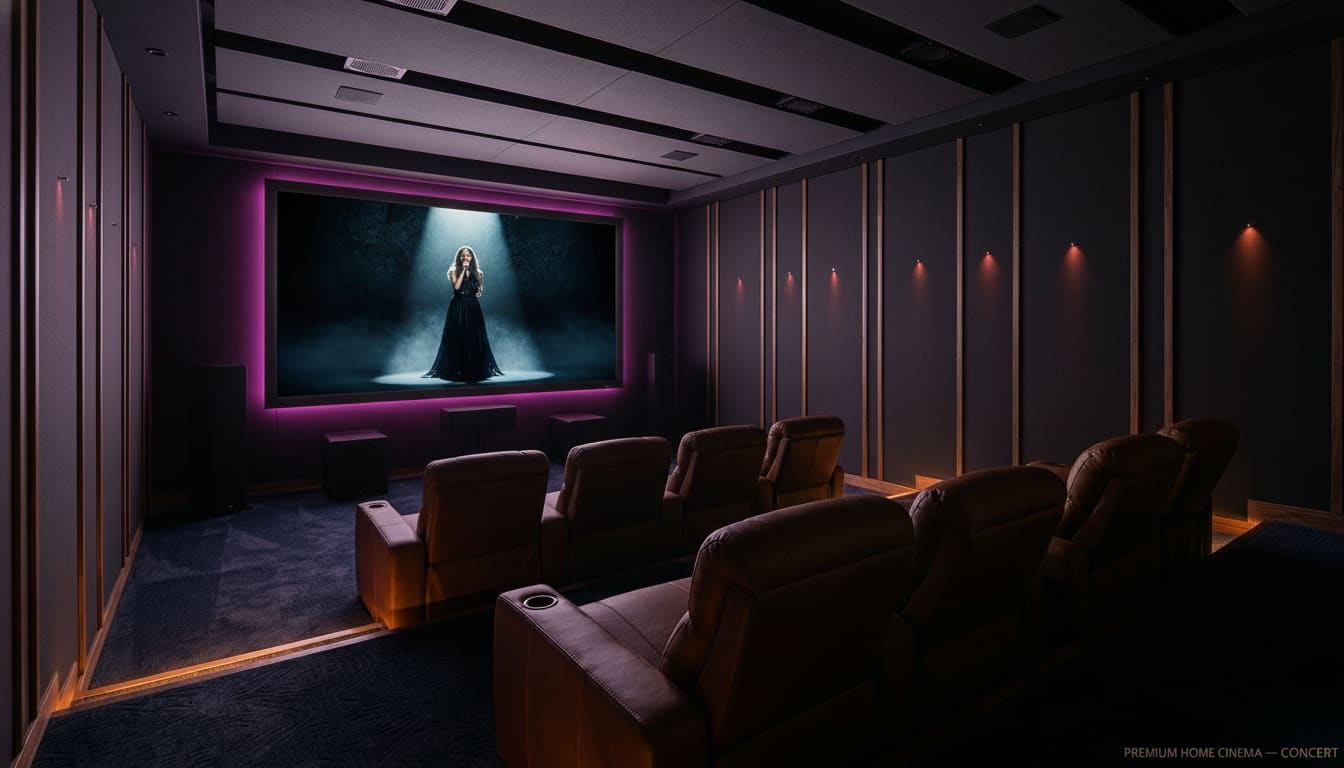
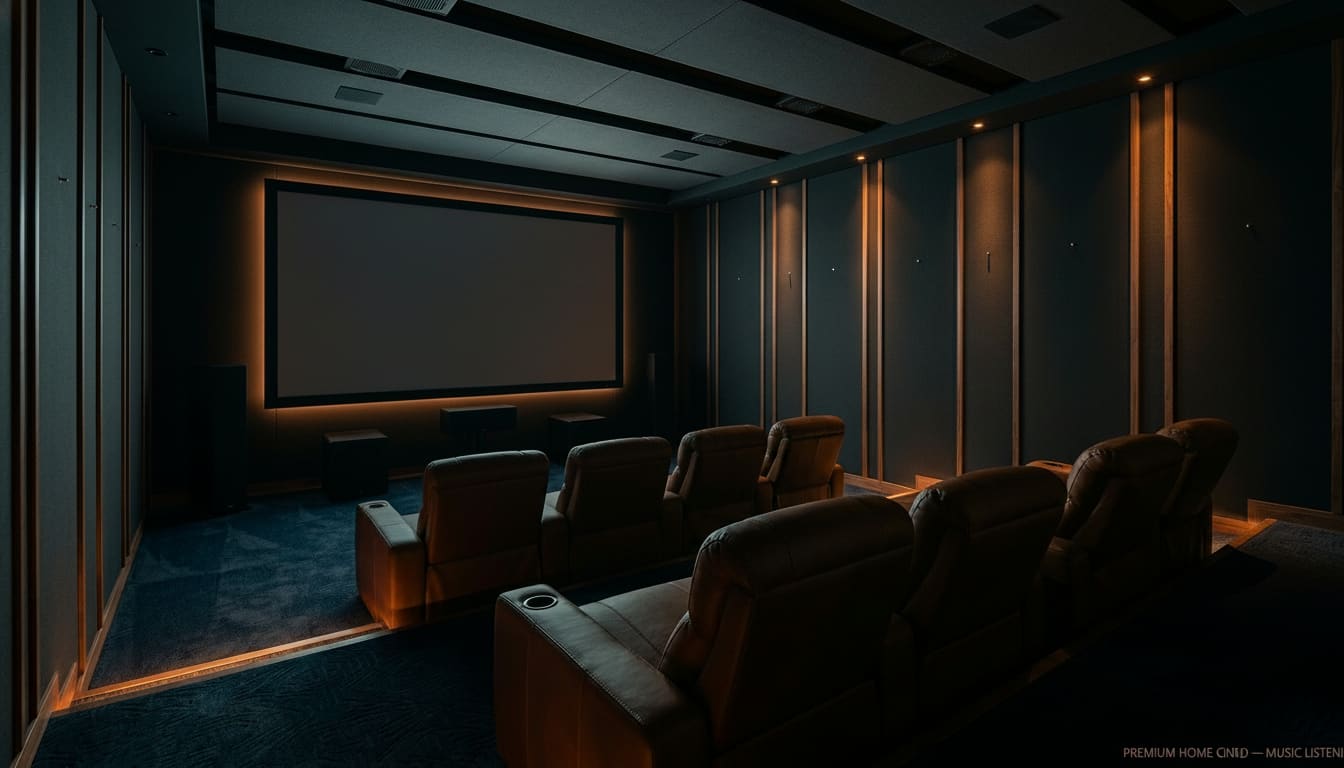
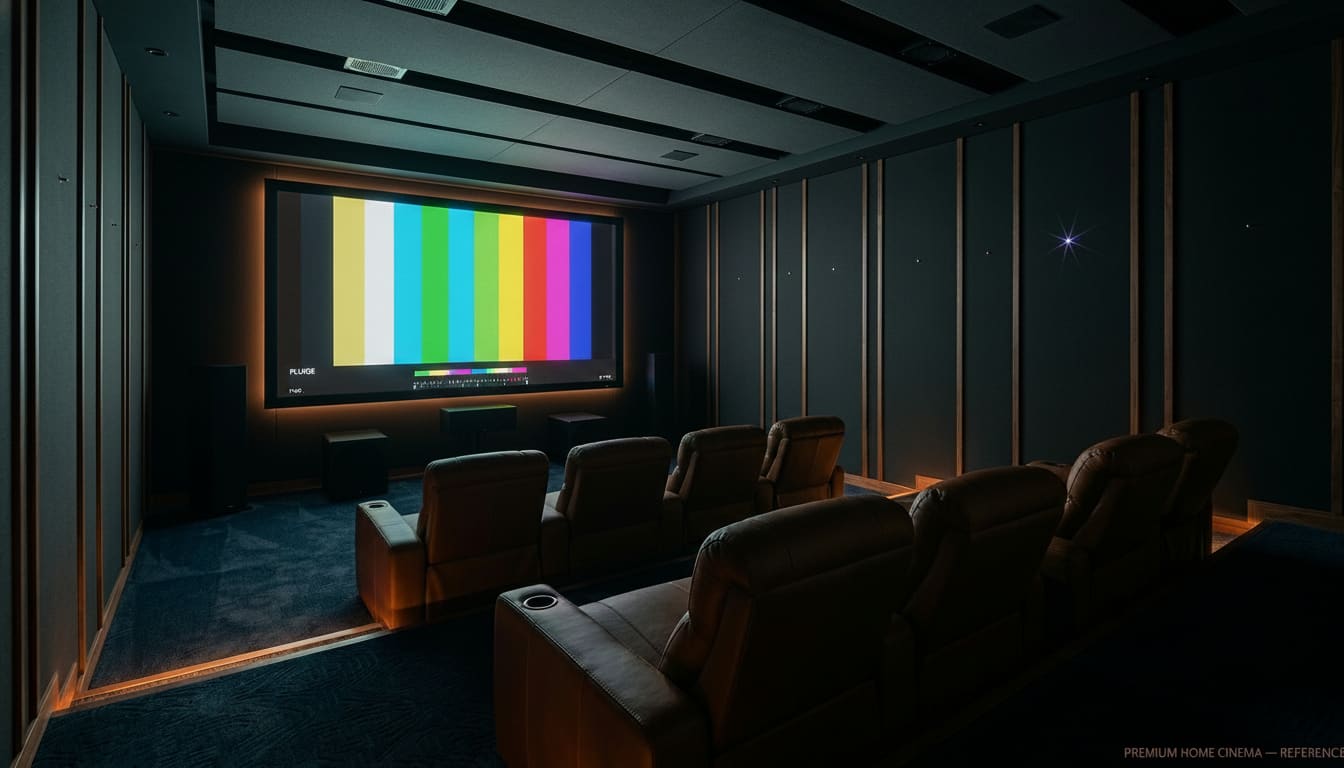
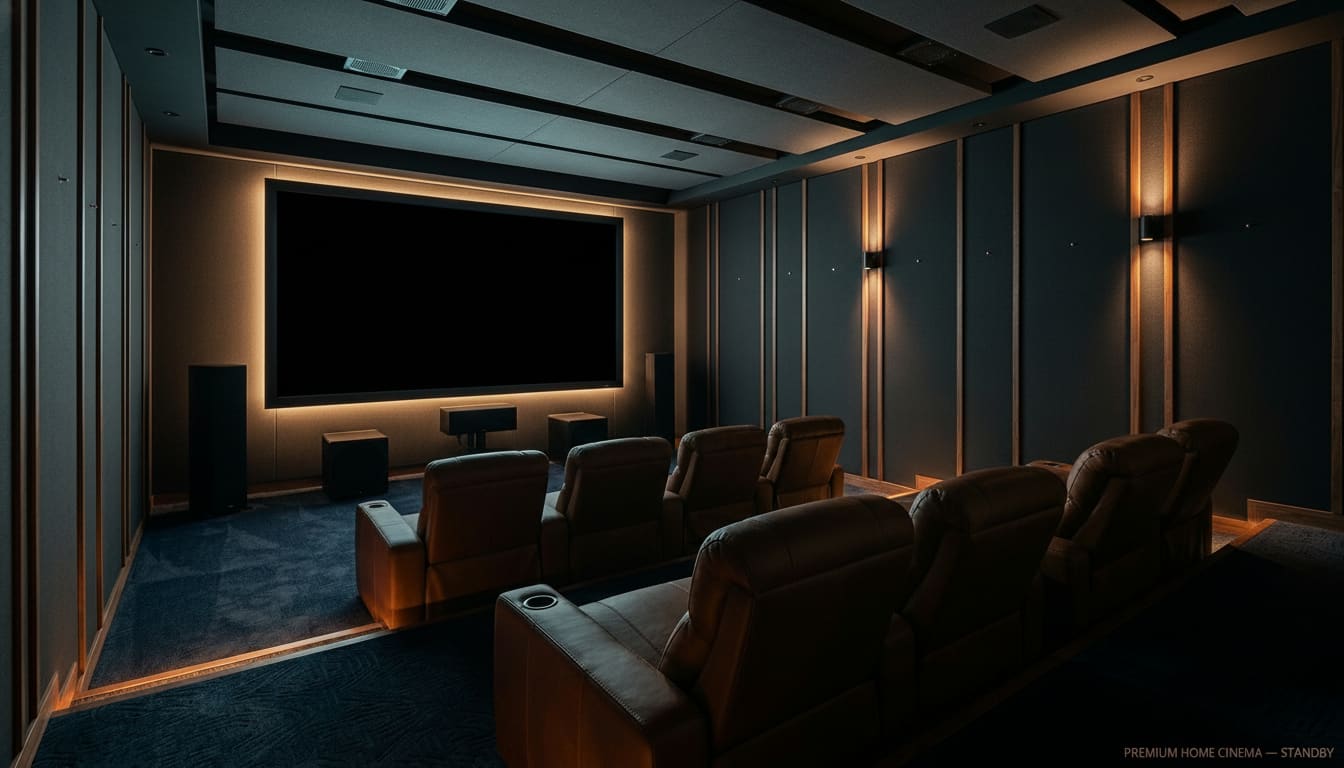
Scene 01 · Film
· Engineering advisory · Cinema Scenes
What the scene graph predicts about the cinema build.
The button tap is the visible moment; the four notes below frame the engineering layers — control programming, audio processing discipline, room treatment, scene-graph ownership — that make a single tap behave as a coordinated state.
01 · Deployment observations
Deployment observations
The observations3 notes — engineering detail behind this section
- A scene tap is nine simultaneous state changes: projector input, screen aspect ratio, audio processor preset (Trinnov / JBL Synthesis), room lighting recipe, cove backlight, step lighting, motorised screen masking, seating recline and ambient music fade. Programming the scene is one job; programming the failsafe (what if one subsystem doesn't respond) is the second, harder, job.
- Scene-graph ownership is the single biggest engineering decision in cinema control. Crestron, Control4, Savant or KNX-based — each commits the room to a different programming language, integrator network and ten-year update path. Specify the head-end first, then choose the cinema equipment that integrates cleanly with it.
- Acoustic-grade construction (sealed room-in-room, broadband bass traps, broadband mid-high absorbers) is the floor. Scene programming, processor choice and speaker selection cannot compensate for an untreated room — RT60 above 0.5 seconds in a cinema is the difference between intelligible dialogue and audience strain.
02 · Operational notes
Operational notes
Read the operational notes2 notes — engineering detail behind this section
- Scene graphs are owned by the integrator's programming file — specify file ownership at contract. Without that clause, a future scene change becomes a new engagement, not an update. Specify the file format and revision-control approach (Git, dropbox, integrator's vault) on contract.
- First-year scene tuning is normal — the owner discovers what the family actually does in the room, and the scene library evolves. Budget two visits in the first year for scene refinement; this is operational discipline, not warranty work.
03 · Lifecycle implications
Lifecycle implications
Read the lifecycle implications2 notes — engineering detail behind this section
- Cinema equipment refresh cycles vary: projector / laser engine 4-6 years, audio processor 8-12 years, AV controller 7-10 years, speakers 15-20 years, motorised screen 10-15 years. The scene graph survives equipment refreshes if the integrator's file is portable; if locked to a specific firmware version, the refresh costs scene re-programming.
- Acoustic treatment is infrastructure-grade — twenty-plus year lifespan if humidity is controlled. Treat the room once, properly, with measurement-driven design. The compression driver fatigue and L70 light-engine decay are the predictable lifecycle events; everything else is invisible until something fails.
Verification status: Decision support — editorial logic, no numeric claim · Methodology documented · reviewed 2026-08-30
· Engineering notes
How to read this tool’s output
Stage 1 (brief). Use during early conversation to align on the cinema-scene programming experience.
The assumptions, limits and reference architectures behind this
What an engineer should know
The assumptions behind the numbers this tool produces.
- Reference 10-seat home cinema with six scenes (Film, Sport, Concert, Music, Reference, Standby). Projector source, screen aspect, processor preset, room lighting and seating shift together.
When this tool is the right one
The project moments and room types this is built for.
- Reference home cinema walk-through.
What changes the answer in practice
Field conditions that move the result away from the planning figure.
- Trinnov + JBL Synthesis reference pairing is the default; scene programming sits on top of that engineering layer.
Defensible starting architectures
Vendor-neutral reference points, not a recommendation to buy — the right answer is the one that survives your site survey.
- Trinnov Altitude + JBL Synthesis reference 9.1.6 cinema with scene-driven projector source, screen aspect and processor preset.
Where this tool fits
The building types this output is calibrated for — and, where we have said so, the ones it is not.
Best suited for
The standards and technologies this touches
Reference pages for the protocols, standards and systems behind this tool’s output.
Compare the options ·
Home theatre AVR vs separates — processing and amplification· Why it matters
A cinema scene is not a button — it is a coordinated state change across nine subsystems. Projector source and aspect, audio processor preset, room lighting, cove backlight, step illumination, screen masking, seating motor positions, climate setpoint and ambient music. The owner taps one button; the room moves. Trinnov as the processor, JBL Synthesis or Bowers & Wilkins on stage, acoustic-grade wall and ceiling construction, and a head-end (Crestron / Control4 / Savant) that owns the scene graph.
· Frequently asked
Reference home cinema —
what people ask first.
Is this an actual TechnoGuru installation?
The render is a reference design — a 50-sqm, 10-seat cinema that the studio specifies regularly. The scene framework, processor choice and acoustic construction are the practice's standard for a reference-grade room.
Why Trinnov instead of an AVR?
Trinnov's Optimizer measures room behaviour at the listening positions and corrects the system for that specific room, and the Altitude range carries the Atmos channel count a reference room needs while expecting separate power amplification. Those two properties are what decide the specification here. An AVR integrates amplification and correction in one chassis at a lower channel count — the right answer for a living room, and the wrong one once channel count and amplification are themselves the brief.
How many channels do you actually deploy?
For a reference room we default to 7.1.4 — seven beds, one LFE channel routed to four subs in a corner array, and four overhead Atmos. Larger rooms go to 9.1.6 or 11.4.8 with Trinnov's higher-channel processors.
What about the screen — laser vs lamp, motorised vs fixed?
Reference cinemas get laser-source projectors (Sony VPL, JVC DLA NZ series) and acoustically transparent perforated screens so the L/C/R can sit behind the panel. Motorised masking lets the screen change aspect for 1.85, 2.39 and 16:9 content without black bars.
Can the scenes be edited after handover?
Yes — through the homeowner app. The scene graph lives in the head-end (Crestron / Control4 / Savant). Changing 'Film' from 8% to 12% cove brightness is a five-second edit; changing the underlying audio calibration is a service visit.
Engineering toolkit
Next in this sequence
Calculators whose inputs or outputs connect to this one.
- AV · Cinema
Cinema Sizer
Room dimensions in, recommended screen size, seat layout, Atmos format and projector throw out. Reference / Premium / Media-room tiers.
Screen · seats · AtmosOpen - AV · LED
LED Wall Size Calculator
Direct-view LED wall sizing across a source-cited model catalogue including Samsung, LG MAGNIT, Sony, Philips, Leyard, Absen, Unilumin, ROE Visual, AOTO, INFiLED, Daktronics, Planar, Nanolumens and more. Cabinet count, native resolution, brightness adequacy, power and weight — with pitch-vs-distance honesty and camera-refresh flags. Sources cited per model.
50 brands · pitch-awareOpen - AV · Projection
Projector Throw Distance Calculator
Engineering-grade throw distance calculator across a verified multi-brand projector catalogue — Sony, JVC, Epson, BenQ, LG, Optoma, ViewSonic, Panasonic, Barco, Christie, Canon, InFocus, Maxell, Casio, EIKI, Philips, Nebula, JMGO, Dangbei, Boxlight, ASUS, Leica, Xiaomi, WEMAX, Ricoh and more. Searchable picker, throw range, lens-shift envelope, viewing distance, pixel density, feasibility flags and a custom-throw fallback. Sources cited per model.
51 brands · sourcedOpen
· Begin
Designing a cinema
for the house?
Send the room dimensions, the audio philosophy (reference / cinema / both), the budget envelope and the architectural plans. We will write back within two working days with a scene framework, an acoustic strategy and a written equipment list.